Folders
Discover how great mathematicians shaped our world, explore the links between math and other fields like art, music, or even philosophy, and relive the key moments that marked its evolution.
The mathematics of knots
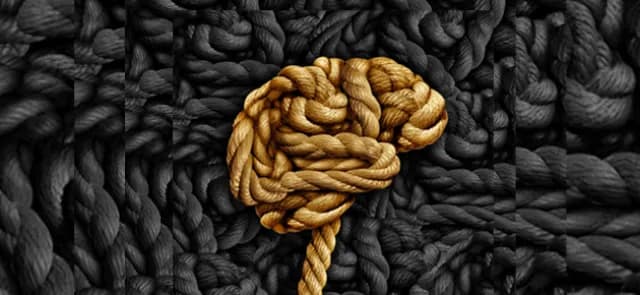
For millennia, sailors (and more recently climbers) have used knots to tie their ropes. Interlacements, already present in Roman decorative art, are found in Islamic and Celtic motifs. At the end of the 19th century, Tait and Thomson, through a hypothesis – which proved to be false – of chemical bonds that would interlace, brought knots into the realm of mathematics. Do you like tying strings or untangling the hanks of your balls of wool? Knot theory is made for you! Mathematical challenges are not lacking there. Without knowing it, Gauss, in studying certain curves, had laid the groundwork for this theory, which makes it possible to generate knots systematically, to classify them, to understand their connections with graph theory or to distinguish them 'at first glance' with the help of a complete invariant... which still remains to be constructed.

The most beautiful mathematical puzzles
They have accompanied all lovers of beautiful mathematics, since the beginning: challenges, puzzles, problems. Arousing in turn astonishment, disbelief, fascination or bewilderment, they awaken our curiosity and ignite the spark of understanding.Puzzles have been part of human culture since antiquity, with the Greeks with Zeno, with the Arabs with Abu al-Wafa, in the Renaissance with Bachet de Méziriac. Great "conveyors" have passed on to us a thousand and one wonders, which inspired the founders of Tangente: Sam Loyd, Henry Dudeney, Martin Gardner? And some mathematical geniuses, Leonhard Euler and John Conway in the lead, have bequeathed us subjects of reflection and dazzling insights that have opened new fields of knowledge, still revisited today, extended, generalized - in short, that are far from becoming outdated!

The parabola, mirror of the world
With the ellipse and the hyperbola, the parabola is the third non-circular conic section. One might think that its properties are rather banal given that its algebraic equation is one of the simplest. Its definition, too, is elementary: a point and a line are all that is needed to draw it. Yet, it opens up surprising possibilities, whether it's its construction which can prove to be very playful and educational, its tangents which contain many gems, its quadrature which allows for subtle reasoning, not to mention all the theorems related to it or all the applications it generates. Welcome to a universe where a simple curve becomes mirror of the world!

The pitfalls of percentages
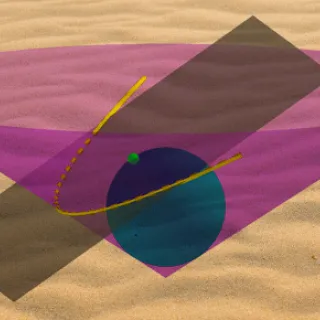
Since the end of the Middle Ages, it has become customary to reduce a quantity to one hundred to compare different data. The rise of the banking system and loans with interest further reinforced the use of percentages to define rates and calculate increases and decreases. Very present in economics, percentages are now used in many other fields, invading the language of journalists and political discourse. Their very delicate handling leads to multiple errors, sometimes bringing confusion where one wanted to be clear and precise.

The practice of mathematics in China
Taking an interest in other cultures implies stepping out of the natural Eurocentrism that is ours. From then on, questioning the existence of "our" proof, derived from Euclid, in East Asian mathematics becomes obsolete. It is, however, instructive to follow the importation and dissemination of this concept. The study of the impact of this event thus makes it possible to understand the distance between different practices of mathematics. How do we set up an equation? How do we calculate? The methods are numerous and their discovery proves fruitful, including for those that the mathematical tradition in China may have forgotten from its own past.


The questions are still open!
Most physical theories were imagined abstractly before being (or not) validated, sometimes a long time after, by observations. Even today, explorations continue and propose new visions of our world, which will one day be confirmed or disproved. It is often daring mathematicians who have ventured into what is apparently not their territory, although the two disciplines were very close until the last century. Yet, who better than these adventurers of abstract concepts can uncover a hidden law? Among them, a woman, Emmy Noether, knew how to base a part of physics on the research and study of invariants, thus becoming a pioneer of modern mathematical physics. Some of David Hilbert's celebrated problems are also in connection with physics.


The remarkable identities
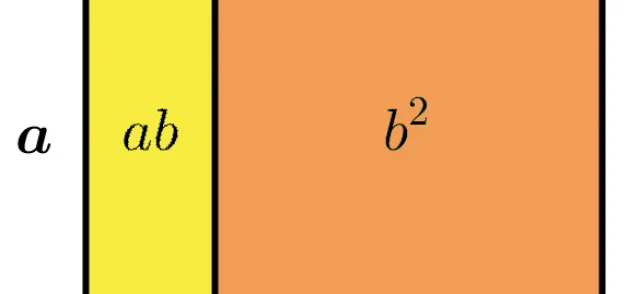
What makes these famous "identities" so remarkable? Why do some of them inherit this qualifier? Yet elegant and concise formulas are not in short supply in mathematics... But let us not begrudge our pleasure, and let us return to these relations.


The resolution of algebraic equations
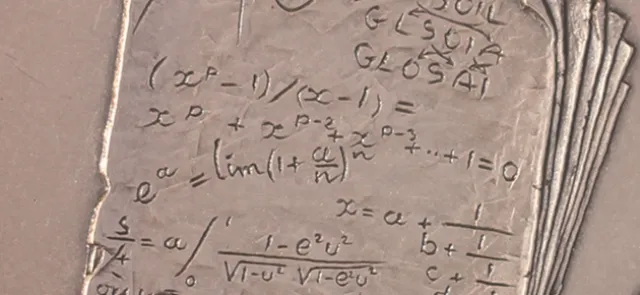
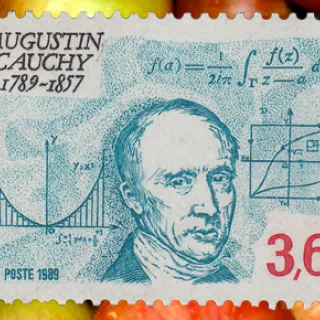
At the time when Galois began to take an interest in mathematics, polynomials had long been studied, and substitutions and permutation groups had already been introduced by Lagrange and studied by Cauchy. Ruffini and Abel had previously proven that it is generally impossible to solve polynomial equations of degree 5 or higher algebraically. So what is Galois's contribution? Beyond solving a problem, he opened a new field of mathematics by showing how much a group could encode the fundamental properties of a polynomial.
The saga of mathematical objects
Seeing, manipulating, learning... Mathematical objects, whether they are instruments, games, tools, puzzles, supports, sculptures, works of art, are a privileged means of appropriating an abstract concept, or even a subtle notion... 'Making sense!' seems to be their reason for being, from the first among them, the Ishango bone, to the ordinary graduated ruler used by all schoolchildren. Some geometric models, beyond the wonder they can inspire, allow us to apprehend properties that are not always obvious… even from a simple cube!


The saga of the great theorems, Thales' theorem
The saga of the great mathematical theorems is launched! To whom honor is due, honor: the king of triangle geometry, Thales' theorem, opens the ball. His name will forever remain attached to a famous scholar living in Greece in the 6th century BCE. And its content will forever revolutionize mathematics, but also other sciences like optics or astronomy. But how can we be certain that Thales is the father of this so important result? Often, indeed, a theorem is named more as a tribute to a mathematician than after the name of its discoverer (not always identified)*… The question is ultimately of little importance compared to the magnificent gems and beautiful stories evoked by the name of the theorem. (* Read the article Tell me, theorem, what is your name?)