Folders
Discover how great mathematicians shaped our world, explore the links between math and other fields like art, music, or even philosophy, and relive the key moments that marked its evolution.
The Saga of Theorems: Pythagoras
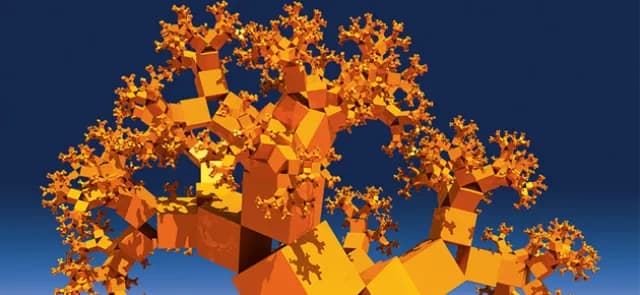
Pythagoras is much more than a mathematician, whose theorem, famous since Antiquity, has traversed generations and has sparked, over the centuries, an impressive number of proofs. Whether one speaks with deference of the Pythagorean school or with distrust of the sect of Pythagoreans, one cannot forget that this mysterious figure, about whom almost nothing is known, is at the center of a philosophical framework perpetuated by his disciples that influenced, beyond mathematics and astronomy, music itself.
The Tangente Trophies
Read while cultivating your interest, or even passion, for maths, it's possible thanks to Tangente. For the twelfth edition of the Tangente Book Prize, our magazine invites you to vote for one of the ten recent books selected for their ability to transmit a taste for maths. Read, yes, but why not write? If you have a nimble pen and inventive spirit, take part in the Best Article Prize. A dream… seeing your text in Tangente soon! The Tangente Trophies also target school audiences. Discover the results of the Tangente High School Prize or encourage a young person to take part in the Bernard-Novelli Prize, a competition to create a mathematical game software.

The art of counting
Mathematics is certainly not limited to "performing calculations on numbers". However, the problem of counting objects is more stimulating than it seems: can we count everything exactly, or at least approximately? Is it useful to have a precise numerical value, or is an estimate sufficient? In each situation, the mathematical techniques used will be different: enumerations, combinatorial reasoning, algebraic tools, set bijections. To count a population, one will prefer statistics, models, estimators. Counting is no small feat!


The art of numbers
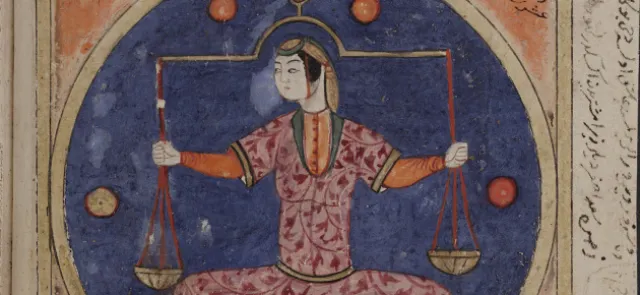
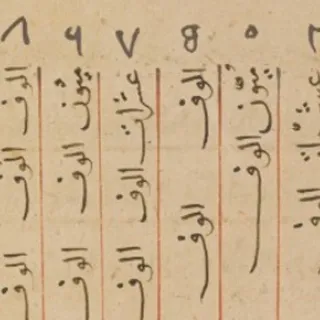
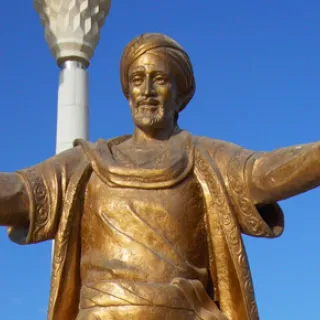
We now talk about "Arabic numerals" but we often completely ignore the successive or competing notation systems that were used in Islamic countries. Similarly, it is said – and readily repeated – that algebra was born with al-Khwārizmī, and one sometimes knows that he was interested in inheritance questions to refine his solving methods, but who has ever looked at the exact way he approached them? We also often forget all the other mathematicians, particularly those who came later, who structured algebra over the centuries. And one should not neglect all the development of arithmetic, especially recreational, which could pervade many texts sometimes with no apparent connection to mathematics.
The barycenter
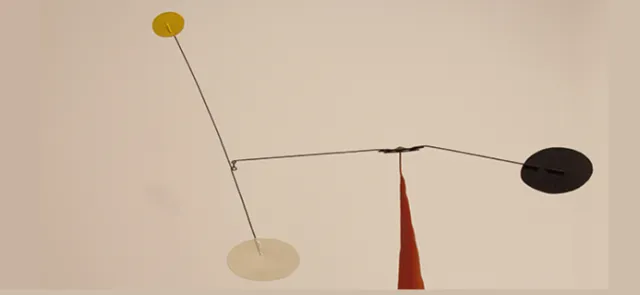
The mathematical concept of barycenter, derived from that of center of gravity in physics, was only introduced in the 19th century. This system of weighted points becomes an essential concept in geometry as it leads to wonders. Its famous law of associativity is found in many proof tricks and allows, with the notion of barycentric coordinates, to solve, regardless of the dimension of space, multiple problems, often without calculation: alignment of points, concurrence of lines, locus of a point in the plane or in space... Born from the laws of equilibrium in physics, which one can, for example, observe in the mobiles of artist Alexandre Calder, the barycenter today has limitless applications, from astronomy to horseback riding, from engineering sciences to sports.



The cross-ratio
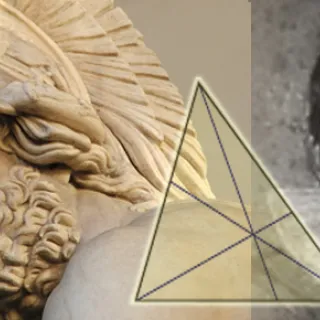
In modeling visual perception, the Renaissance painters brought forth a new geometry to represent depth. Nothing seemed to be preserved, except a strange relation linking four collinear points, the cross-ratio, which however, since Antiquity, had been glimpsed by Menelaus and Pappus. This invariant, which emerges from the concurrence of four lines, allows geometric constructions and elegant proofs, even in a non-Euclidean setting. It offers a different perspective on the plane, by abolishing the reign of the notions of angle and distance.

The different ways to solve problems
At the time of smart tanning, take advantage of this issue to clean up your neurons by solving mathematical puzzles, some of which are out of the ordinary! How? Don't panic! Our feature will get your brain back in the saddle by reminding you, with examples, of the main proof techniques. The essential induction and the inexhaustible pigeonhole principle are obviously on the menu. From Alcuin of York in the past to Terence Tao today, great mathematicians have always been fond of beautiful problems, while popularizers, like Martin Gardner, excelled in the art of leading you to an elegant solution.



The family of algebraic numbers
In the universe of real numbers, when one is not transcendental, one is algebraic. That is to say, for the latter, solutions of an algebraic equation with integer coefficients. This is the case, for example, of all numbers constructible with a ruler and compass. But even if some can be written using radicals, this is not the case for all of them and their study often brings us back to the theory of equations initiated by Galois in the 19th century. Another specificity of the set of algebraic numbers is to possess a structure: the sum, the product and the quotient of two of them is still algebraic. We are therefore in the presence of a field, a very important notion in modern algebra.

The foundational texts
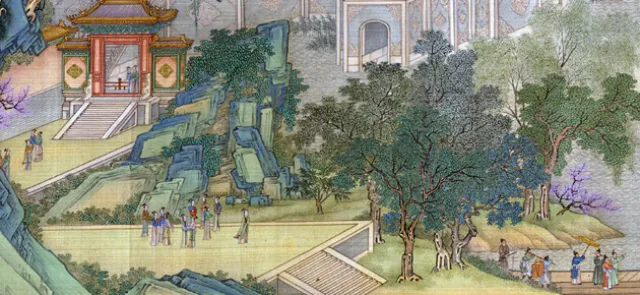
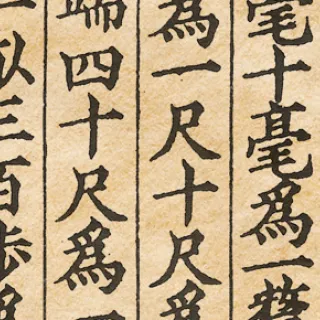
China represents the center of East Asian mathematics because its continued geopolitical power and its script used by other civilizations enabled all mathematical corpus written in Chinese to be read, adapted and deepened over the centuries. The texts that have come down to us are nevertheless not very numerous and are the consequence of the choices of successive dynasties. If the most famous – and oldest – treatise is The Nine Chapters, many other works have developed very advanced, original research and sometimes ahead of what was being done in Europe at the same time. Nevertheless, the so-called Chinese mathematics do not present themselves as a unity: that is where things become interesting!

The genius of John Conway
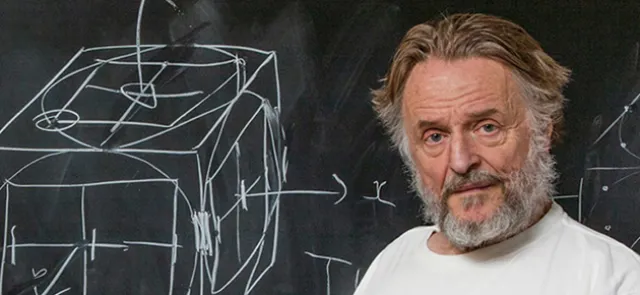
John Horton Conway, a brilliant mathematician, passed away at the age of 82 on April 11, in New Brunswick (New Jersey, United States). Both a creator with boundless imagination in many fields – especially games – and an exceptional popularizer, he embodied the ideal mathematician that Tangente could dream of. Through his talent, John Conway advanced mathematics in various fields: finite groups, number theory, geometry and geometric topology, theoretical physics, combinatorics and game theory. But it is more particularly the "Game of Life" that made him famous, allowing a wide audience to discover mathematics in a new light, both playful and profound. This game was used, among other things, for modeling the spread of an epidemic. Tragic coincidence, it was complications related to the coronavirus that claimed the life of its creator.