Folders
Discover how great mathematicians shaped our world, explore the links between math and other fields like art, music, or even philosophy, and relive the key moments that marked its evolution.
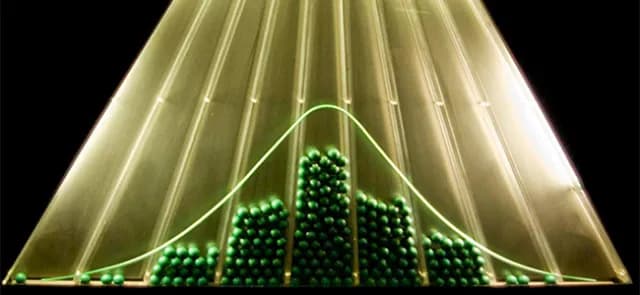
The saga of theorems Central Limit Theorem
It's astonishing, but chance is governed by a law! The normal distribution is ubiquitous in mathematics and more generally in all sciences. How Gauss sensed it through astronomy and Laplace through extension of the binomial distribution? What makes it so powerful? What role does the central limit theorem play in this adventure? Opinion polls are an application of this result, but their reliability must be taken with a grain of salt, as errors are due to the choice of samples and the methods used.
The sphere
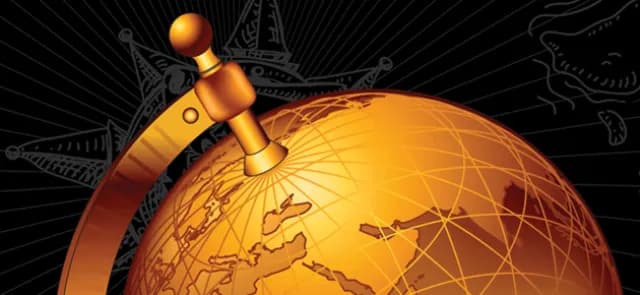
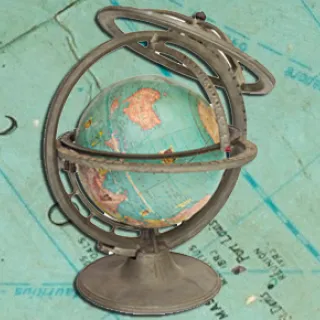
The sphere is one of the most elementary objects in geometry. To study it, since Archimedes, treasures of ingenuity have been deployed. The most famous of them is the one we inhabit, but it took centuries to become convinced that the Earth is 'round'! And the multiple attempts at cartographic representations have given rise to mathematical developments that have sometimes held quite a few surprises. Each projection of the globe onto the plane generates its share of deformations, transformations of areas, modifications of properties. Thus, the stereographic projection preserves angles, but not distances. How to choose 'the' right way to visualize this object? Depending on the characteristics to be preserved, various types of transformations have been devised. And if we took the time to revisit the properties of the sphere?

The thousand and one lives of Benoît Mandelbrot
Mandelbrot understood that, far from being mere mathematical curiosities, fractals, these self-similar objects, could constitute a powerful description of vast fields of the real world. Thus he offered a new perspective on an entire branch of mathematics, while showing how relevant fractal models could be for the study of nature or for modeling stock market fluctuations. But if Benoît Mandelbrot's name is associated with fractals, particularly the one bearing his name, we often forget that he also worked in many other fields: aerospace, information theory, linguistics…


The truth about the golden ratio
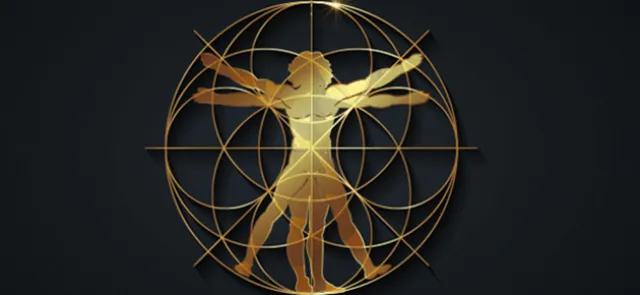
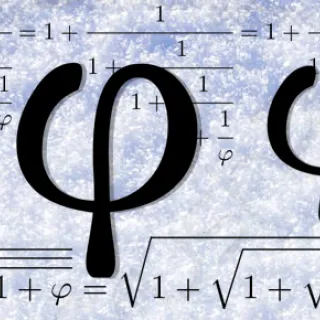
The golden ratio can be simply defined by the quadratic equation of which it is one of the roots. But its multiple geometric and arithmetic properties made it a mystical object at certain times. Discovered in ancient constructions or in our natural environment, it has even, under the name "divine proportion", been considered as the aesthetic canon of works of art, or even, since the Pythagoreans, as proof of the harmony of the world. This feature aims to place it back in an objective universe by separating the mathematical constructions, how clever they are, that it has allowed, from the deliriums of which it has sometimes been the object.
The universe of our color screens
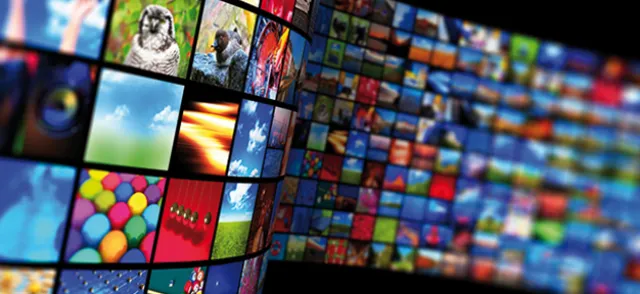
The screens have invaded our daily lives: computers, tablets, televisions, smartphones, we barely communicate anything but through them. We are also becoming increasingly demanding about the quality of their resolution. The transition from the small black-and-white formats of the early 1950s to today's large screens with vivid colors can only be achieved thanks to astonishing progress, both in terms of signal transmission and their compression. Exploiting the peculiarities of our visual system, the JPEG format and its various derivatives deliver images considered sharp while remaining of an acceptable "weight." To achieve this, a transformation inspired by Fourier's work produces excellent results.


The wonders of logarithms
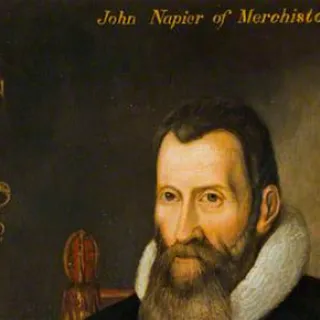
What a strange character Napier was! Having passed away exactly four hundred years ago, this mathematician managed to transform multiplication into addition and raising to a power into multiplication. He invented logarithms for this purpose, which would enable immense scientific progress. It would later be understood that the logarithm maintains a reciprocity with the exponential function, thus allowing for a development of differential and integral calculus. Although nowadays logarithm tables have been relegated to the attic, logarithms remain a very useful tool, well beyond mathematics.

There was once a cone
It all begins with Apollonius of Perga, whose monumental treatise laid the foundations of a geometry that would not be surpassed for two millennia. The xvii th century will overturn everything: Descartes, Pascal and Desargues seize upon conics and transform them, blending algebra, perspective and theory. Kepler – a genius astronomer but also a prodigious mathematician – is undoubtedly one of the first to unify the concept of a conic into a coherent object which he explores both in the study of polyhedra and in that of celestial orbits. Finally, projective geometry, by bringing infinity to the same status as the finite, reveals that behind the diversity of curves lies a profound unity.

Tilings of the plane
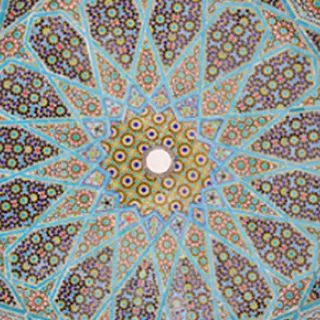
Regular tilings and friezes are now rigorously catalogued, but their diversity far exceeds initial intuition. In the 20th century, group theory indeed put an end to their apparent variety, thanks to the introduction of notations both clever and powerful. The subject seemed barely closed when non-regular tilings were discovered! Mathematician Roger Penrose and engraver Maurits Cornelis Escher were the precursors of these astonishing and magnificent new mosaics... whose riches Muslim artists had already glimpsed!