




This issue is not fully translated into English yet; only translated content is shown.
Read the French versionAll folders in this issue
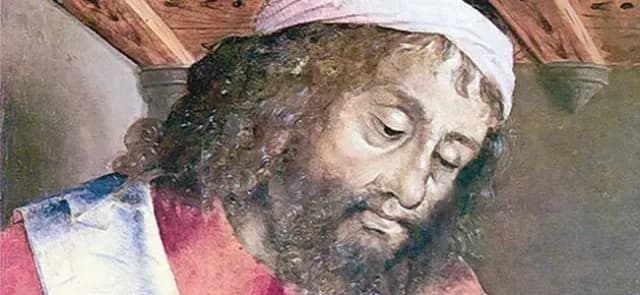
Euclidean Division
Division, the most difficult of the four elementary operations, has the unpleasant tendency to not always "come out even"; it then admits not only a quotient, but also a remainder: this is Euclidean division. Why does it owe its name to Euclid? It is because with the Greek mathematicians, Euclid in particular, numbers moved from the concrete – with the different algorithms that make it possible to arrive at the result – to the abstract. This approach is indeed the source of many properties, ranging from everyday use (such as the making of calendars) to the most advanced mathematics (such as quadratic residues) via a classic: divisibility criteria.


Should the bac be abolished?
The bac, created in 1808, is "a social and political institution," as sociologist Émile Boutmy already wrote in… 1899. If it was a benchmark, both in university and social terms, until the mid-20th century, it no longer plays this role, devalued by its level, in constant decline, and by its growing but increasingly artificial success rate. Yet it has its defenders, in a world where profound reforms are not the order of the day, and where, as Jean Dhombres explains regarding mathematics programs, one prefers to modify the existing through small touches that are juxtaposed until there are no longer any true guiding principles. This is what will feed a sensitive case!



Rolle's theorem
It is part of the basics of mathematical analysis. The theorem (or lemma) of Rolle states that a differentiable function that takes two equal values has at least one 'peak' where its derivative is zero. But who was Michel Rolle? Did you know that he was a fierce opponent of differential calculus? This led to a memorable dispute with Pierre Varignon. With its extension the mean value theorem, Rolle's theorem admits multiple applications: in pure mathematics such as certain methods for solving equations, but also in various fields such as finance for performing certain interest calculations.

All articles in this issue

Heine and the rigorous study of functions
Eduard Heine is not among the best-known mathematicians, even though his name is attached to a theorem on the uniform continuity of continuous functions on a closed interval.

The Liouville Journal
In 1832, the Annales de mathématiques pures et appliquées, better known as the Annales de Gergonne, ceased publication after twenty-two years.

A walk through Porto: in the footsteps of Gomes Teixeira
When we think of Porto, we think of its wine, its river and bridges, or the much-missed filmmaker Manoel de Oliveira. We never think of its mathematician, Francisco Gomes Teixeira Costa! Let's revisit the Portuguese city by following in his footsteps.

Number theory: a wealth of news!
An unexpected bias in the distribution of prime numbers has just come to light. At the same time, Andrew Wiles receives the Abel Prize.

A sculptor of polyhedra in Paris
In the "Village Saint-Paul" in Paris is a shop called Cabinet de curiosités géométriques, where numerous polyhedra pile up. Our editorial team got in touch with its owner, Sylvain Calvier.

Babies love numbers too
"At three days old, babies are sensitive to a ratio of 3 to 1. They can tell 3 and 9 apart, 4 and 12. At six months, it's 2 to 1. At nine months, 3 to 12."

Rademacher's interesting mistake
The German-born mathematician Hans Adolph Rademacher (1892-1969), a professor at the University of Pennsylvania, was a giant of number theory.

Mathematician and pianist: a winning composition
The final of the 27th international competition for great amateur pianists, bringing together 92 candidates from 27 different countries, took place on April 10 at the grand amphitheater of Assas in Paris.

On the trail of a forgotten book
The Éléments de trigonométrie rectiligne (Elements of Rectilinear Trigonometry), written by a mysterious F.J., were found in the trash of a religious institution in Damascus in the early 1990s.