



Mathematical Themes
Explore the major mathematical themes: geometry, algebra, analysis, arithmetic, logic, and many other fascinating fields.
 Podcast
David Hilbert's overhaul of geometry | Tangente
Though Euclid's axiomatization remained in force for a long time, it was amid the ferment of the German academic world in the nineteenth century that mathematicians began to feel it needed to be rebuilt from the ground up. David Hilbert took on the task in 1899.
 Podcast
The origin of mathematical rationality | Tangente
Formalization originated in ancient Greece with the project of constructing a coherent mathematical edifice, of which Euclid is the foremost representative.
 Podcast
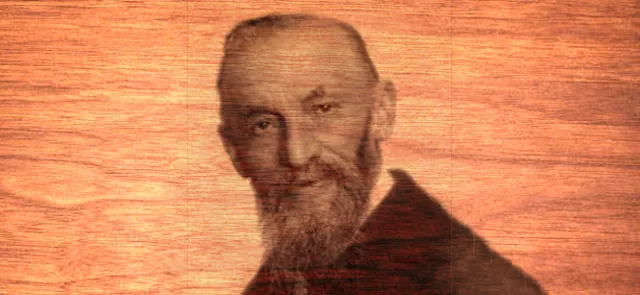
Giuseppe Peano and formalism | Tangente
The Italian mathematician Giuseppe Peano made major contributions to logical formalism by developing a symbolism for transcribing ordinary mathematical language. He also contributed to mathematical formalism by constructing systems of axioms for various fields.
 Podcast
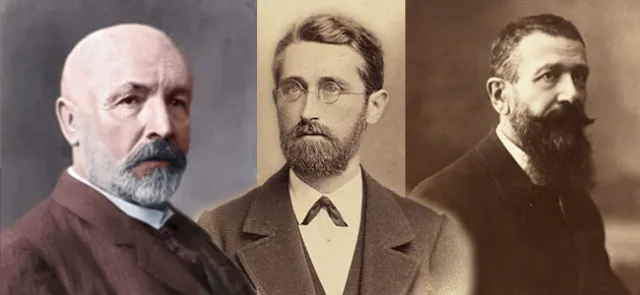
A panorama of set theory | Tangente
Work on the notion of infinity led to paradoxes. This forced mathematicians to formalize set theory. Progressive axiomatization led to the current ZFC system, which nonetheless remains subject to various shortcomings following the work of Kurt Gödel and Paul Cohen.
 Podcast
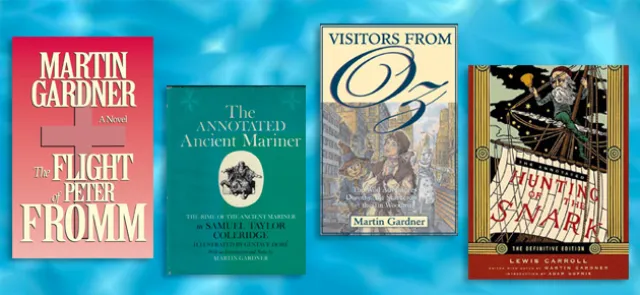
Martin Gardner's literary work | Tangente
Martin Gardner left behind, in literature and literary criticism, a rich, profoundly original body of work that, unfortunately, remains little known in its entirety. This article offers an overview.

Toward modern skepticism with Gardner | Tangente
Martin Gardner wrote extensively about science and its validity. He is thus recognized as one of the founders of modern skepticism, an important philosophy of science to bring to the fore in this age of post-truth.

Martin Gardner, mathematical influencer | Tangente
While it is true that Martin Gardner never took a mathematics course at university, he spent his life studying the subject through his work as a journalist, ultimately receiving numerous honors from the mathematical community.

Four mathemagic tricks
Martin Gardner knew how to blend magic and logic to captivate his readers. A tireless seeker of magic tricks, he explored the "27-card trick" in particular, and created many others besides.
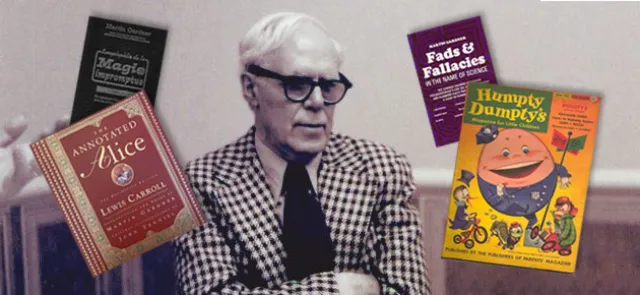
Martin Gardner: Itinerary of a genius | Tangente
Although he is known for his recreational mathematics and his work as a popularizer, Martin Gardner strangely never pursued a course of study in the discipline. Here are the surprising stages of his unusual path.

Al-Khwarizmi's lost manuscript | Tangente
Al-Khwārizmī is widely known as the father of algebra or as the scholar who introduced Indian numerals to the Arab world. Less well known is that the manuscript of his Livre de l’addition et de la soustraction d’après le calcul indien (Book of Addition and Subtraction According to Indian Arithmetic) is now lost.
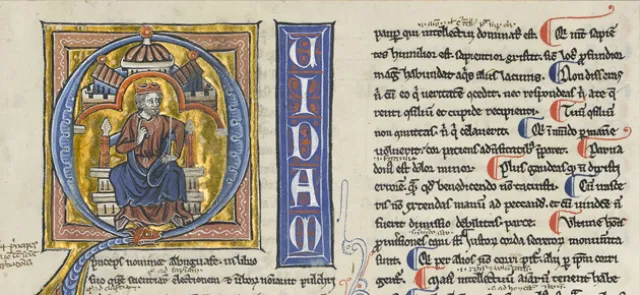
Gerard of Cremona, portrait of a translator | Tangente
The Latin translation movement of Arabic mathematical texts is marked by the towering figure of Gerard of Cremona. His monumental body of work brought a scientific revival to the Latin West.
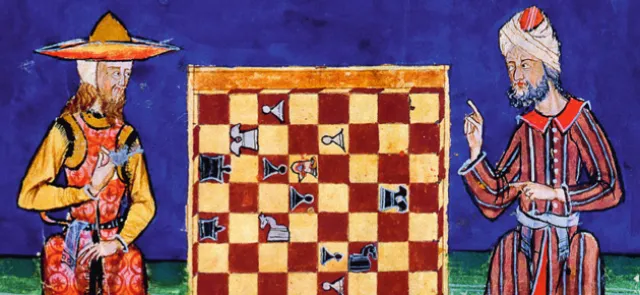
Arabic-Latin translations in the 12th century | Tangente
A movement that began in the twelfth century, the Latin translations and adaptations of Arabic mathematical texts were not merely a bridge between ancient Greek texts and the medieval West: they were also an opportunity to benefit from the formidable advances made by the Islamic world.
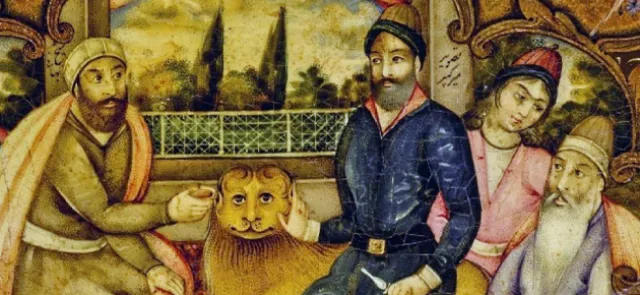
Arab mathematics after its golden age | Tangente
When we think of Arab mathematics, we think mainly of what was produced in the Middle Ages. Yet it continued to exist in later centuries. This sometimes meant the continuation of a tradition, but also translations into Arabic of texts written in European languages.

Thābit and the Pythagorean theorem
In Sur la preuve attribuée à Socrate au sujet du carré et de sa diagonale (On the Proof Attributed to Socrates Concerning the Square and Its Diagonal), Thābit ibn Qurra examines how squares can be dissected, taking as his starting point the famous example from Plato's Meno. This gives him an opportunity to present two proofs of the Pythagorean theorem and to generalize it.
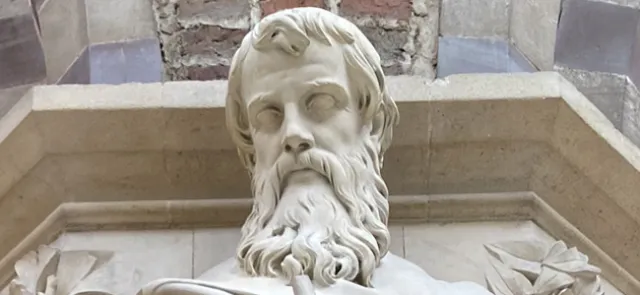
In search of Euclid's lost treatise On Divisions | Tangente
Several of Euclid's texts have been lost, including a treatise on the division of plane figures. Fortunately, the abundant commentaries and extensions written by Arab mathematicians have made it possible to investigate this lost manuscript.
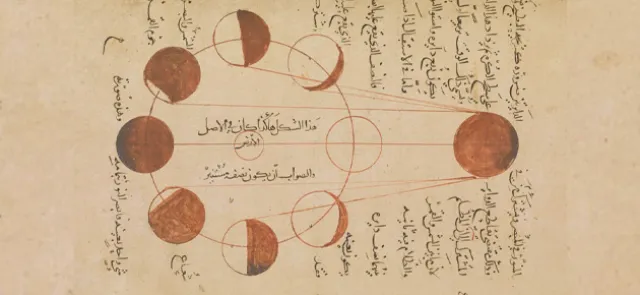
Al-Biruni reads Ptolemy: planetary distances | Tangente
Drawing on his extensive knowledge of the astronomy and mathematics of his time, al-Bīrūnī succeeded in making Ptolemy's highly complex method for calculating distances between the planets comprehensible. Devised in the 2nd century, it was a decisive step towards modern astronomy.
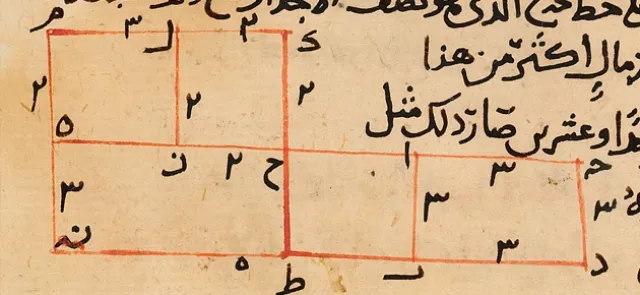
Al-Khwārizmī's geometry of equations
Quadratic equations have been solved by geometric methods, of varying degrees of sophistication, since Babylonian times. Similar methods appear in the works of Greek authors. But al-Khwārizmī was the first to set out a clear, general method.
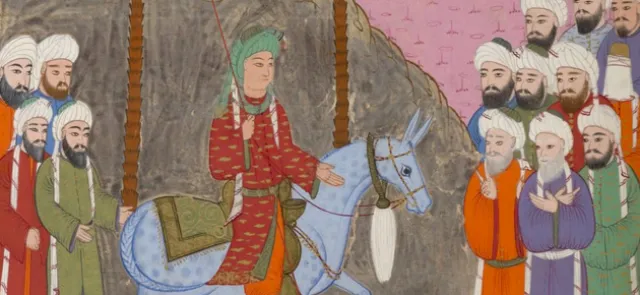
Recreational problems from the Arab-Islamic world
Mathematical recreations feature prominently in the Arab-Islamic tradition, yet they do not appear to have been collected in dedicated anthologies. Some examples, very well known in Europe, pose a real challenge to historians seeking to trace how they circulated.
Al-Zanjānī: teaching algebra in the 13th century
What we now group under the term "algebra" took time to develop into a discipline in its own right. Al-Zanjānī, the author of a 13th-century educational treatise, provides valuable evidence of the algebraic methods used in his day.
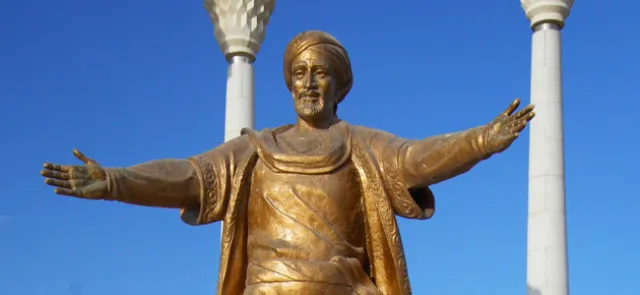
Dividing inheritances under Islamic law
Dividing an inheritance may seem like a mathematical question of little interest. Yet al-Khwarizm devoted a large part of his work to it because he saw it as an ideal playground for algebra.