



Mathematical Themes
Explore the major mathematical themes: geometry, algebra, analysis, arithmetic, logic, and many other fascinating fields.
Lovász and Widgerson, winners of the 2021 Abel Prize | Tangente
This year, the Norwegian Academy of Science and Letters has put theoretical computer science and graph theory in the spotlight.
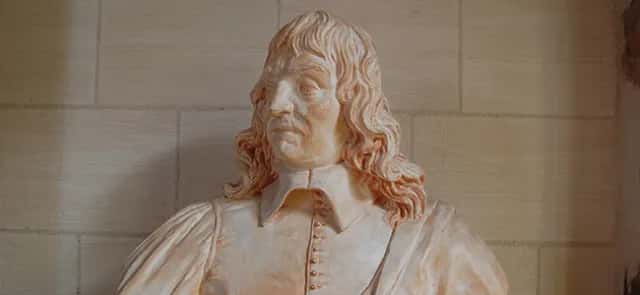
The emergence of Cartesian geometry
Greek geometers were the model for mathematicians when Descartes revolutionized geometry by introducing coordinates, making it possible to approach geometry through algebraic methods. Cartesian geometry was born.
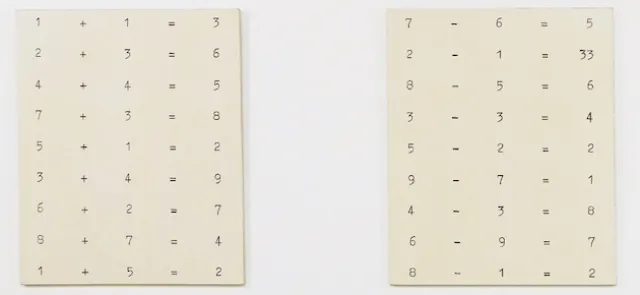
The artist and the number: art and maths | Tangente
Mathematics in general, and numbers in particular, have inspired many artists, including Dalí and Picabia. Some are drawn to the magic of numbers. Others find beauty in number sequences, which they bring to life in graphic art or painting.
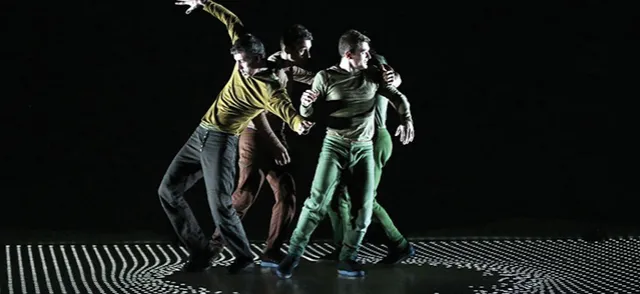
Art and mathematics: creative encounters | Tangente
Digital art takes many forms, surprising us with the new territory it explores. It can be 2D or 3D, static or moving, passive or interactive. It lies at the intersection of art and technology. How have artists moved from a mathematical concept to creating a work of art?
Mapping with Khartis: visualization | Tangente
Most data visualizations in the press are created with this open-source software, developed since 1995 by the mapping workshop at the Institut d'études politiques de Paris ("Sciences Po").
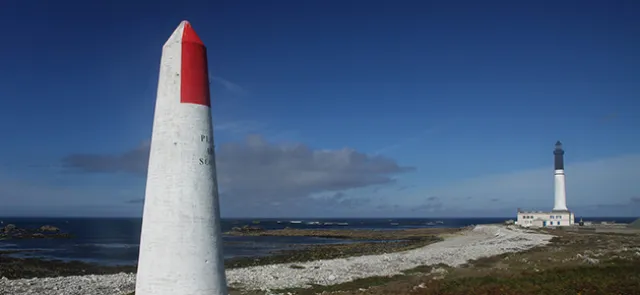
Finding your position at sea
How can you determine your position when sailing offshore or along the coast? With land in sight, one or two landmarks are enough. On the open sea, sailors’ ingenuity led to the invention of sophisticated instruments such as the sextant and the Cras plotter. A little geometry is essential to use them.
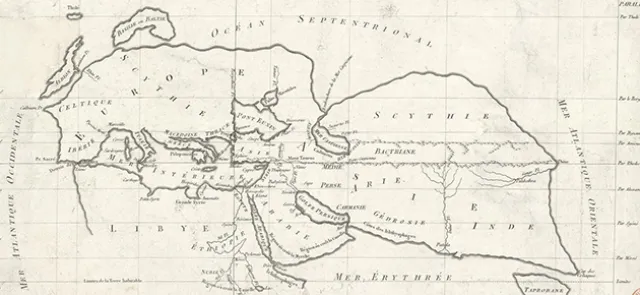
How not to lose your bearings
Since antiquity, navigators have sought to find their position at sea, first developing instruments and then maps before the practice was standardized in the 19th century. This practical and strategic use of mathematics endured for centuries before other tools superseded it.
Xenakis’s UPIC: mathematics and music | Tangente
One of the pioneers of the digital revolution in music was the composer Iannis Xenakis (1922–2001). Music has always had an underlying structure closely related to mathematics, but with a composer like Xenakis, this synergy found concrete expression.
Digital technology and music: benefits and limitations | Tangente
The introduction of digital technology into the arts was a genuine revolution. In music, that revolution took many forms.
Art, virtual tokens and blockchain | Tangente
The best-known blockchain is used to verify ownership of bitcoins in a way that is, in principle, tamper-proof.
Towards vector art: art and digital technology | Tangente
If contemporary art has been marked since the twentieth century by a succession of avant-garde movements, most often breaking with their predecessors, today's digital art is no exception.
Two and a half centuries of optimal transport
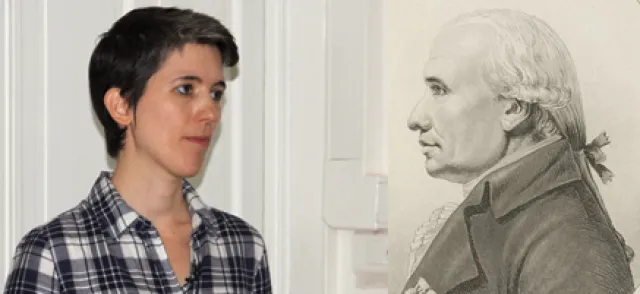
Moving a pile of sand, transferring colors from one image to another, minimizing a group’s travel time—all these problems can be tackled using optimal transport. Gaspard Monge pioneered a theory that computing has made remarkably effective.
Nivat's conjecture
Although easy to state, questions in discrete mathematics are generally hard to solve. Progress often comes when a problem is linked to another field. This is the case with Nivat's conjecture, which has resisted mathematicians for more than twenty years.
Teja Krašek in Escher's footsteps | Tangente
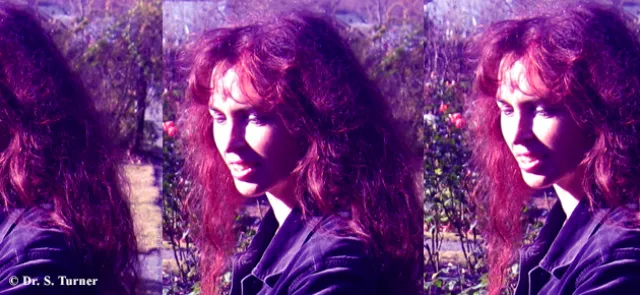
Born in Celje, Slovenia, Matjuska Teja Krašek (pronounced "Teyla Krashek") lives and works in Ljubljana. Her work draws on her fascination with symmetry, fractals and, more broadly, the beauty she sees in mathematics. She agreed to share her passion with us.
The Mercator projection
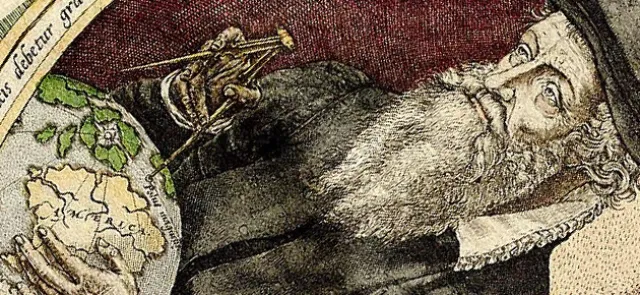
The best-known maps are based on the famous Mercator projection, named after its Flemish creator, who worked in the early Renaissance. Yet this projection relies on mathematical concepts developed well after the scholar’s death! So how could he have constructed his world map?
The Zodiac's encrypted messages | Tangente
At the turn of the 1970s, a serial killer was at large in California. What set him apart was that he communicated with the police through seventeen letters, four of them encrypted. The first was deciphered in 1969; the second has only just been cracked. These cryptograms put a new spin on classic cryptographic methods.
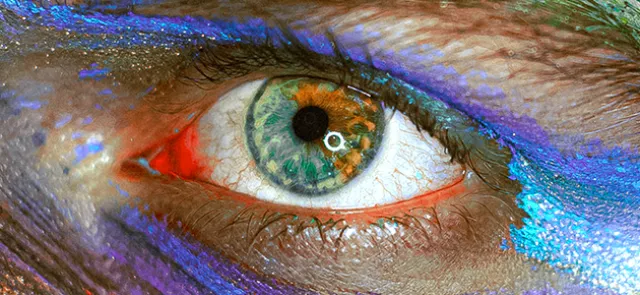
The magic of autostereograms
How can we see a three-dimensional object in a flat image? Glasses and stereoscopes offer technological solutions. Autostereograms, like optical illusions and trompe-l'œil, require no device or apparatus.
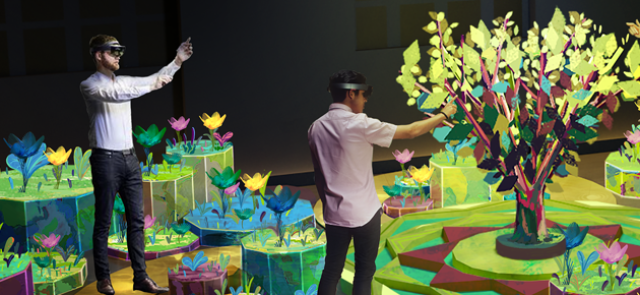
Holo-Math: a new way to visualize mathematics
The Holo-Math project grew out of a desire to offer an innovative form of public engagement, using mixed reality to help people visualize a mathematical concept. It will soon be up and running at the Institut Henri-Poincaré's brand-new Maison Poincaré.
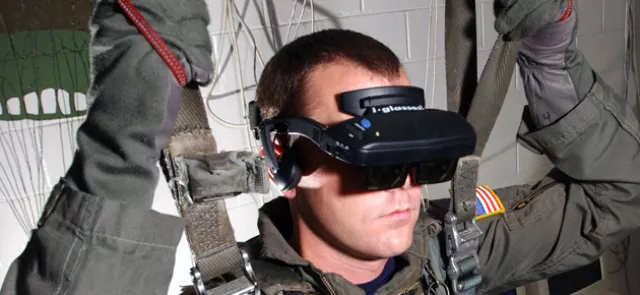
Representing three-dimensional objects
Digital techniques for creating 3D images have been developing since the mid-20th century. Initially driven by the needs of industry and later by those of a wider public, they offer numerous possibilities, including the representation of movement.
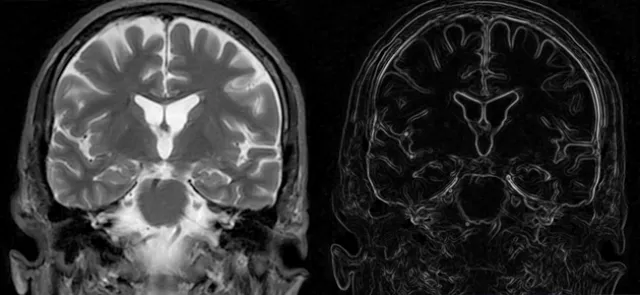
Image segmentation
Once a medical image has been obtained, an important step is to identify certain features within it, either to assist with diagnosis or to take measurements. The challenge is to partition the image into several regions. This is the realm of image segmentation.