



Mathematical Themes
Explore the major mathematical themes: geometry, algebra, analysis, arithmetic, logic, and many other fascinating fields.
Family reunion
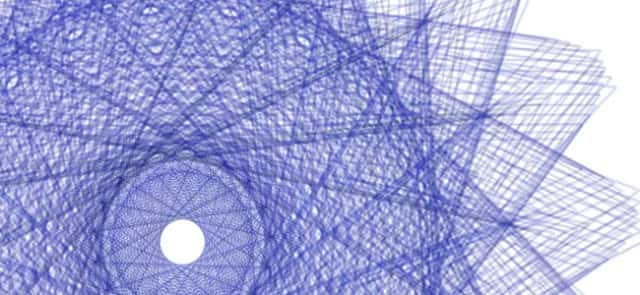
Some geometric figures are a delight to behold: a host of skilfully arranged lines, intertwined with a graceful curve that seems barely to touch each one. What mathematical theory lies behind them? The theory of envelopes of lines.
Telepathy
How can we be sure that the predictions made are not the result of a gift of clairvoyance? Profound results in probability, which sometimes seem counterintuitive, can help convince you that the results observed are in fact nothing out of the ordinary...
The art of making numbers talk
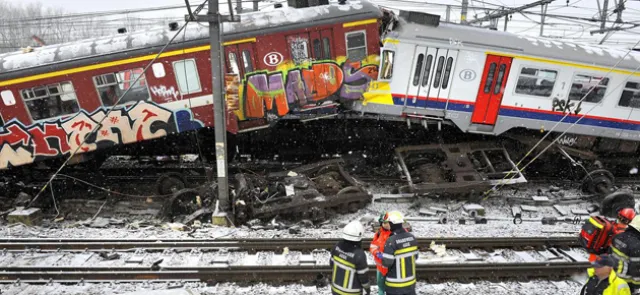
We are awash in numerical and statistical information. Yet even objective, accurate data can be interpreted misleadingly. A little calculation and a sound grasp of error theory can correct some unwarranted conclusions.
Objective and perceived reality: biases | Tangente
We are all subject to various biases arising from our senses, our experience, or the conscious and unconscious messages we receive.
Pushkin’s poetry and Markov chains | Tangente
Every written language has its own grammatical and lexical structure. Its sounds are represented by recurring patterns of letters whose combinations are far from chaotic.
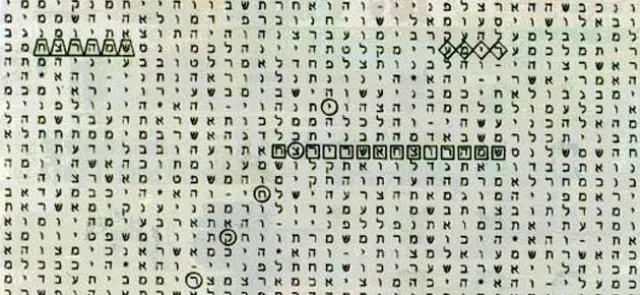
Demystifying the Bible's "secret codes"
Alain said: "You can prove anything you like; the real difficulty is knowing what you want to prove." With the advent of technologies that can produce fake documents, and everyone's desire to invent information that confirms their own ideas, this quotation has a bright future ahead of it...
The leading series on scientific skepticism | Tangente
Henri Broch founded the Book-e-Book publishing house in 2002 to publish works on scientific skepticism.
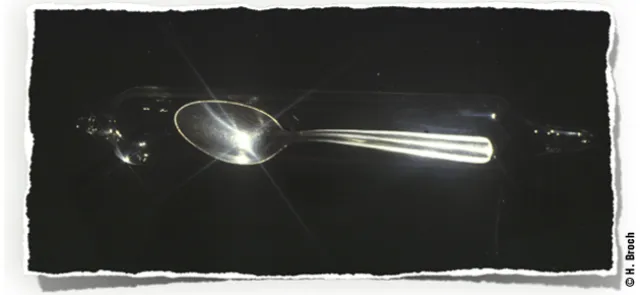
A mathematical approach to the paranormal
When it comes to the paranormal, it may seem easy to separate fact from fiction and use various tests and experiments to prove that a supposed medium or clairvoyant is nothing of the kind. Not so fast! Such protocols are difficult to set up, and few impressionable souls know about the Yule–Simpson paradox...
Zetetics, or the art of doubt
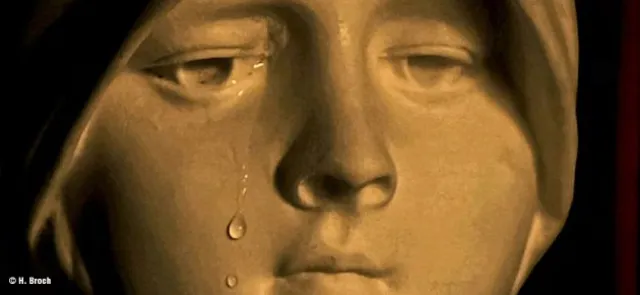
In recent years, zetetics has found its way into the science curricula of several universities. Contrary to a common misconception, its scope extends far beyond the mere study of paranormal phenomena…
Write for Tangente: 2019 competition and prize | Tangente
What if you, too, wrote for Tangente? To that end, the Club Tangente is getting an early start on its 2019 Best Article Prize (PMA), organized in partnership with the CultureMath website and the APMEP.
Play with 2019: curiosities and decompositions | Tangente
We thought 2019 was an unremarkable number. Not at all! As it does every year, the Tangente team has surpassed itself in uncovering its finer qualities.
Math-o-LU workshops launch in 2019 | Tangente
The Maison des mathématiques de l'Ouest, which brings together mathematics outreach initiatives across Pays de la Loire, and the Résonnance association, which runs dance and theater workshops linked to science, spearheaded a project to establish a mathematics club at Le Lieu Unique, a performing arts venue in Nantes (Loire-Atlantique).
Three exceptional mathematicians who have passed away | Tangente
The days following Christmas 2018 were particularly cruel for the mathematical community. In addition to Jean Bourgain, we learned of the deaths of Elias Menachem Stein (193–12018), Sir Peter Swinnerton-Dyer (1927–2018) and Sir Michael Francis Atiyah (1929–2019).
Jean Bourgain, Fields medalist, dies at 64 | Tangente
Belgian mathematician Jean Bourgain died on Saturday, December 22, 2018, following a long illness.
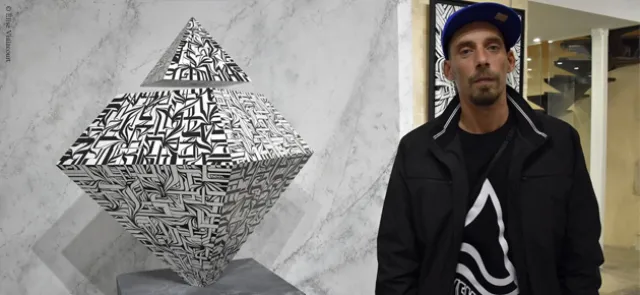
Astro: street art and optical illusions | Tangente
A painter and visual artist, Astro favors random structures and elementary geometric forms in both his paintings and his murals. Trompe-l'oeil, anamorphoses and other optical illusions also interest this self-taught artist.
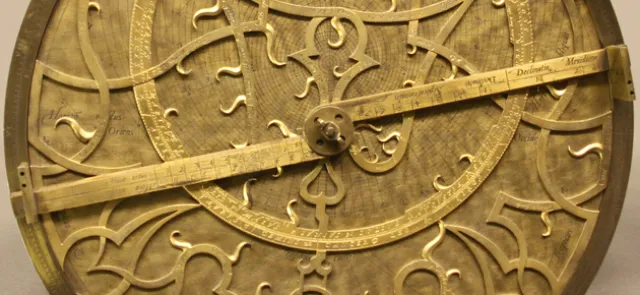
The planispheric astrolabe
The astrolabe is the scientific instrument par excellence! The king of measuring instruments, it ruled supreme for more than a thousand years. It has since lost its former glory, and few people still use it or handle it with nostalgia. Yet it offers a wonderful opportunity to put mathematics into practice.
Did Leonardo da Vinci invent the drone? | Tangente
Taken together, several studies and inventions foreshadow the advent of drones in aerial photography.
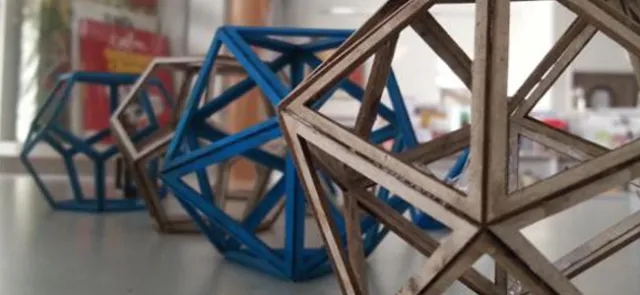
Leonardo da Vinci, master of polyhedra | Tangente
Leonardo da Vinci studied mathematics with Luca Pacioli, the greatest mathematician of the age. But the pupil soon surpassed the master! The artist-geometer's depictions of polyhedron nets upend some firmly held beliefs about the Renaissance.
Pythagoras: Leonardo's proof | Tangente
Leonardo da Vinci was not strictly speaking a mathematician, but the subject interested him, as it did many educated men of the Renaissance. We owe him an elegant proof of the Pythagorean theorem.
World harmony dictated by mathematics | Tangente
Beginning with painting, Leonardo da Vinci developed a vision of world harmony governed by mathematics.