



Mathematical Themes
Explore the major mathematical themes: geometry, algebra, analysis, arithmetic, logic, and many other fascinating fields.
Arata Isozaki: Pritzker Prize and geometry | Tangente
Japanese architect Arata Isokazi has just been awarded the Pritzker Prize, architecture's very own "Nobel Prize."
Richard Serra: sculptures and surfaces at the Guggenheim | Tangente
In his installation "The Matter of Time," Richard Serra takes us on a journey through eight monumental sculptures, created between 1994 and 2005 and installed in a gallery at the Guggenheim Museum Bilbao, Spain.
Football pitch as a unit of area | Tangente
In recent years, a new unit for measuring area has emerged. Let's see how to convert between units.
Surface and area in mathematics: a little terminology | Tangente
Everyday language often conflates the notions of surface and area.
Intellectual self-defense: zetetics courses | Tangente
Cortecs (Collective for Transdisciplinary Research on Critical Thinking & Science) is a teaching and research collective founded in 2010 to produce educational resources and scientific content, as well as courses and training in critical thinking, intellectual self-defense, zetetics and the scientific method.
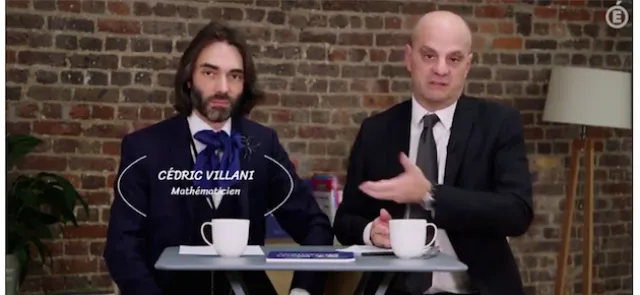
High school maths: education's vicious circle | Tangente
On January 24, 2018, the Villani–Torossian report, "21 Measures for the Teaching of Mathematics," was published, generating enthusiasm among the teaching community. That enthusiasm was tempered on February 12 by the announcement of the forthcoming high school reform.
François Viète and algebraic zetetics | Tangente
Henri Broch revived the word "zetetics." Long before him, François Viète (1540–1603) had already used it in a slightly different sense.

Theorizing conspiracy theory through mathematics | Tangente
We often encounter the outlandish claims made by conspiracy-theory enthusiasts. But can we use theory itself to show just how implausible they are?
Russell's teapot and the burden of proof | Tangente
We often hear the phrase "absence of evidence is not evidence of absence." This statement is ambiguous: many fanciful claims cannot be disproved.
Séphora-Berrebi scholarships: 2019 winners | Tangente
The four Séphora-Berrebi scholarships, each worth €2,000, are awarded to female doctoral or postdoctoral researchers who have distinguished themselves through their research in mathematics or computer science.

Maths Night 2019 in Tours and Blois | Tangente
For its fifth edition, the Maths Night festival, held in the Loire Valley, will feature talks, shows, exhibitions and films, all with plenty of humor and conviviality.
Félix, inventor bridging art and mathematics | Tangente
Sculptor, architect, engineer, mathematician? No doubt all of the above! Gérard Chamayou, known as Félix, was one of those who refused to accept barriers between disciplines, and his gift was to move among them with a provocative yet deeply humane spirit.
Three mathematicians honored in 2019 | Tangente
The 2019 L'Oréal-UNESCO For Women in Science Award went to Claire Voisin and Ingrid Daubechies. At the same time, Jean-François Le Gall received the prestigious Wolf Prize.
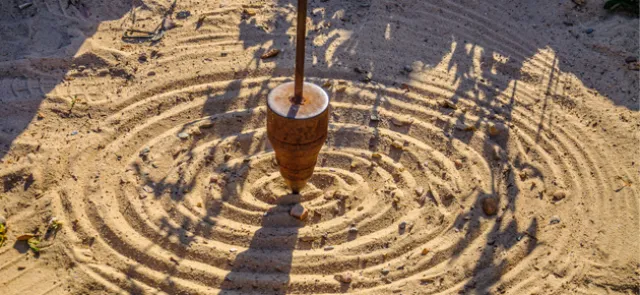
The cycloidal pendulum
The cycloidal pendulum has three key properties: it is isochronous, tautochronous and brachistochronous. Behind these learned names lie fundamental properties—so fundamental, in fact, that we owe nothing less than the birth of clockmaking to the pendulum!
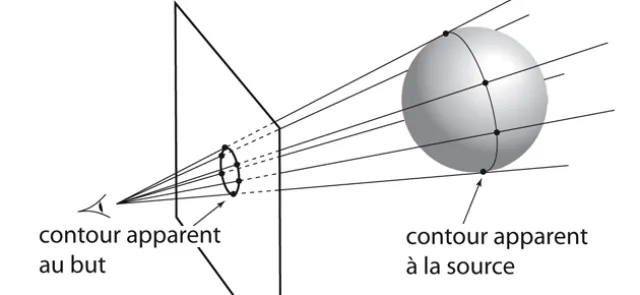
The envelope of a family of curves
Defining the envelope of a family of lines precisely is subtler than it appears. This becomes clear when we try to extend the idea to an arbitrary family of curves. René Thom's approach provides a way around the difficulties.
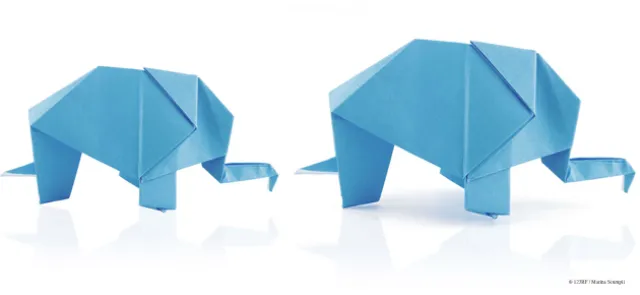
Envelopes by folding
Every regular curve is the envelope of all its tangent lines. For conics, these tangent lines are particularly easy to construct geometrically, making it possible to produce them by folding.
Knuth's octagons
The American mathematician Donald Knuth created TeX, a mathematical typesetting system based on Bézier curves.

Equilateral triangles from any triangle | Tangente
There are at least two ways to derive an equilateral triangle from any triangle T—in other words, to obtain a triangle with the greatest possible symmetry from one that initially has none.
Simson line and Steiner's hypocycloid | Tangente
This delightful geometric property was familiar to French secondary-school students in the 1970s, although few knew how to prove it.

Envelopes, moving points and evolutes
The envelope of a family of lines can be understood in two ways. The second lends itself better to computation, but both give rise to superb geometric questions.