



Mathematical Themes
Explore the major mathematical themes: geometry, algebra, analysis, arithmetic, logic, and many other fascinating fields.

The saga of economic indicators 3
Between 1909 and 1914, Corrado Gini carried out work aiming to calibrate the distribution of a nation's income.

The saga of the Nobel Prizes 3 | Tangente
When the collaboration between mathematics and economics results in Nobel Prizes being won...

The economist's toolbox: probability | Tangente
Collecting data only makes sense if the information is sorted, classified, and studied for useful purposes. Some data collections involve numerical data and can be processed statistically without manipulation. But this is not always the case.
The saga of the Nobel Prizes 2 | Tangente
Let's discover three prize-winning economists whose work drew heavily on other fields

The economist's toolkit: integral calculus
The concept of an integral can be useful in economics, for example to define an expected cost (see the article "Inventory management in a random environment")

The economist's toolkit: analysis | Tangente
Economics draws on several tools from mathematical analysis, including the derivative.

The saga of economic indicators 2 | Tangente
What does the consumer price index—the famous "housewife's shopping basket"—really measure?

The Nobel Prize saga, part 4 | Tangente
The Nobel Prize in Economic Sciences saga concludes with the economists honored for their research in finance.

The Nobel Prize saga, part 1 | Tangente
Contrary to popular belief, there is no Nobel Prize in Economics! Discover the truth about this prize...

The saga of economic indicators 1 | Tangente
What do these economic indicators we hear so much about in the media actually mean?
French economy boosted by mathematics | Tangente
Mathematics has a major socioeconomic impact in France. AMIES proves it!

Unemployment and energy supply: prob... | Tangente
Discover mathematician Hermann Laurent's proposal for putting unemployed people to work.

Emergence in economics | Tangente
Economics, too, has emergent properties! They create order despite apparent disorder, as if through "self-organization."
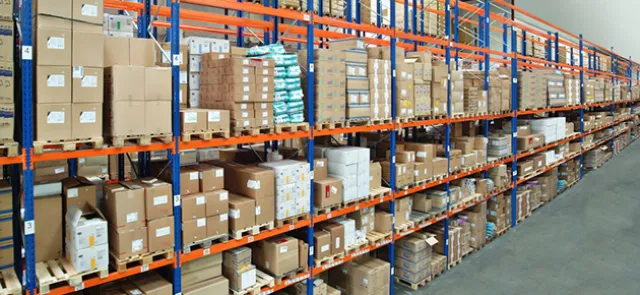
Inventory management in a stochastic setting
From small bakeries to hypermarkets, retailers face dilemmas with every product they sell. How much should they make available to customers? Too little, at the risk of losing sales, or too much, at the risk of being left with unsold goods? And, of course, at what price? A probabilistic model can help them decide.

Markov chains and workforce management
Markov chains are used to model memoryless probabilistic processes. By modelling internal promotions, they can help analyse and develop workforce management policies in very large companies.

An introduction to econometrics
Economic models are only simplified representations of reality. Econometrics provides a set of tools for estimating the parameters of these models and testing their validity. The trouble is, the closer we want to get to reality, the more complex the model becomes…
Formulas for public procurement
Fair competition, which follows from the Declaration of the Rights of Man, is, fortunately, the fundamental principle governing all public procurement. Yet the freedom to choose scoring formulas inevitably introduces an element of subjectivity.

What consumers prefer
How can we model the behavior of a particular consumer? Their tastes, needs and available budget all help shape their choice. The mathematical concepts of preference, indifference and utility should help us...

Money and inflation: two inseparable concepts
The desire for wealth fuels many people's ambitions and sometimes dictates their behavior. While no one now doubts the usefulness of money in our modern way of life (!), who knows its history? And how is money linked to inflation?
Economics in question
What is economics? Can it be regarded as a science? What role do mathematical models play in its analysis and development? Can they counterbalance decisions based exclusively on a dogmatic approach?