



Mathematical Themes
Explore the major mathematical themes: geometry, algebra, analysis, arithmetic, logic, and many other fascinating fields.
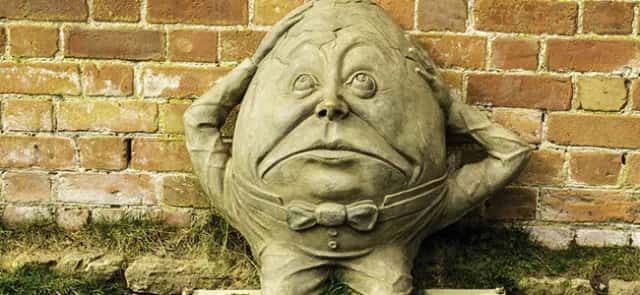
Meta-comprehension: an insidious effect in maths | Tangente
How do mathematicians choose names for new concepts? They draw inspiration from the world around them and from the mental images these new objects evoke. In the process, everyday words take on new meanings, sometimes causing confusion...
Speaking, seeing, comparing: Five historical texts
Mathematical writings contain words, but also signs, symbols and figures. Texts are therefore meant to be looked at as much as read, as works of geometry from antiquity to the present day attest.
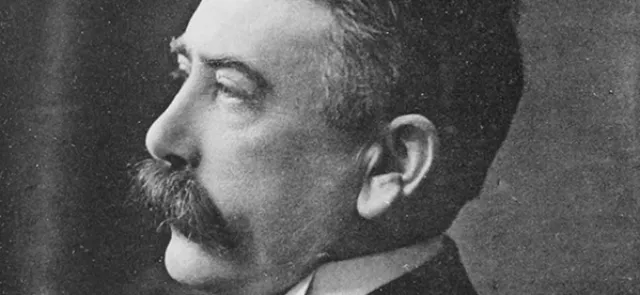
The structures of language
Inspired by formal logic, the study of language as a structure developed under the influence first of Saussure and then of Chomsky. Statistics, meanwhile, can be used to analyze texts and are an indispensable tool for machine translation.
From sentence to formula
Before the 20th century, everyday language played a prominent role in mathematical writing. Did that necessarily make it easier to read? How did the balance between descriptive sentences and concise formulas emerge?
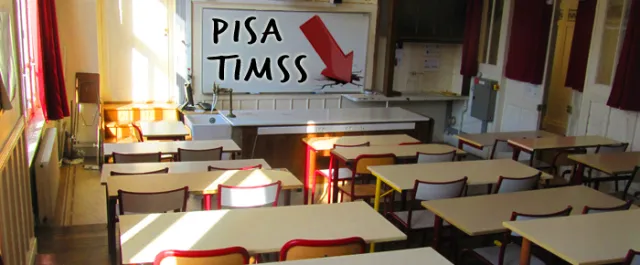
TIMSS and PISA: The latest developments in mathematics assessments
The recent publication of the PISA and TIMSS results unleashed a media storm, so poor were the scores of young people in France. But rather than settling for a few simplistic figures and reductive statistics, what if we took a closer look at what these assessments actually measure?
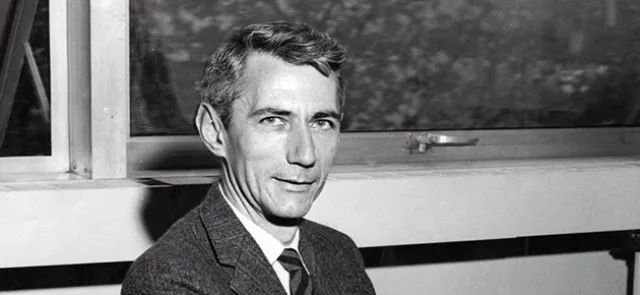
Claude Shannon and the dawn of the digital age
The year 2016 marks the centenary of Claude Shannon's birth. He was one of the driving forces behind today's digital revolution. John von Neumann, Alan Turing and other visionaries gave us computers, but Shannon introduced the modern concept of information.

A “little” theorem for major advances
Fermat's “little” theorem is surely one of the most fruitful results in arithmetic. Ever since it was first stated in 1640, mathematicians have made constant use of it. Euler even proposed a sweeping generalization. Let's take a closer look…
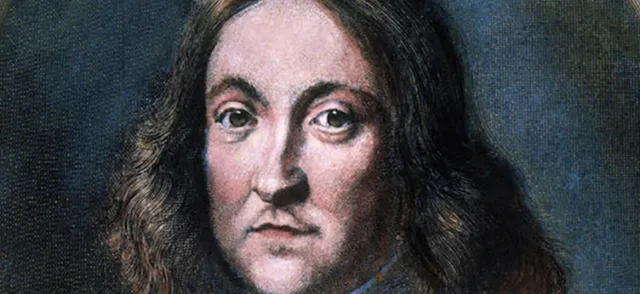
Fermat and his little theorem: history | Tangente
In the 17th century, Pierre de Fermat, though not a professional mathematician, was one of the pioneers of number theory. Less famous than his "last" theorem, whose proof has yielded more applications than the statement alone, his "little" theorem is immensely useful to us.
Marcel Berger: a life devoted to geometry | Tangente
Everyone who met Marcel Berger (1927–2016) will remember this tall, athletic, resolute man with a strikingly intelligent gaze vividly.
DGF: the fifth-power formula finally scrapped | Tangente
Did Tangente help bring about the abolition of the formula for distributing France's general operating grant among municipalities?
2016 Nobel Prize in physics: topology wins | Tangente
On October 4 in Stockholm, no one expected the 2016 Nobel Prize in Physics to go to this trio of British researchers. Still less did anyone expect their research to be explained… with pastries!
Recursion: to program is to prove!
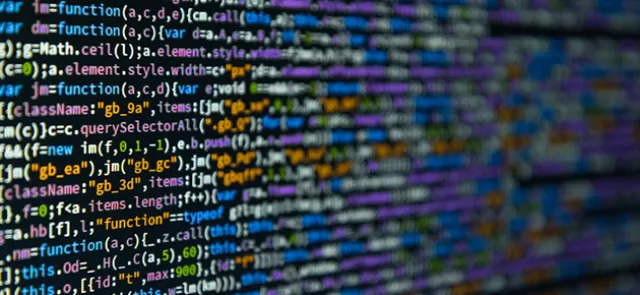
Recursion may seem like an arcane method to the uninitiated, but it makes programs easier to prove correct, and therefore safer. The key principle is that, with recursion, to program is to prove! Sorting a deck of cards illustrates this perfectly…
History of shapes: Geometry and art intertwined | Tangente
Mathematics inspires artists, as a wonderful exhibition at Les Tanneries, on the banks of the Loing in Amilly, Loiret, demonstrates.
2016 US election: an analysis of the electoral system | Tangente
The outcome of the US election did not match the forecasts based on opinion polls. What happened?
RSA encryption explained by example | Tangente
RSA underpins the encryption of financial transactions.
Fermat's little theorem in practice | Tangente
Fermat's little theorem is used to test whether a number is prime. Here is how.
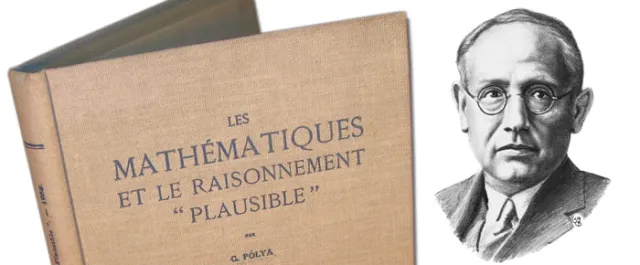
Psychological experiments in arithmetic
Like any other scientist, a mathematician makes use of experiments. But these do not necessarily resemble those conducted in other sciences: carried out mentally or on a sheet of paper, they are usually psychological in nature!
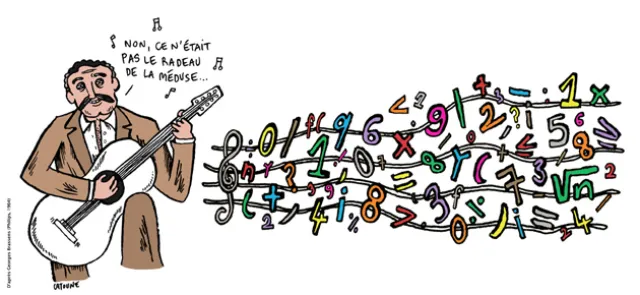
In search of friends
Integers never cease to fascinate us: divisibility raises some formidable questions, as several conjectures about perfect numbers attest. Here, experimenting with a computer is a valuable aid in the hunt for counterexamples.
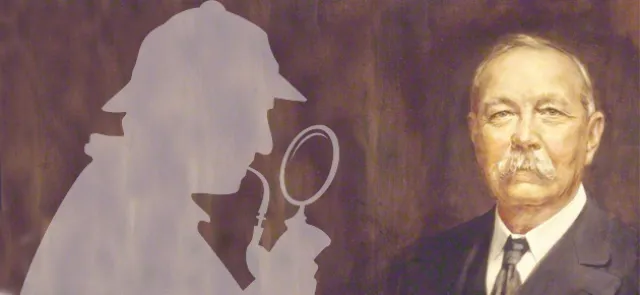
Deduction, induction, abduction: three forms of logic | Tangente
A host of tiny clues leads the detective Sherlock Holmes to formulate a theory, moving from the particular to the general. He is well aware that his method leads to the truth only if it is confirmed by the facts—that is, by observation!

Simulation and proof: two complementary approaches
Some problems involving chance are easier to solve by simulation... but a proof is always more convincing! Although simulation produces a result more quickly in practice, the value of a theoretical study lies in its generality.