



Il est des biographies qui sont plus éloquentes que d’autres. Celle de Poincaré en est un parfait exemple. Si l’on en croit l’historien André Bellivier, « sa vraie vie respire dans sa jeunesse jaillissante ».
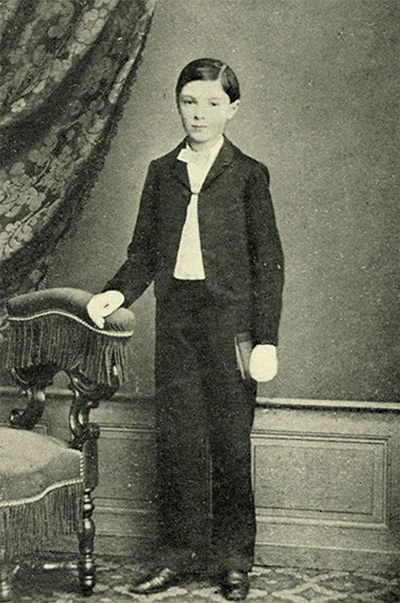
Henri Poincaré en 1865.
En 1867, alors qu’il vient de visiter l’Exposition universelle, le jeune Henri, 13 ans, a l’idée de fonder, dans le grand jardin d’Arrancy (Aisne) où il passe ses vacances, un triple gouvernement, une sorte de fédération qu’il appelle la Trinasie.
La Trinasie est une sorte de « Nouvelle Atlantide », un modèle social et politique, une utopie incarnée. Poincaré en élabore la Constitution, se charge de distribuer les ministères, invente même des langues particulières pour les trois royaumes, qu’il partage avec sa sœur et son cousin, ses partenaires de jeu. Les questions politiques sont au cœur de la réflexion du jeune Henri. La recherche du meilleur gouvernement est l’un des enjeux de ce monde inversé.
La propriété d’Arrancay devient l’incarnation de ce royaume fictif, la maison et le jardin sont divisés selon des territoires égaux. Cette vue de l’esprit est pour le jeune Poincaré une expérience féconde, qui lui permet de prendre toute la mesure de l’exercice du pouvoir et des luttes d’intérêts qui le rendent possible.
Mais la Trinasie devient aussi un véritable atelier de création. Poincaré y rédige des comédies à l’occasion de galas organisés par sa famille. Il écrit même un drame en vers sur Jeanne d’Arc. Le jeune homme manifeste de fait, dès le plus jeune âge, un intérêt particulier pour la langue française et les humanités.
La Trinasie préfigure en quelque sorte l’identité intellectuelle de Poincaré, la sensibilité universelle et les engagements politiques à venir.