



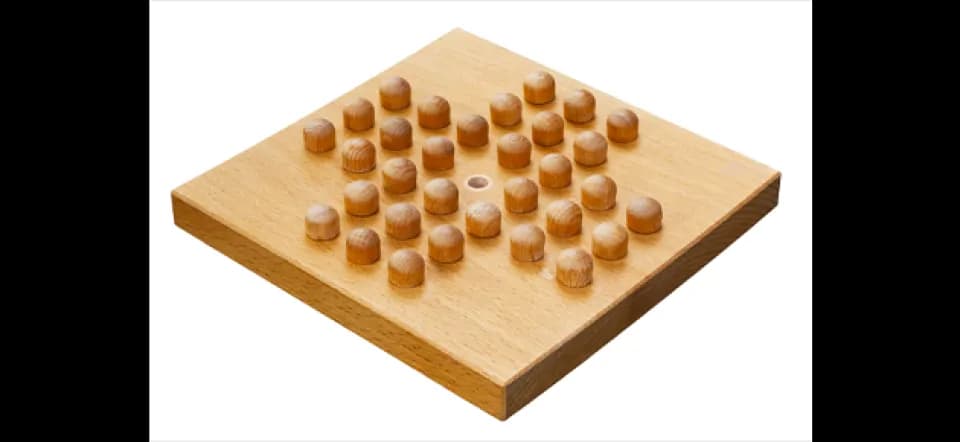
Le jeu du solitaire est bien connu : déjà pratiqué à l’époque romaine, il s’est répandu en France à partir du XVIe siècle et il est toujours commercialisé de nos jours. Si les plateaux usuels sont en forme de croix, cet article se contentera de la version du jeu à une dimension, sur un plateau de n cases numérotées de 0 à n ‒ 1.
À chaque tour, un pion, comme au jeu de dames, peut prendre l’un de ses voisins si la case suivante est vide. Voici un exemple de prise où le pion 4 prend le pion 3 en allant vers la case 2.

Au départ, le plateau est entièrement rempli et on peut retirer le pion de son choix pour commencer à jouer. Il faut ensuite enchaîner les prises pour terminer avec un seul pion sur le plateau. Est-il possible de gagner ? Si oui, comment ?
Commençons par regarder les petites valeurs de n. Pour n = 3, on peut gagner en supprimant le pion à l’une des extrémités, alors qu’en retirant le pion central, on est bloqué.