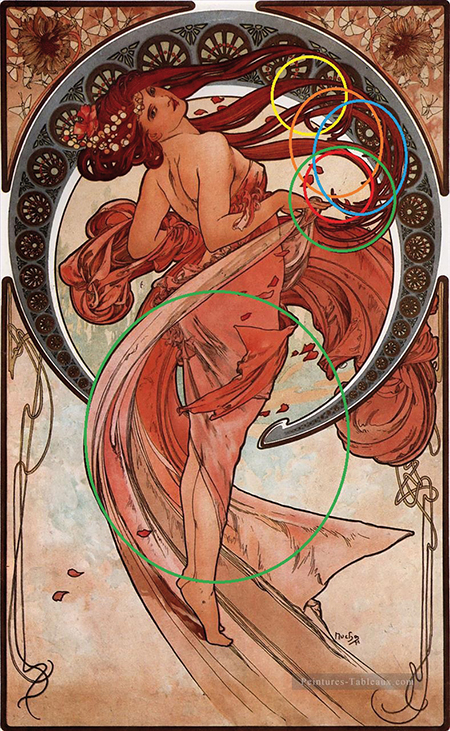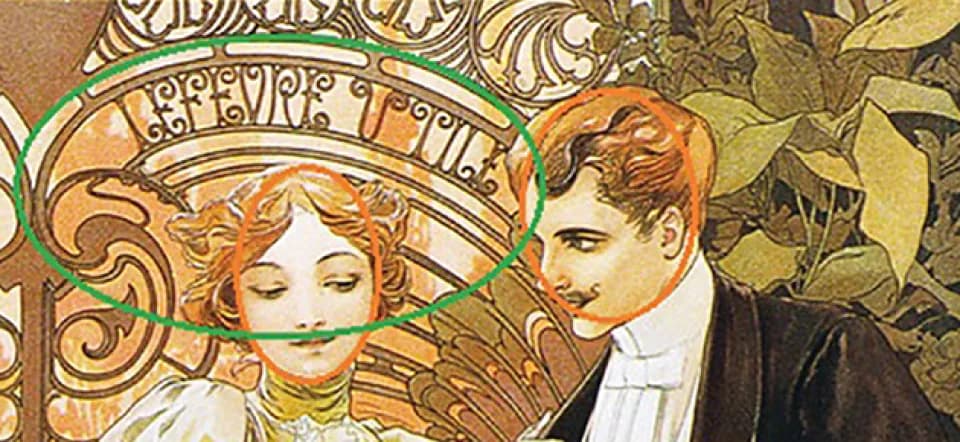
The end of the 19th century witnessed a genuine artistic counter-revolution, born of opposition to poor-quality mass production and rampant industrialization. It originated in Great Britain. In England, the Arts and Crafts movement (“arts and crafts”) began to emerge as early as 1860; it aimed to restore the value of craftsmen’s work by rediscovering handwork. The ideology underlying this return to roots spread throughout Europe, giving rise, during the final decade of the century, to Art Nouveau in Belgium, France and Czechoslovakia, to Jugendstil in Germany and Austria, and even inspiring the Mingei movement in Japan.
Breaking down barriers
----------------------
The achievements of all these movements in architecture are generally well known (see Mathematics and Architecture, Tangente Library 60, 2017), but the value of craftsmen’s work was reaffirmed in every field, and Art Nouveau became an all-encompassing art movement, breaking down the barrier that had until then existed between “major” and “minor” arts and seeking to offer everyone an ideal aesthetic world, even in the smallest utilitarian object. It therefore encompassed painting, sculpture and architecture, as well as cabinetmaking and the production of cutlery, lamps, jewellery and glassware. By favouring curves and arabesques, it advocated a rediscovery of nature (fauna and flora), while also multiplying depictions of women.