



All articles
Dive into the fascinating world of mathematics with our captivating articles, written by passionate experts. Whether you are a curious amateur or a seasoned mathematician, our articles cover a wide range of topics, from fundamental concepts to the latest discoveries, including practical applications and philosophical reflections.

Editorial
Évariste Galois is one of the best-known mathematicians—and also one of the least understood.
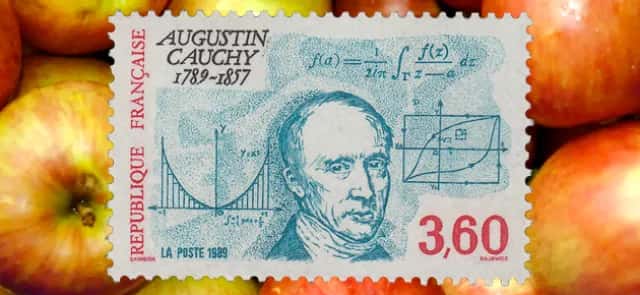
Cauchy, a forgotten pioneer
Because Augustin-Louis Cauchy did not take a direct interest in solving algebraic equations, he is an overlooked figure in the history of group theory. Yet his research on permutations provided valuable tools for those who worked on Galois theory.
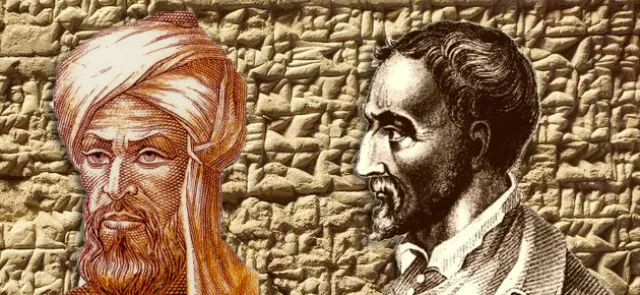
Before Abel and Galois
Until the end of the 18th century, algebra was essentially about solving algebraic equations. That chapter in the history of algebra closed with the work of Abel and Galois. Before them, what questions occupied mathematicians? What problems could they hope to solve?

Finite-difference schemes
Physics, biology, chemistry, mechanics and many other fields abound in phenomena that can be modelled mathematically using differential equations or partial differential equations. In general, these equations cannot be solved explicitly. We must therefore seek approximate solutions…

An epidemic of ODEs
In epidemiology, mathematical modeling has three aims: to understand, describe, and predict. Since the focus is on what happens in the "fairly distant" future, continuous-time models involving differential or partial differential equations are generally preferred.

Proving without saying a word
No drawing or diagram can ever replace a "proper" proof, but both can help make a proof self-evident. In this respect, proofs without words, so beloved of mathematicians, are a fine exercise in style. Some have become classics of the genre.
Models for biology
Historically, differential equations emerged in response to geometrical questions and problems in physics, particularly the study of planetary motion, pendulums and, later, heat diffusion. Yet they have plenty of applications in biology too!
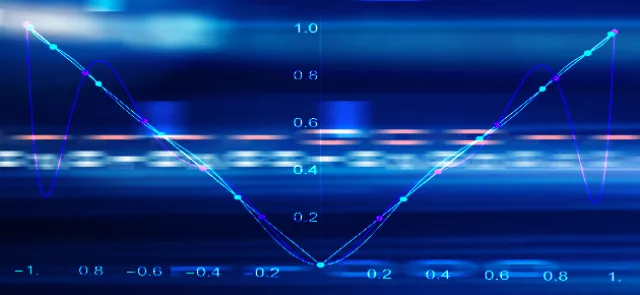
When numerical methods provide the solution
Except when a differential equation is linear or of a very special type, there is generally no exact method for solving it—that is, for finding a solution. We therefore often have to resort to approximation methods and numerical schemes.

A relationship between functions and derivatives
Historically, differential equations emerged early in the development of analysis, through problems in geometry and mechanics.

Graphs in literature | Tangente
The Oulipians have also explored the use of graphs and trees in literature.

Mary Everest Boole: Forming mental images | Tangente
For Mary Everest Boole, a graphical approach is essential to teaching.

Voronoi cells | Tangente
How a London doctor used Voronoi diagrams to combat cholera.
Graphical statics
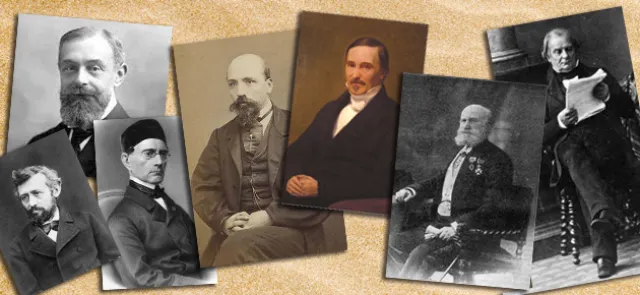
Have you heard of "graphical statics"? Rooted in mathematics, particularly geometry, it is the art of balancing the forces acting on a body… without any calculations. Surprisingly, the discipline originated long before vectors were introduced!
Nomograms
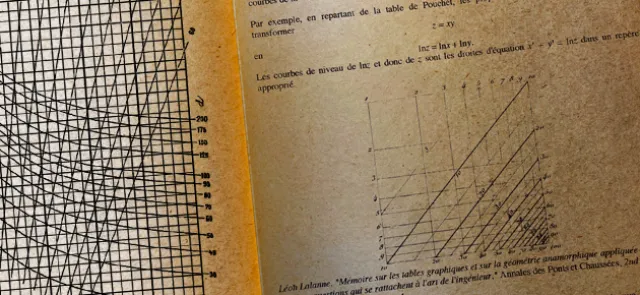
Arithmetic and geometry, the two traditional branches of elementary mathematics, come together in nomograms. But what exactly does this term, evidently derived from Greek, mean? What are nomograms used for, and how are they designed?
Lewis Carroll's diagrams
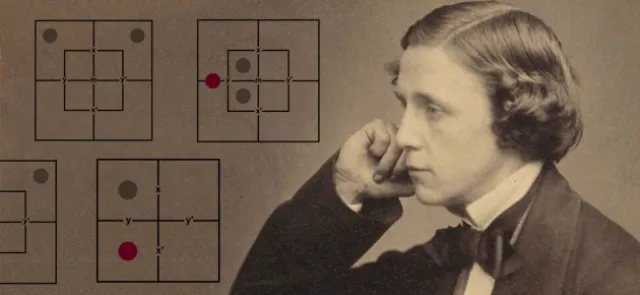
Lewis Carroll is known worldwide as the author of Alice's Adventures in Wonderland. Behind the pseudonym was Charles Lutwidge Dodgson (1832–1898), an Oxford mathematics lecturer with a passion for logic.

The tree that hides the forest
Trees are often used to represent mathematical reasoning. Here are a few examples.

Squaring the circle: new advances! | Tangente
Squaring the circle is so well known that it is commonly invoked to describe an impossible problem. Yet the many problems derived from it continue to inspire researchers.

High-school reform: maths go off on a tangent | Tangente
Last January, the Société mathématique de France, together with several learned societies and professional associations, warned the Ministry about the disastrous effects of the new high-school reform on mathematics education. Here is an analysis, backed by figures.

Jean-Pierre Demailly (1957–2022) | Tangente
We were saddened to learn that mathematician Jean-Pierre Demailly died on March 17.

Maths at home is good for the mind | Tangente
It is often assumed that differences in students’ academic success are explained by their parents’ level of education and ability to “help” them with their homework. New research supports other hypotheses.