



All articles
Dive into the fascinating world of mathematics with our captivating articles, written by passionate experts. Whether you are a curious amateur or a seasoned mathematician, our articles cover a wide range of topics, from fundamental concepts to the latest discoveries, including practical applications and philosophical reflections.

Radical-X: combinatorics in play | Tangente
Radical X is a compact game packaged in a rectangular box with edges measuring less than 5 cm.

Games as a source of inspiration
Games were an inexhaustible source of inspiration for Conway—both studying the classics and creating new puzzles.

Tilings: Conway's criterion | Tangente
You have probably heard of tilings, but do you know this simple criterion for determining whether a polygon can tile the plane?

Conway's sequences and conjectures | Tangente
Conway loved playing with number sequences. His explorations led him to formulate conjectures that are elementary to state but formidable to tackle.

Reference books on Conway | Tangente
Guided by his passions and discoveries, John Conway wrote many fascinating books, regrettably few of which have been translated.

Viète's new algebra | Tangente
François Viète ranks among those scholars celebrated for their considerable contribution to mathematics. He did not invent algebra, but his work propelled the discipline forward spectacularly.

Ishango bones finally deciphered | Tangente
The earliest mathematical object is more than twenty thousand years old. It was discovered by chance in the heart of Africa by a Belgian geologist. Its interpretation remains a matter of debate to this day.

Conway and quantum free will | Tangente
John Conway joined forces with Simon Kochen to prove the free will theorem. This result calls for a reassessment of quantum mechanics, without necessarily tying it to probability. It casts new light on a paradox highlighted by Einstein.

Mind-boggling surreal numbers!
By combining Dedekind cuts with von Neumann's construction of the natural numbers, John Conway constructed the largest possible collection of numbers: the class of surreal numbers, which he endowed with the structure of a field.

An irresistible geometer
Finding fruitful connections between two mathematical objects that, at first sight, have no reason to meet: this was the essence of Conway's approach. How did he uncover such connections? By playing around, as these examples from geometry show!

Wonders of Conway's Game of Life | Tangente
One of John Conway's best-known creations is the Game of Life, which he devised in 1970. It is a particular kind of cellular automaton, made up of virtual beings that develop in the cells of a regular grid, living, dying and being born according to predetermined rules.

Conway, the game-playing mathematician | Tangente
John Conway advanced finite group theory, number theory, topology, theoretical physics, combinatorial game theory and geometry. His originality, creativity and extraordinary personality made him popular with mathematical game enthusiasts everywhere, especially after he created the Game of Life in the 1970s.

Conway and group theory | Tangente
Conway developed a passion for groups—and sporadic groups in particular—at an early age.

Real-time mathematical modelling | Tangente
The current pandemic reminds us that mathematical models are built up in stages, from scientific assumptions and the available data. They are not objects in the real world, but abstractions. Their reliability can be established only by comparing them with reality.
Covid-19: mathematics to the rescue
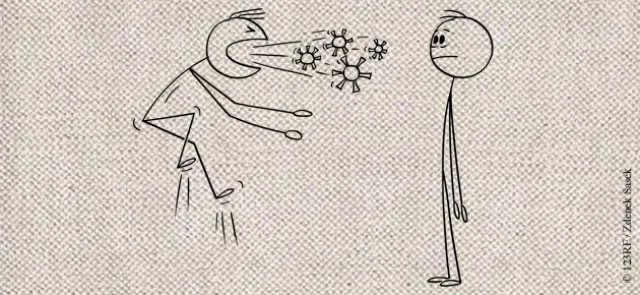
What can epidemiological models contribute during a pandemic such as Covid-19? Can they justify measures that are difficult for the public by quantifying and explaining their direct effects on the spread of the disease?

The birth of epidemiology | Tangente
For more than three centuries, major pandemics have prompted statisticians to quantify mortality data and produce death forecasts. How has this helped reduce the impact of such disasters?

Epidemiological statistics | Tangente
Despite what its name suggests, epidemiology is a broad discipline. Its scope now extends beyond the study of infectious diseases to encompass all human diseases and disorders, whether chronic, genetic, environmental or behavioral, as well as accidents.

Covid: an equation with too many unknowns | Tangente
The Covid-19 pandemic took the world by surprise, both through its virulence and the speed of its spread. A wealth of statistics, sometimes contradictory, has been published. Governments have introduced measures that often differ from one country to another. A range of medical treatments is being used. Can mathematics help us make the right decisions?

How to inform yourself intelligently about Covid | Tangente
Several web pages provide an overview of the available scientific information on the current epidemic.

Robert protocol and COVID-19 tracing | Tangente
The problem posed by asymptomatic people, who are the most likely to transmit the virus, is a major challenge in the fight to curb the epidemic.