



Curiosity
Patterns, crafts, magic squares and fun mathematical content not part of the school curriculum

Combinatorics on words and music | Tangente
Combinatorics on words is an area of mathematics that has proved particularly fruitful for studying certain musical phenomena, especially the rhythmic features of African and Malagasy music—so much so that a computer can even recreate them!
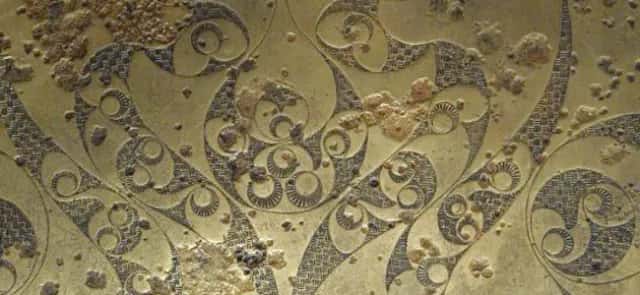
Geometry in Celtic art | Tangente
Celtic art is constructed according to mathematical and geometric principles. Ethnomathematics helps us identify and analyze the geometry that underpins this symbolic art.
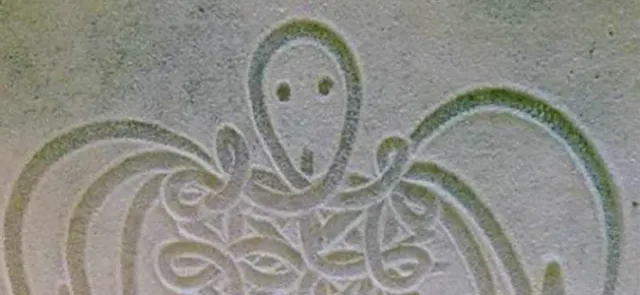
The turtle algorithm in Vanuatu | Tangente
Mathematical modelling offers one way to make sense of Vanuatu's sand drawings. In particular, it will lead us to a surprising "turtle theorem".
2024 Tangente high school students' prize | Tangente
The ninth Tangente High School Students' Prize ran throughout the 2023–2024 school year. It is a flagship initiative promoting mathematics among young people—an aim close to your magazine's heart.
Laurent Schwartz, politically engaged mathematician | Tangente
The publication of the graphic novel Laurent Schwartz, les engagements d'un médaillé Fields offers an opportunity to revisit the life and struggles of this surprising mathematician.
2024 SMF prizes | Tangente
Every two years, the Société mathématique de France (SMF) awards the d'Alembert and Jacqueline-Ferrand Prizes.
The egg equation | Tangente
Three researchers, Valery Narushin, Michael Romanov and Darren Griffin, recently published a paper proposing a general formula for drawing the outline of any real egg.
Fermat Museum: Heritage and mathematics | Tangente
In July 2024, the Fermat Museum opened in Pierre de Fermat's birthplace in Beaumont-de-Lomagne, Tarn-et-Garonne.

The new Fourier has arrived! | Tangente
The mathematician Joseph Fourier is buried in Père-Lachaise Cemetery (Division 18, near the Casimir-Perrier roundabout) in Paris. His tomb, decorated with Egyptian motifs, was restored in 2023 by the City of Paris at the request of the Society of Friends of Joseph Fourier.

Mandelbrot, a free spirit | Tangente
In the centenary year of his birth, we look back at the life of Benoît Mandelbrot, the "father of fractals": those strange geometric entities with which he adorned mathematics and which he managed to uncover even in nature.
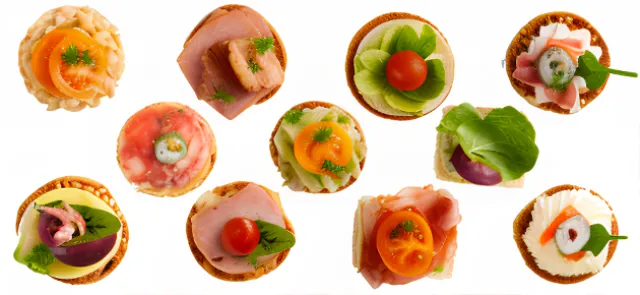
The surprising aperitif problem | Tangente
Where should a platter of canapés be placed to satisfy the guests as well as possible? This seemingly innocuous problem has inspired brilliant developments over the centuries. It also illustrates how individual and collective optimization are often at odds—a seemingly paradoxical result.
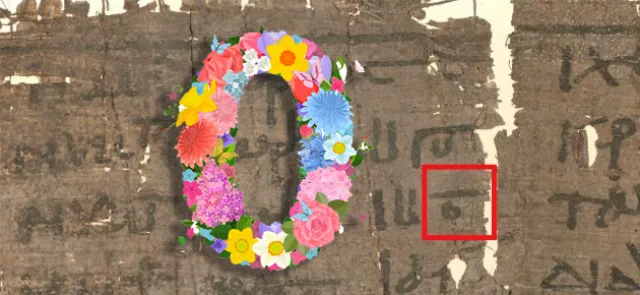
Did the Greeks use zero?
It is commonly thought that the Greeks did not know about zero. That is not entirely true: Greek astronomers had a positional zero, and Iamblichus even invented an arithmetical zero before it was consigned to oblivion.
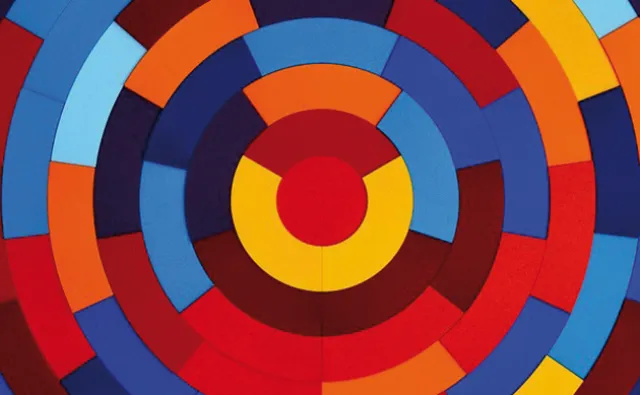
Philippe Leblanc,
Visual artist Philippe Leblanc describes his artistic development this way: "Discovering Op Art, kinetic art and the abstract geometry of the 1960s and 1970s had a decisive influence on my artistic direction." Mathematical concepts and emblematic numbers are recurring features of his work.

It's everywhere!
π turns up almost everywhere, sometimes even in the most fanciful fields. In mathematics, of course, we encounter it in geometry, analysis and number theory… As a result of this omnipresence, it appears throughout the other sciences too!
In search of the universal number: Champernowne and Borel | Tangente
Sometimes, a concept that is relatively simple to define leads us into a world we dare not imagine, where our common sense struggles to find its bearings. Such is the case with universal numbers, which remain today as elusive as they are fascinating.
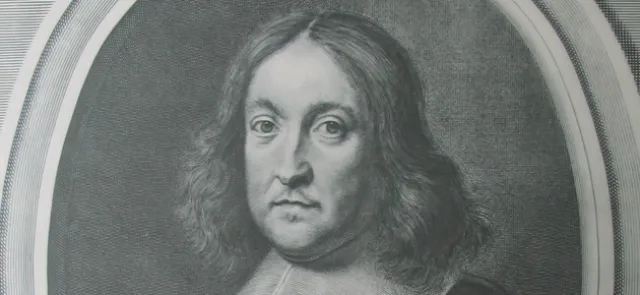
A historical example involving Fermat: article by m… | Tangente
Through his marginal notes in Bachet's edition of Diophantus's books on arithmetic and through his correspondence, the mathematician Pierre de Fermat spurred the study of integers with new results and methods. He both transmitted ideas and drove the subject forward.
Integers: stars of equations: article by… | Tangente
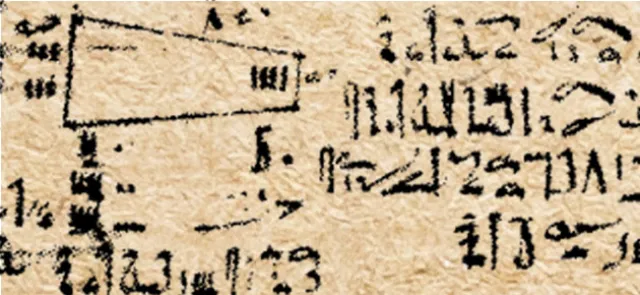
In ancient Egypt, puzzles and problems were already being framed in terms of equations over the integers. Although the methods used to solve them have changed, the underlying question remains the same. These equations would go on to transform mathematics.
Navigating the mathematical universe | Tangente
Did you know that a list covering almost every current area of mathematical research was created to help classify publications? It runs to more than two hundred pages! No wonder it is hard for general readers who are simply curious about mathematics to find their way around.
A genealogy of fractions
A beautiful construction due to Calkin and Wilf, foreshadowed a century earlier, provides an elegant and deep way to list all fractions. Beginning with 1 / 1, each fraction in this construction gives birth to two new ones.
An unhurried journey to infinity
The harmonic numbers form a sequence that tends to infinity, but very slowly. That does not stop them from playing a role in several important problems.