



History and Culture
History of mathematics and cultural connections

Donald in Mathmagic Land: finally in comic-book form | Tangente
Donald in Mathmagic Land (Hamilton Luske, 1959) is a 27-minute short film produced by Walt Disney Studios.
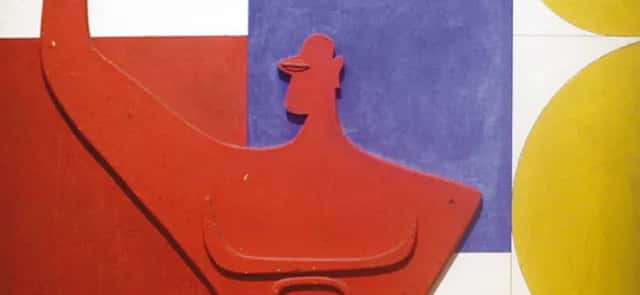
An architect's dream?
The golden ratio, as everyone knows, crops up everywhere in art... provided, that is, you are determined to find it and willing to overlook (!) a few approximations or anachronistic units of measurement. Let's trace the writings that linked it to architecture and brought it to public attention.
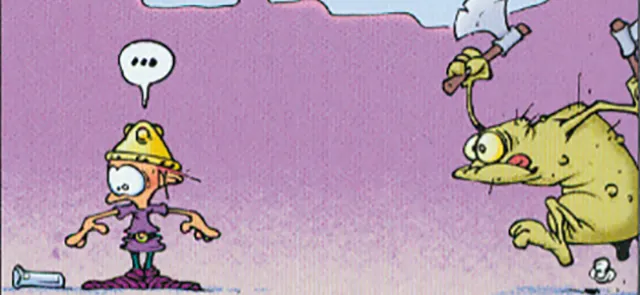
Midam and Kid Paddle’s mathematical models | Tangente
Welcome to the world of Michel Ledent, better known as Midam. For thirty years, his characters have appeared in two comic-book series, each carving out a distinctive place of its own. Let's explore the mathematics hidden behind their hilarious adventures.

An interview with Étienne Lécroart: mathematics and creative comics | Tangente
Mathematics and its history can both become the subject of comics. Some authors draw inspiration from these subjects to devise the very structure of their pages. We spoke with one of them, the iconic Étienne Lécroart, who believes that "all mathematics stems from the same thing: logic."
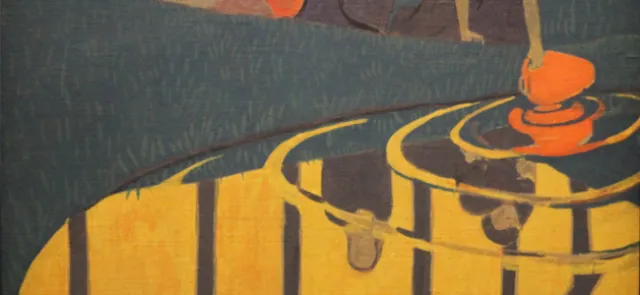
Golden ratio in art: between myths and realities | Tangente
However you look at the paintings, it is hard to substantiate the idea that the golden ratio's presence in art gives a work some decisive aesthetic quality. Let's see where φ really lurks...

Gold, yes... but metal too
Mathematics enthusiasts—and mathematicians themselves—have no shortage of imagination! Starting from the golden ratio, some have defined a family of numbers known as metallic means that share certain properties with the golden ratio.

When mathematics meets comics | Tangente
Mathematics may not be the first thing that springs to mind for comic-book enthusiasts. Yet the two fields are far from as separate as one might think; when they come together, the results can be real gems.
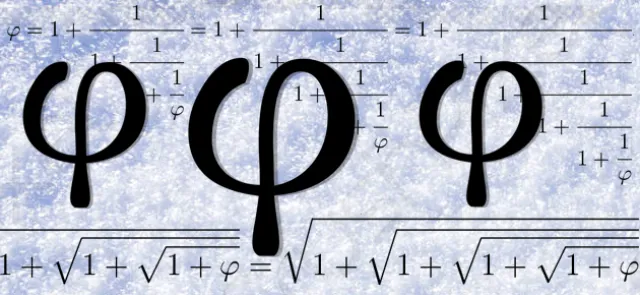
Remarkable mathematical properties
At first glance, the golden ratio, despite its mythical name, is nothing exceptional mathematically: it is simply the positive solution of a quadratic equation. Much ado about nothing? Let's see, then, what surprises it has in store.

Combinations and permutations in modern art | Tangente
Permutations appear in many works of conceptual art. Let's look at a few iconic examples to see how artists have readily embraced the concept of a group.

An example of a group in the social sciences
A simple, classic, real-world application of the mathematical concept of a group can be found in social anthropology. It was brought to light by the anthropologist and ethnologist Claude Lévi-Strauss, working with the mathematician André Weil.
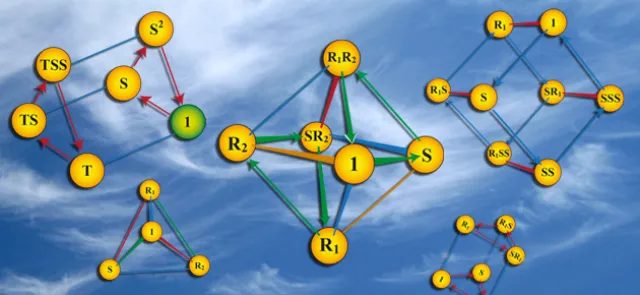
The Cayley diagram
How can we grasp the structure of a finite group at a glance? The Cayley diagram provides the answer!

Lie groups
The groups introduced by mathematician Sophus Lie have become indispensable tools in theoretical physics.

The Erlangen program
On his appointment as a professor at the University of Erlangen in 1872, Felix Klein, then only 23, presented a research program in geometry that has since become known as the "Erlangen Program." The concept of a group lies at its heart.

The Klein group and its many guises
When we first start working with groups, we patiently draw up the tables for those with only a few elements. A one-element group consists solely of the identity element and is therefore unique. Similarly, groups with two or three elements are unambiguously determined. The surprises begin with four elements...

The language of groups
The word "group" was introduced by Évariste Galois himself in the 19th century, without a precise definition. The emergence of this concept called for a new vocabulary.

Group theory's founders: Galois, Cayley, Jordan | Tangente
The concept of a group did not simply appear overnight. Like many mathematical concepts, the idea took time—a great deal of time—to emerge, however "elementary" it may be, along with definitions… that now seem so obvious to us.

In the school curriculum
The era of so-called "modern mathematics" brings back many memories, some pleasant, others decidedly less so. But does that mean we should throw the baby out with the bathwater?

The Monster: the largest sporadic group | Tangente
The Monster is a group with more elements than there are atoms on Earth. Let’s meet it...
Early formalizations
Évariste Galois's tragic death lent an epic quality to the introduction of the group concept in mathematics. What followed is less familiar but fascinating, culminating in brilliant theorems that are still taught today. Sixty years later, the notion of a group was finally established.
The classification of finite simple groups
Are finite groups simple? Not so fast: although the classification of finite simple groups began more than a century ago, a complete proof is still being written! Work on this proof began in the late 1980s and should be completed in 2025. But the task is daunting…