



History and Culture
History of mathematics and cultural connections

2022 Tangente Awards ceremony | Tangente
One of the events scheduled at the Musée des arts et métiers on 4 December was the 2022 Tangente Awards ceremony, held in the lecture hall from 4 to 6 p.m. Here is our report.

A call to our readers | Tangente
Tangente has just celebrated its 35th anniversary. Quite an achievement! Who would have thought that a popular mathematics magazine could last so long? Yet to secure its future for many years to come, our magazine needs some of you to get involved. Here are three areas where you can help.

Nalini Anantharaman at the Collège de France | Tangente
She was among the favorites for a Fields Medal in 2014; now she has been awarded a chair at the Collège de France!

What's new in the International System of Units | Tangente
The 27th General Conference on Weights and Measures was held in November in Versailles (Yvelines). Participants were delegates from the states that had signed the Metre Convention.

The barber was a woman
The barber paradox is said to be just the thing for dazzling people at parties. Although it serves an educational purpose by illustrating one of the most fundamental results in set theory, taken out of context it may well backfire on you!

The last two sangaku solved | Tangente
Of all the sangaku on record, two have proved particularly difficult to solve. The Japanese mathematician Yamaguchi Kanzan (c. 1781–1850) collected them in his travel journal between 1817 and 1828.
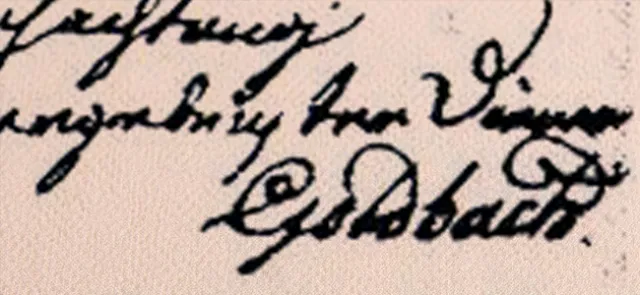
A passion for Goldbach's conjecture | Tangente
In set theory, which Cantor founded, intuition has little place. Yet his approach to open mathematical problems relied more on intuition than on rigorous reasoning. His interest in Goldbach's conjecture is a case in point.

Geometry theorems
With the country cut off almost entirely from the world during the Edo period, Japanese mathematics developed in isolation for more than a century and a half. It was during this period that highly distinctive geometric puzzles flourished and prospered.

Cantor−Bernstein:
Georg Cantor left his mark on the history of mathematics through his study of infinite sets. The Cantor–Bernstein theorem shows how a few results that are obvious for finite sets generalize to infinite sets… provided one takes a serious look at the question.
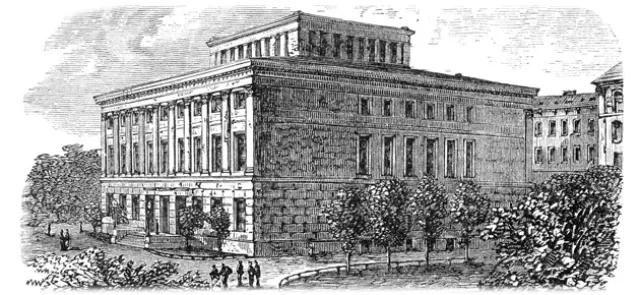
A journey into infinity | Tangente
While many mathematicians toiled in the footsteps of their predecessors, Cantor opened up an entirely new field that many of his colleagues refused to enter. This journey through the different infinities proved to be both fascinating and fruitful.

The origins of the tangent
“Tangent” is a word that has found its way into everyday language. But where did it come from?

The beautiful geometry of sangaku
A sangaku was originally a Japanese wooden votive tablet. It sometimes bears an engraved geometric figure with the statement of a problem, together with the solution or sometimes a hint.

The revenge of the tangent spheres in 4D | Tangente
By shedding new light on the semiregular polyhedra of space, Alicia Boole Stott's method makes it possible to go further and explore objects in the fourth dimension. In particular, she was able to set out in search of semiregular polytopes.

Deviation of a curve from a tangent
Newton and Leibniz, the founders of differential and integral calculus, studied how a curve deviates from a tangent. To this end, they drew on the notion of curvature. The fundamental ideas of these two scholars gave rise to contemporary mathematical analysis.

Beyond Descartes
Several results in the plane and in space generalize Descartes' theorem on the curvatures of tangent circles.

Touching circles
Euclid's Elements, the standard reference for centuries, established straightedge-and-compass proof as the norm in geometry. But many problems involving circles tangent to one another become simpler when using conics or transformations, such as the indispensable inversion.
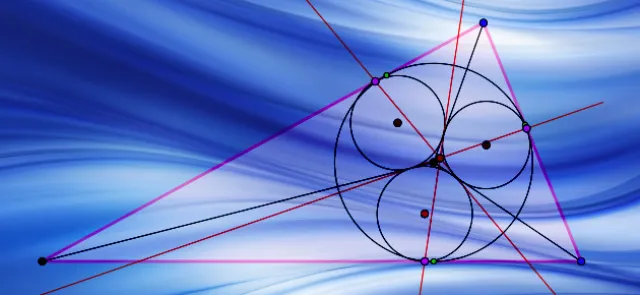
The Malfatti circles in a triangle | Tangente
In a triangle, how should three non-overlapping circles be chosen so as to minimize the area of the triangle left over once the three circles are removed? A natural solution, involving tangents within the triangle, is not the best one, but it gives rise to interesting problems.
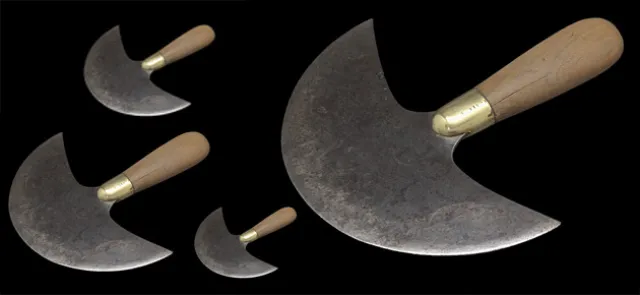
The arbelos
The properties of the arbelos, this fascinating geometric object studied since antiquity, are countless. How did the Greeks go about establishing such results? Let's look at a few clues, drawing on the texts handed down to us by Archimedes and Pappus.

The tangent at X: École Polytechnique slang | Tangente
The right to wear a sword, formerly reserved for sergeants, was not granted to students at the École polytechnique until after the three revolutionary days of July 1830.

Yitang Zhang's long, solitary quest | Tangente
Born in China in 1955, Yitang Zhang developed an interest in mathematics at an early age: at the age of 10, he discovered prime numbers and the puzzle of Fermat's Last Theorem. But during the Cultural Revolution, he was sent to work in the countryside with his mother and was unable to continue his studies.