



Knowledge
In-depth articles on mathematical knowledge and theories

Reuleaux: a triangle that rolls – Curves | Tangente
A circular roller may always seem ideal for moving an object. Yet this is not so: a kind of equilateral triangle with rounded sides is actually better suited to certain everyday situations.

Rollers: when a triangle rolls | Tangente
The circle always seems to be the ideal shape for moving an object on rollers. Yet this is not so: a kind of equilateral triangle with rounded sides proves better suited to certain everyday situations.
Archaeological chronology: statistical methods | Tangente
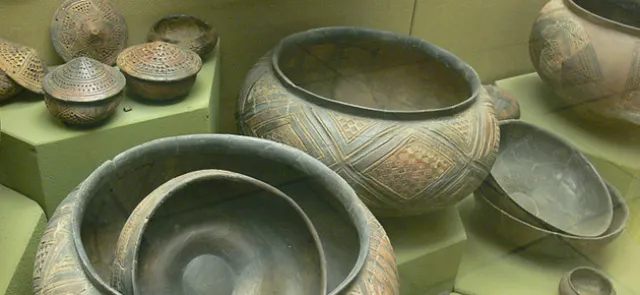
To establish a chronology, archaeologists draw on a variety of statistical models, including correspondence analysis. Monte Carlo numerical methods are also brought into play. Mathematics is becoming indispensable to archaeology!
Chronology
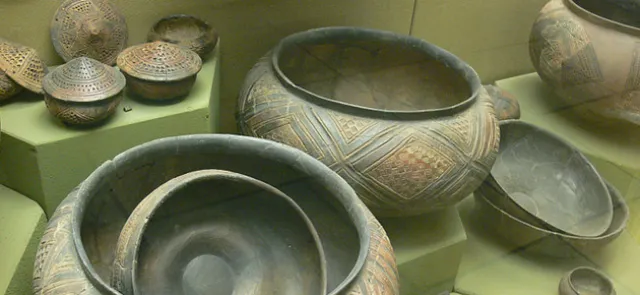
To establish a chronology, archaeologists draw on a range of statistical models, including correspondence analysis. Monte Carlo numerical methods also come into play. Mathematics is becoming indispensable to archaeology!
The dyadic tree
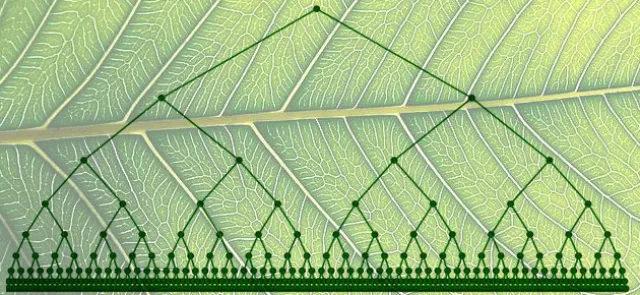
An infinite tree can be used to construct either the positive integers or the dyadic integers. The trick is to choose carefully where to put the 0s and 1s.
Dyadic tree: integers and p-adic order | Tangente
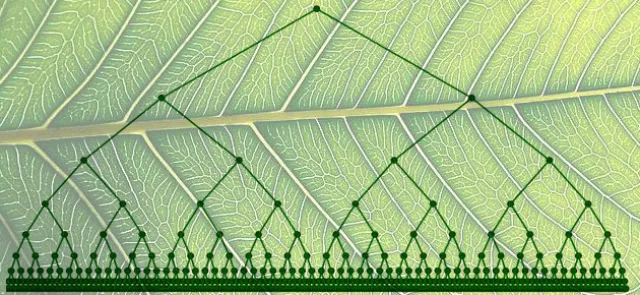
Starting from a tree whose leaves extend indefinitely, we can construct either the positive integers or the dyadic integers. The trick? Put the 0s and 1s in the right places.

A dive into a strange world of numbers
At the beginning of the 20th century, the German mathematician Kurt Hensel "invented" new numbers, written with infinitely many digits as in the decimal system, but based on a very different notion of proximity. This curious theory has proved highly fruitful in arithmetic!
Tangente Best Article Award | Tangente
Why not showcase your talent for bringing mathematical culture to a wider audience? That is exactly what the Tangente Best Article Award is for. Read this page and you will have everything you need to submit, by September 30, a miniature masterpiece that might even be published in Tangente.
Two theorems for the price of one
The idea of pairing two mathematical objects according to a set of rules allows us to extend certain results without reinventing everything: that is the whole point of duality. Or, mathematically speaking, how to kill two birds with one stone.

Loop quantum gravity
What if our universe were actually discrete? If confirmed, a bold theory known as loop quantum gravity could reconcile the physics of macroscopic gravitational fields with quantum physics. Spin plays a fundamental role in this theory.

The unification of physics through mathematics | Tangente
Physicists have two dreams. The first is to find a beautiful equation. The second is for that beautiful equation to describe all of physics. The Standard Model, string theory and loop quantum gravity are all candidates for a "theory of everything."

The first black hole image explained | Tangente
Soon after the detection of gravitational waves, astrophysics and cosmology are buzzing once again with the publication of the first image of a black hole. These discoveries match theorists' predictions and lend further support to the theory of general relativity.
Rattlebacks: when motion reverses | Tangente
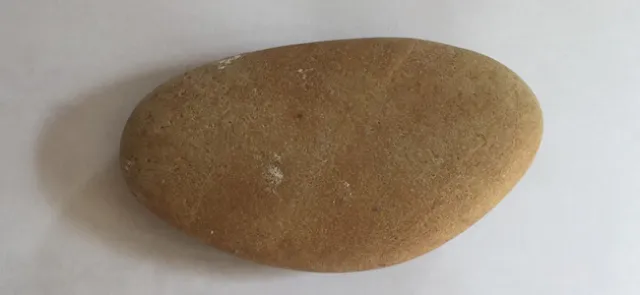
Among the unusual objects that inspire both wonder and scientific curiosity, few are more astonishing than the rattleback. When spun, it has the remarkable ability to reverse its direction of rotation "by itself."

Shuffling an infinite deck of cards
Shuffling a fifty-two-card deck is easy enough. But suppose the deck contained infinitely many cards: could it still be "shuffled"? The answer is entirely up to you! Welcome to the world of paradoxes that play with infinity…

How mathematics powers video animation
Three-dimensional digital works, such as video games and animated films, unsurprisingly rely on mathematics to immerse us in their worlds. Angles, linear algebra, vectors and matrices play a particularly important role.
When polyhedra come in pairs
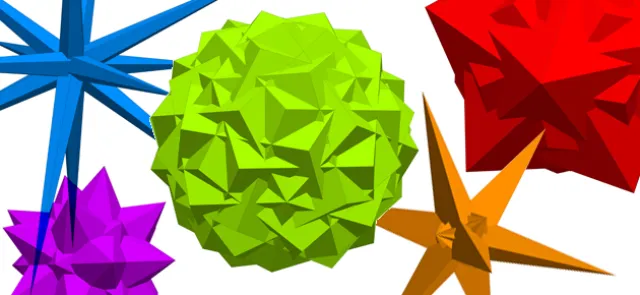
Swapping the faces and vertices of a polyhedron produces a new one, which can be built using elementary geometric constructions. This phenomenon once again demonstrates the close connection between arithmetic and geometry.

Mathematical controversy over duality | Tangente
The word "duality" comes from the Late Latin dualitas, which had displaced the classical term duales, used to describe something associated with two (duo in Cicero's Latin).
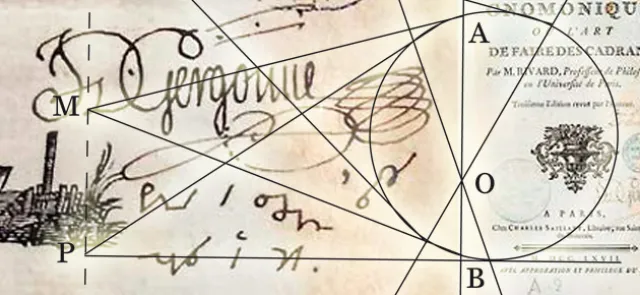
Partner-swapping in geometry
Duality has appeared in many branches of mathematics, from the Platonic solids of antiquity onward. It came into its own in projective geometry in the early 19th century, emerged soon afterward in logic with George Boole and Augustus De Morgan, and later flourished in linear algebra.

Let’s multiply in quasi-linear time!
The news broke in late March: mathematicians David Harvey and Joris van der Hoeven showed that large integers can be multiplied in "quasi-linear" time, confirming a conjecture that dates back to 1971, when Volker Strassen first suggested it. Let's revisit one of arithmetic's basic operations!

What if our universe were a hologram? | Tangente
Our universe could be a sphere whose exterior would resemble a black hole. Our world would merely be the reflection of a reality inscribed on the surface of this sphere—a kind of hologram. All information would be encoded on our cosmic horizon. A scenario that may not be so far-fetched after all…