



Famous figures
Portraits of famous mathematicians, historical and contemporary
The circles of Apollonius of Perga: harmonic ratios
The set of points whose ratio of distances to two fixed points A and B is constant is called the Circle of Apollonius. Three ways to approach it: classical geometry, analytic geometry, and electricity
Finding geometric loci: methods | Tangente
Geometric loci: the term has a whiff of grandfather's geometry about it. Nowadays we'd talk about the set of points satisfying a given property. The old terminology gives the problem a more spatial, physical feel. How have the mathematical tools for studying loci evolved?
Sociologists and mathematicians: Condorcet, Quételet | Tangente
Throughout the 20th century, mathematicians drew on their knowledge and developed statistical methods to gain a better understanding of sociology.
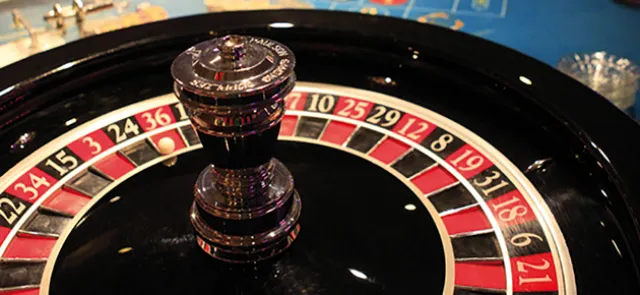
Pascal's wager applied to presidential elections | Tangente
Throughout history and across civilizations, chance has fascinated people. Although betting was not conceptualized until the 15th and 16th centuries, it had already attracted many enthusiasts. Strategies were devised. But can they be adapted to presidential elections?
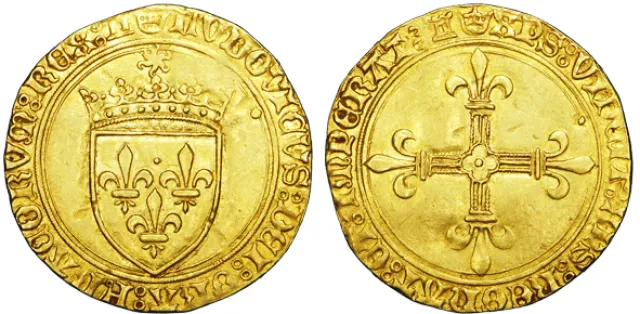
D'Alembert's heads-or-tails dispute | Tangente
A coin tossed twice has a one-in-four chance of landing heads both times. D'Alembert had his doubts. Why? To say he was wrong is to challenge a law formulated by Laplace. Yet Laplace failed to see that his own rule lent credence to D'Alembert's doubts!
Newton's formula
What a legacy! Newton's binomial formula finds applications in both trigonometry and probability…

Penrose designer: aperiodic tilings & quasicrystals | Tangente
Roger Penrose's non-periodic tilings are inspiring designers too!
Women mathematicians at NASA: the film Hidden Figures | Tangente
They were employed almost as "human computers" at Langley, the American research center in Hampton, Virginia.
Unemployment and energy supply: prob... | Tangente
Discover mathematician Hermann Laurent's proposal for putting unemployed people to work.

Markov chains and workforce management
Markov chains are used to model memoryless probabilistic processes. By modelling internal promotions, they can help analyse and develop workforce management policies in very large companies.
When maths divides economists | Tangente
Over the past few decades, several disputes have punctuated relations between economists and mathematicians.

Imre Lakatos and mathematics education | Tangente
The Hungarian mathematician Imre Lakatos set out his perspective in his best-known work, Proofs and Refutations. He illustrated his argument using Euler's formula.
Following in Euler's footsteps
Euler's formula has led to many further developments, including its use in the study of polytopes.
OuLiPo: Mathematics inspires literature | Tangente
On November 24, 1960, Raymond Queneau, a writer with a passion for mathematics, and François Le Lionnais, a mathematician with a love of literature, founded Oulipo (the Workshop of Potential Literature), together with mathematicians such as Paul Braffort and Claude Berge, as well as Jacques Bens, Jean Lescure and Marcel Duchamp. They would later be joined by Georges Perec, Luc Étienne, Jacques Roubaud, Italo Calvino and others.
An illustrious line of descendants
It all began with a football to which Euler's formula was applied. Why does the constant 2 appear on the right-hand side? To find out, we follow in the footsteps of Henri Poincaré, André Weil and… Alexander Grothendieck.
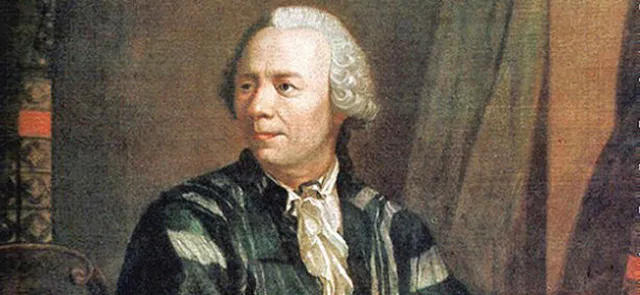
The pursuit of Euler's formula for polyhedra | Tangente
In a polyhedron, the number of vertices, S, plus the number of faces, F, equals the number of edges, A, plus 2. In other words, S + F = A + 2. For many mathematicians, Euler's formula is the most beautiful formula of all! Above all, it has had an eventful history, to say the least...
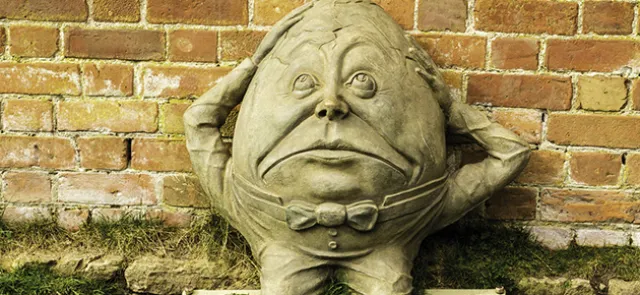
Meta-comprehension: an insidious effect in maths | Tangente
How do mathematicians choose names for new concepts? They draw inspiration from the world around them and from the mental images these new objects evoke. In the process, everyday words take on new meanings, sometimes causing confusion...
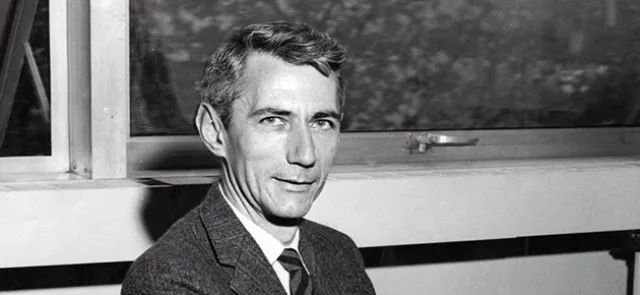
Claude Shannon and the dawn of the digital age
The year 2016 marks the centenary of Claude Shannon's birth. He was one of the driving forces behind today's digital revolution. John von Neumann, Alan Turing and other visionaries gave us computers, but Shannon introduced the modern concept of information.
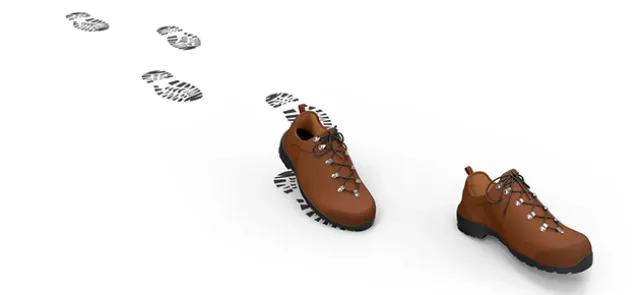
A “little” theorem for major advances
Fermat's “little” theorem is surely one of the most fruitful results in arithmetic. Ever since it was first stated in 1640, mathematicians have made constant use of it. Euler even proposed a sweeping generalization. Let's take a closer look…
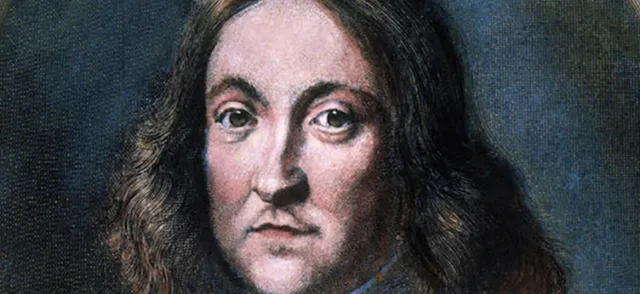
Fermat and his little theorem: history | Tangente
In the 17th century, Pierre de Fermat, though not a professional mathematician, was one of the pioneers of number theory. Less famous than his "last" theorem, whose proof has yielded more applications than the statement alone, his "little" theorem is immensely useful to us.