



History and Culture
History of mathematics and cultural connections
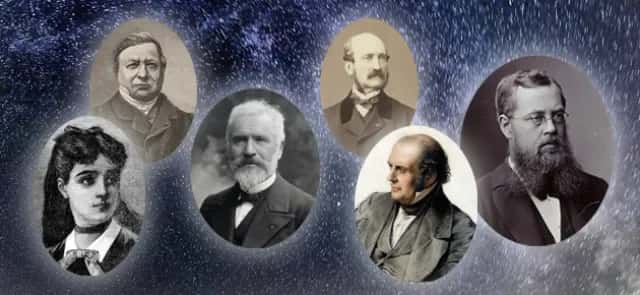
“An iconic figure!”
Historian of science Caroline Ehrhardt shares her expert perspective on the life of Évariste Galois with Tangente. She casts a keen eye over the legacy—both mathematical and symbolic—of this young prodigy, who became a true mathematical “icon” long after his death.

Writings on Galois: biographies and key sources | Tangente
For readers interested in Évariste Galois's life and history, here is a short, non-exhaustive list of publications and references in French.

Galois as a character in fiction | Tangente
Several novels and fictionalized biographies have been written about Évariste Galois. Even if we consider only works published in French, the list is already substantial.
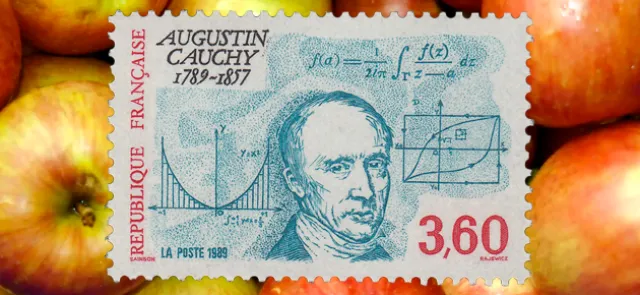
Cauchy, a forgotten pioneer
Because Augustin-Louis Cauchy did not take a direct interest in solving algebraic equations, he is an overlooked figure in the history of group theory. Yet his research on permutations provided valuable tools for those who worked on Galois theory.
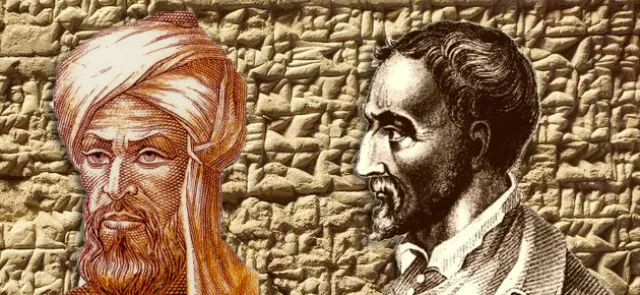
Before Abel and Galois
Until the end of the 18th century, algebra was essentially about solving algebraic equations. That chapter in the history of algebra closed with the work of Abel and Galois. Before them, what questions occupied mathematicians? What problems could they hope to solve?

Proving without saying a word
No drawing or diagram can ever replace a "proper" proof, but both can help make a proof self-evident. In this respect, proofs without words, so beloved of mathematicians, are a fine exercise in style. Some have become classics of the genre.

Graphs in literature | Tangente
The Oulipians have also explored the use of graphs and trees in literature.

Mary Everest Boole: Forming mental images | Tangente
For Mary Everest Boole, a graphical approach is essential to teaching.
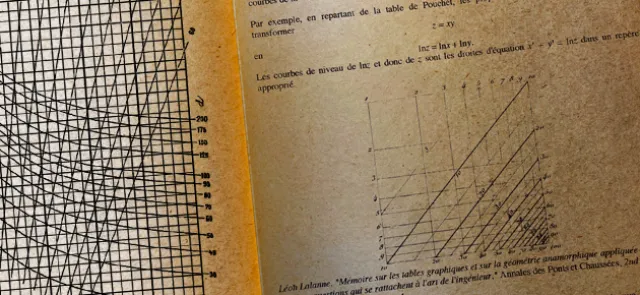
Nomograms
Arithmetic and geometry, the two traditional branches of elementary mathematics, come together in nomograms. But what exactly does this term, evidently derived from Greek, mean? What are nomograms used for, and how are they designed?
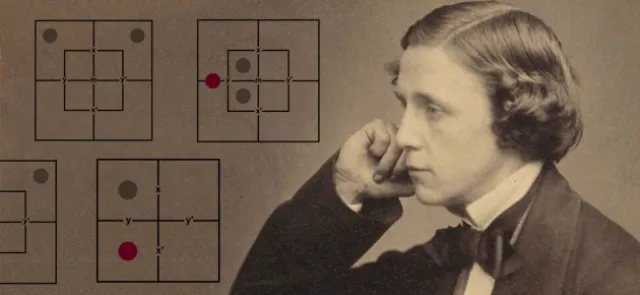
Lewis Carroll's diagrams
Lewis Carroll is known worldwide as the author of Alice's Adventures in Wonderland. Behind the pseudonym was Charles Lutwidge Dodgson (1832–1898), an Oxford mathematics lecturer with a passion for logic.

The tree that hides the forest
Trees are often used to represent mathematical reasoning. Here are a few examples.

Squaring the circle: new advances! | Tangente
Squaring the circle is so well known that it is commonly invoked to describe an impossible problem. Yet the many problems derived from it continue to inspire researchers.

Jean-Pierre Demailly (1957–2022) | Tangente
We were saddened to learn that mathematician Jean-Pierre Demailly died on March 17.

Dennis Sullivan wins the 2022 Abel Prize | Tangente
The Abel Prize, one of mathematics' most prestigious honors alongside the Fields Medal, has just been awarded to American mathematician Dennis Parnell Sullivan (born in 1941).

Mathematical puzzles take center stage | Tangente
Discover the new problem-writing competition and the new format of Tangente's "Problems" section.

2022 from every angle
Once again this year, the Tangente team has shown ingenuity in uncovering hidden properties of 2022…

A YouTube for maths | Tangente
Carmin.tv is the name of a brand-new, free online audiovisual platform devoted entirely to "mathematics and its interactions with other sciences".

Société mathématique de France turns 150 | Tangente
In 1871, France, fresh from defeat at the hands of Germany, recognized that it had fallen behind technologically. The government of the new French Republic decided to bring together and coordinate efforts to organize research. This led to the founding of the Société mathématique de France (SMF) in 1872, followed the next year by the Société française de physique.

A new president for the CIJM | Tangente
At the end of January, Brigitte Bourgasser Wenner succeeded Marie José Pestel as head of the International Committee for Mathematical Games (CIJM).
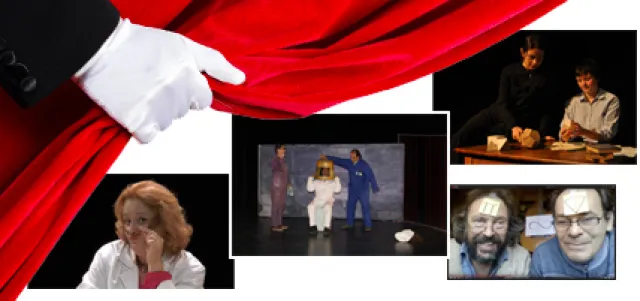
Dramatic twists! | Tangente
Mathematics and theatre—together? But to what end? What is at stake, what makes such a partnership work, and what does it require? The editors of Tangente put these questions to four enthusiasts who dared to take the plunge.