



Amazing Math
Surprising or counterintuitive mathematical results and proofs

Tangente's 35th anniversary | Tangente
Come celebrate a unique anniversary, the 35th anniversary of the only magazine of mathematical culture in the world sold at newsstands! There will be something for every taste, every age and every level. Here is a preview of what this eventful day has in store. The full program can be found at the end of this article.
A podcast devoted to Ada Lovelace | Tangente
Bababam's "True Story" podcasts tell remarkable true stories that are a pleasure to listen to and share.
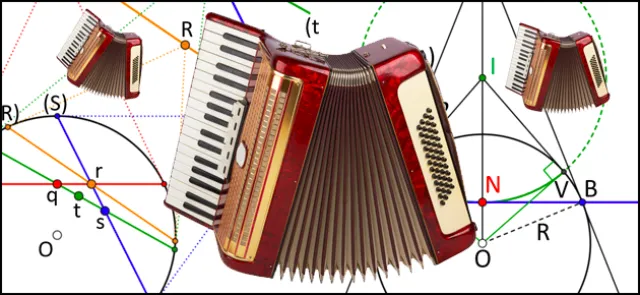
Inverting the power
The notion of power defined with respect to a circle naturally leads to the notions of inversion and polars. These pedagogical tools, which have vanished from school curricula, are central to the birth of the concept of duality and of representations of non-Euclidean geometry.
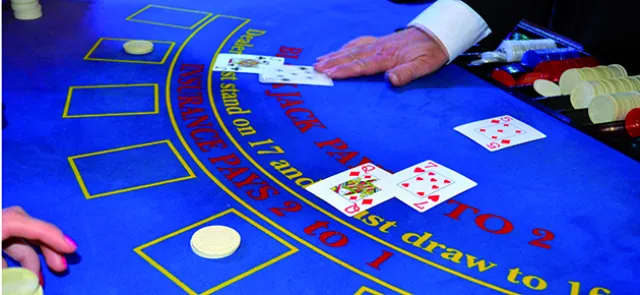
Blackjack: fluctuating probabilities | Tangente
Mathematicians have been studying blackjack since the postwar years. They discovered ways to improve players’ performance by applying probabilities both statically (basic strategy) and dynamically (card counting). But casinos changed the rules to protect themselves.

Soapy mathematics
What could be more fascinating than soap bubbles? They are beautiful, soothing, with their regular shapes and lovely iridescent colors. But they are also an object of mathematical study. And they hold plenty of surprises for us!
Origami in robotics and medicine | Tangente
No, this is no longer science fiction: origami-inspired minirobots can now deliver medication exactly where it is needed in the human body.

The Haga fold
Straightedge-and-compass geometry boasts a long history. But Euclid and his followers do not have a monopoly on points, lines and figures! The study of origami geometry is more recent, and it is surprisingly effective. Kazuo Haga has shown just how much richness a simple fold can hold.
An abstract concept: filters
The concept of a filter, developed by the French mathematician Henri Cartan (1904–2008) and anticipated by the Polish mathematician Alfred Tarski (1901–1983), can be regarded as a generalization of the notion of the limit of a sequence of real numbers.
Category theory: an abstract nonsense? | Tangente
The essence of modern mathematics is abstraction, especially since the 1930s with the emergence of the concept of structure. But as early as the 1940s a new concept appeared: categories, accompanied by the ideas of functor and natural transformation.
From "concrete" algebra to "abstract" algebra
In the twenty-first century, the idea of "concrete" algebra seems paradoxical: for everyone—high school students, university students, and teachers alike—this discipline is essentially abstract, devoted to the study of structures (groups, rings, fields, modules, possibly ordered sets…). This was not always the case.
The construction of mental images in abstraction | Tangente
Can we speak of abstraction in concrete terms? The question deserves asking, since in everyday language "abstract" and "concrete" are often taken to be opposites. In reality, things are more subtle. What if abstraction were nothing but an illusion?

2022 Fields Medals: some lovely surprises
The Fields Medals, awarded every four years, were announced in early July! France can take pride in a new triumph with Hugo Duminil-Copin. For the second time, a woman, Maryna Viazovska, has been honored. British mathematician James Maynard and American–South Korean June Huh round out this year's medalists.
Van der Waerden's conjecture solved | Tangente
Manjul Bhargava, a mathematician of Indian origin who was born in Canada in 1974 and is now a professor at Princeton University in the United States, has just proved van der Waerden's conjecture.

The Mathematics of Tchoukaillon
Mancala is the generic name for traditional sowing games in Africa and Asia. One of the solitaire variants of these games gave rise to a mathematical recreation with unexpected properties and consequences.

The projective geometry behind the Dobble game | Tangente
You would never guess it while playing Dobble: combinatorics, projective geometry and modular arithmetic can offer a new approach to constructing the game's various variants.
A delightful conjecture by Paul Erdős…
The convergence of certain series is a classic topic in analysis (see Suites et Séries, Bibliothèque Tangente 41, 2011). For example, it is fairly easy to prove that the harmonic series—the sum of the reciprocals of the positive integers—diverges.
Wittgenstein and Russell at Cambridge | Tangente
Born in Vienna in 1889, Ludwig Wittgenstein began studying mechanical engineering in 1906. Drawn to mathematics, he initially explored its applications before becoming fascinated by Russell's writings.
Tales of roots
The roots of unity form an abelian group. A quick refresher...
Two geniuses, two approaches
Two methods are known for proving that the general quintic equation cannot be solved: Abel's method, presented in 1824 and refined in 1826, and Galois's method from 1829–1830. Galois theory is fairly well known, whereas Abel's ideas are less often discussed.
Galois's handwritten papers at Louis-le-Grand | Tangente
Although Galois's "complete" works were published in 1962, they can be "completed"—a kind of paradox of completeness—with his papers from the 1829 entrance examination for the École préparatoire. They are held in the Archives nationales. Let us open them! Some of them have never been published.