



Knowledge
In-depth articles on mathematical knowledge and theories
 Podcast
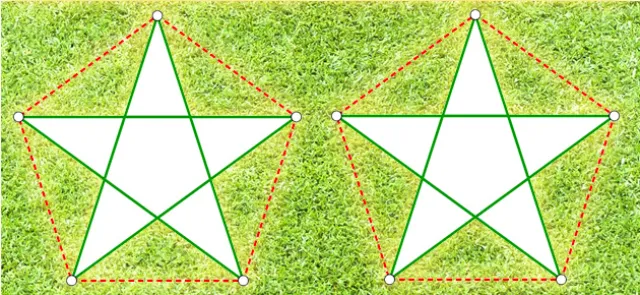
Quadrilaterals that don't come up short on area!
While the formula for the area of an arbitrary triangle has been known for a long time, that of an arbitrary quadrilateral took longer to emerge. Yet the two formulas share a kinship — visual, if nothing else — that is quite fascinating.
 Podcast
The challenges of tomorrow's agriculture
The AgroStat project studies the dynamic evolution of living organisms of interest to agronomy using an approach based on the overall study of agroecosystems. This leads to interdisciplinary work bringing together numerous scientists.
 Podcast
Flexible in three dimensions | Tangente
The flexacube and a more sophisticated form, the Yoshimoto cube, are three-dimensional versions of flexagons. Beyond their construction, these astonishing objects raise questions about the flexibility of polyhedra and formalize that question: under what condition does a solid remain rigid?
 Podcast
Tetraflexagons: squarely strange | Tangente
Unlike hexaflexagons, known for their regularity, tetraflexagons, whose faces are squares, have always escaped systematic study. They exhibit several types of cycles, and the complexity of handling them contrasts sharply with the apparent simplicity of their shape.
 Podcast
In the land of hexaflexagons | Tangente
The first hexagonal-faced flexagon studied had three stable positions. Methods were quickly found for constructing an associated hexaflexagon for a given number of stable positions — and even several different hexaflexagons…

New developments in polynomial equations
Did you think the subject of polynomial equations had been more or less settled since Galois's work? Think again.
 Podcast
Bees and the abstract sense of number | Tangente
Research into bees' cognitive abilities shows that they can count up to five, order numbers along a mental number line that includes zero, perform simple operations, and even associate a number with a symbol. This suggests the near-universal nature of mathematics.
 Podcast
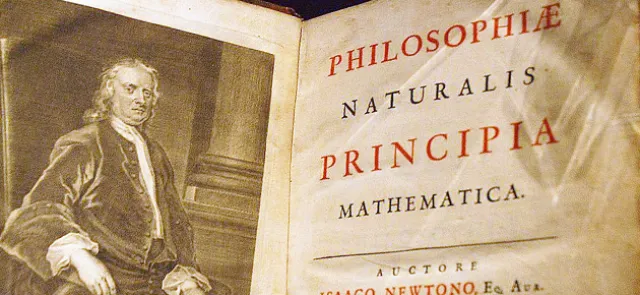
More than a translation of Newton | Tangente
Émilie du Châtelet is famous for having translated Isaac Newton's scientific work into French. Yet she did not simply reproduce the Latin text identically in French; she undertook an original rewriting of the proofs and concepts of Newtonian physics.
 Podcast
Order according to Ramsey
Ramsey theory is another field in which Erdős played a crucial role without being its originator. His use of the probabilistic method was essential to this theory, whose aim is to find the size of a set that guarantees the existence of a substructure possessing a given property.
 Podcast
A happy ending
Behind this phrase lies a famous mathematical challenge that brought together two brilliant minds on a quest to uncover the hidden order within chaos. It was the birth of a beautiful love story — and of a new branch of mathematics!
 Podcast
A cornucopia
Paul Erdős and Leonidas Alaoglu studied highly abundant and superabundant numbers, rediscovering along the way notions already studied, but not published, by the celebrated Indian mathematician Ramanujan.
 Podcast
Some of Erdős's work in number theory
Analytic and probabilistic number theory was one of Paul Erdős's favorite subjects. Here is a small selection of his contributions in this field, picked here and there from topics that can still be presented accessibly.
 Podcast
Trinity College and the dissection of the square | Tangente
In the 1930s, the problem of dissecting a square into smaller squares of different sizes gave rise to two conjectures by Erdős. They would be disproved by four Trinity College students who threw themselves into the research.

Two geometric jewels
Long after the 19th century, the golden age of geometry, Erdős took an interest in problems whose statements could appear in an elementary textbook. Among these are two jewels of elegance: the Erdős–Mordell theorem, which involves nothing more than a triangle, and the Erdős–de Bruijn theorem, which features only points defining lines.

Some conjectures in algebra
Here are a few conjectures proposed by Erdős that, despite some progress, remain unsolved...

So many distances!
Here are two problems about distances that interested Paul Erdős. The first studies the distances defined by n points. The second looks for sets of points that define only integer distances.
 Podcast
The great book of problems
The "Book" was a project of Erdős's to bring together the most beautiful known mathematical proofs, several of which had been found by Erdős himself. Although he died shortly before the project was completed, the work was nonetheless published, authored by Aigner and Ziegler. Its successive new editions keep the flame alive.
 Podcast
To exist is to do mathematics — Erdős | Tangente
Pál Erdős (1913-1996) is renowned for his eccentric behavior, but above all for the brilliance of his ideas. His ingenious methods, off the beaten track, his countless publications, and his constant wandering built the image of a legendary scholar.
 Podcast
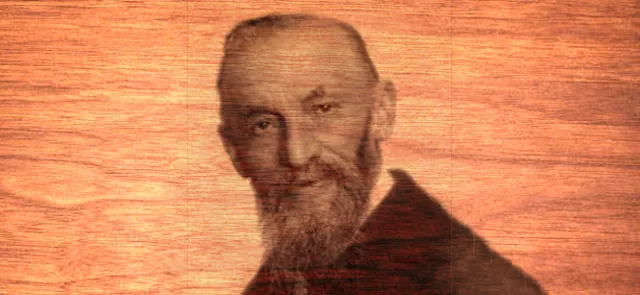
Giuseppe Peano and formalism | Tangente
The Italian mathematician Giuseppe Peano made major contributions to logical formalism by developing a symbolism for transcribing ordinary mathematical language. He also contributed to mathematical formalism by constructing systems of axioms for various fields.
 Podcast
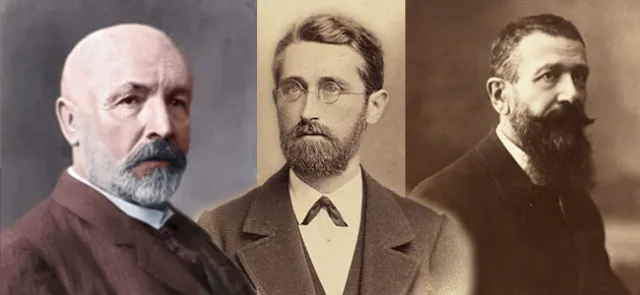
A panorama of set theory | Tangente
Work on the notion of infinity led to paradoxes. This forced mathematicians to formalize set theory. Progressive axiomatization led to the current ZFC system, which nonetheless remains subject to various shortcomings following the work of Kurt Gödel and Paul Cohen.