



Knowledge
In-depth articles on mathematical knowledge and theories
 Podcast
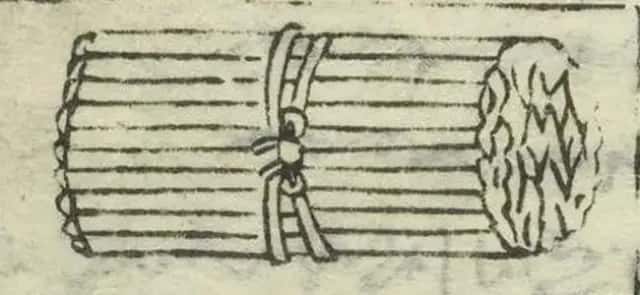
Wasan: Japanese mathematics of the Edo period | Tangente
Rooted in the tradition of Chinese-language treatises, the Japanese mathematics of the Edo period (wasan) is far from a pale copy: the problems and methods developed at the time display remarkable originality in the history of mathematics.
 Podcast
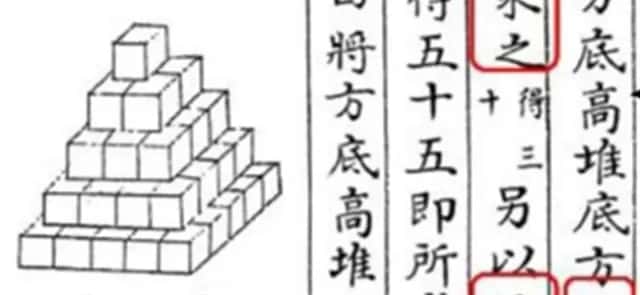
The nonexistent proof in ancient China?
Mathematical proof, which comes from the Greek tradition, is often radically contrasted with Chinese mathematics, where it is absent. In reality, monstration was used there, and an enriching hybridization of mathematical reasoning methods emerges, particularly in the work of Xu Guangqi.
The Chinese remainder theorem
An early method for what is known as the "Chinese remainder theorem" appears in the Classique mathématique de Maître Sun (Mathematical Classic of Master Sun), but its generalization had to await Qin Jiushao and his Neuf chapitres du traité des nombres (Nine Chapters of the Treatise on Numbers).
 Podcast
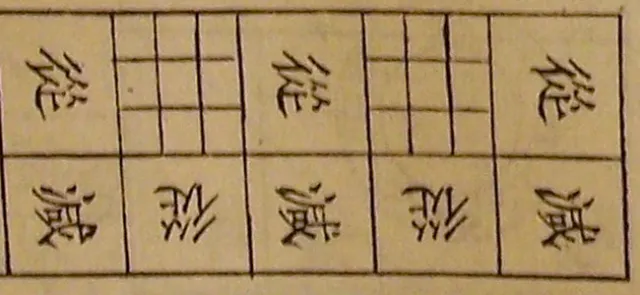
Setting up polynomial equations in medieval China | Tangente
Several methods exist for arriving at a polynomial equation to solve a given problem. The celestial source is the best known but not the only one. This is also an opportunity to see the different strategies of mathematicians in Song-dynasty China.
 Podcast
Making art with the Conway knot | Tangente
An artist passionate about mathematics, Michel Delaunay creates works that plunge the eye into the infinity of geometric and topological aesthetics. He notably combines the potentialities of the cube with those of the Conway knot.
 Podcast
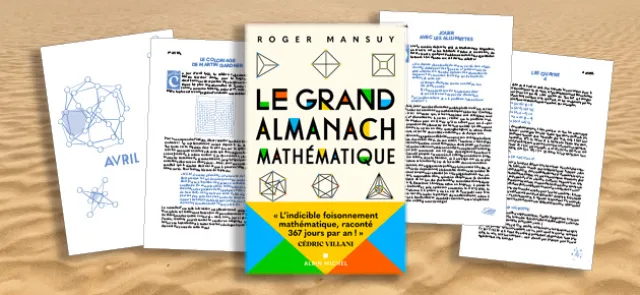
Roger Mansuy's mathematical almanac | Tangente
On the occasion of the publication of his Grand almanach mathématique (The Grand Mathematical Almanac), Roger Mansuy opens up to Tangente about the secrets of this book like no other, in which readers discover, among others, many unjustly forgotten figures.
 Podcast
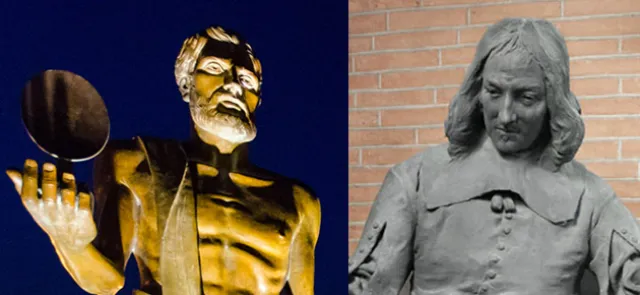
Straightening the curve
The quadrature of the parabola was one of the first triumphs of ancient geometry in the study of areas bounded by curved lines — a success wrested through fierce struggle by Archimedes, before more modern methods simplified and generalized the result.
 Podcast
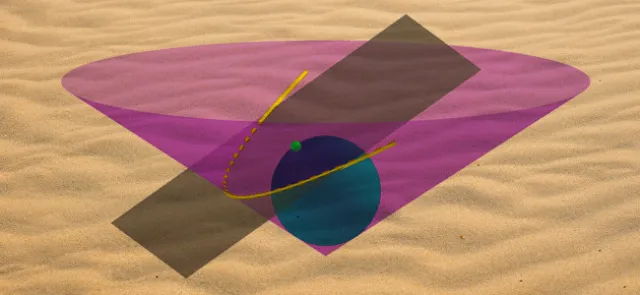
Tangents and the parabola: gems galore
Behind its sleek appearance, the parabola brims with fascinating properties. Thus, the study of its tangents reveals remarkable angular properties and offers a playground of astonishing richness, where classical geometry meets luminous reflections.
 Podcast
A line, a point, that's all | Tangente
The parabola is one of the simplest curves to define, yet also one of the richest, with properties that make it a flagship object in classical geometry as much as in algebra and analysis. It thus offers an opportunity to bring together different mathematical perspectives.
 Podcast
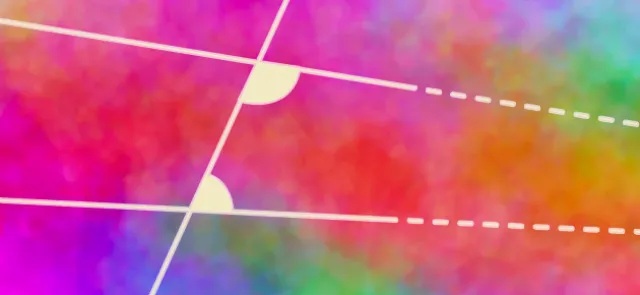
Misleading graphical proofs: the missing square paradox and more
Discover how seemingly rigorous diagrams can fool us: the missing square paradox, the astonishing proof that every triangle is equilateral, and more.
 Podcast
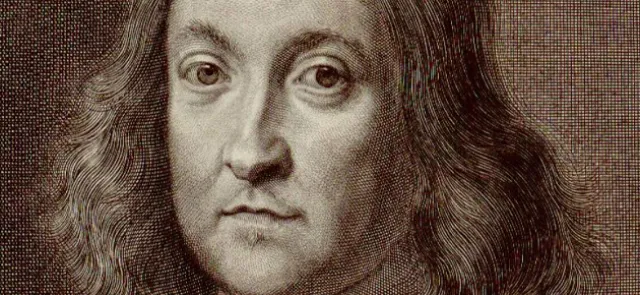
When Legendre believes he has proved the fifth postulate
For two millennia, mathematicians sought to prove Euclid's fifth postulate. Adrien-Marie Legendre believed he had found a proof, before realizing that his proof implicitly assumed the truth of that same postulate. A circular argument…
 Podcast
Fermat's false theorem
Fermat formulated many theorems, but one of them proved false: he conjectured that all "Fermat numbers" were prime, an error exposed by Euler. This notably illustrates how induction can lead us astray.
 Podcast
Fermi's wacky problems
They contain no data, yet a little ingenuity and plenty of common sense are all you need to work them out in your head: welcome to the world of the wacky problems invented by physicist Enrico Fermi.
 Podcast
Heron's method for approximating square roots
What is the square root of 50? Since 50 is not a perfect square, the best we can give is an approximation. Put away our pencils and smartphones, and let's try to work it out in our heads.
 Podcast
Grains on the chessboard and other high powers
Are billions, trillions, quadrillions and the like beyond our grasp? Not necessarily. With approximate calculations, many immense numbers become perfectly intelligible.
 Podcast
What day will Doomsday fall on? | Tangente
A classic mentalist trick is to work out instantly, in their head, which day of the week corresponds to a given date. How do they know at once that January 27, 1962, was a Saturday? Here are some of the methods they use for our Gregorian calendar.
 Podcast
Number sense — A history of mental arithmetic | Tangente
For a time, electronic tools seemed to have consigned mental arithmetic to history. Yet in recent years it has made a strong comeback among educational priorities. Far from being merely a set of automatic procedures, mental arithmetic is an irreplaceable way to explore numerical structures and deepen our understanding of certain concepts.
 Podcast
Is this number prime?
Prime numbers form the backbone of arithmetic. Although their distribution remains a subject of cutting-edge research, being able to decide mentally whether a number is prime is an excellent mental exercise—both enjoyable and creative.
 Podcast
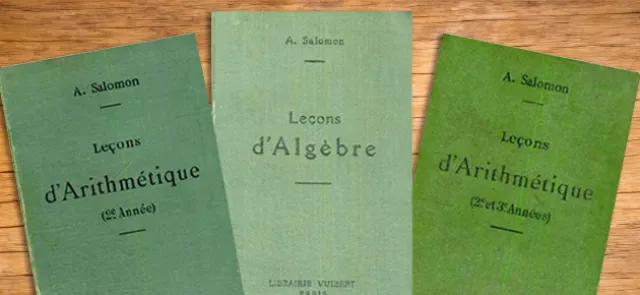
Divisibility in 19th-century textbooks | Tangente
Divisibility rules are numerous and are used by everyone who practises mental arithmetic. Blending arithmetic with common sense, they are a source of countless mathematical recreations, and have long been used in teaching.
 Podcast
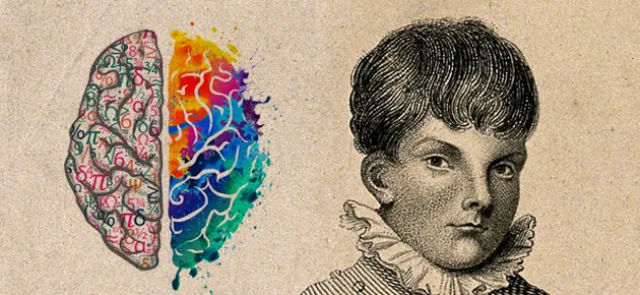
Calculating prodigies
Calculating prodigies fascinate the public with their ease in rapidly performing operations on large numbers. The tricks used by these number magicians draw on abilities that are more mnemonic than mathematical, but also on numerous methods and stratagems based on various theorems.