



At the root of numbers
This issue is not fully translated into English yet; only translated content is shown.
Read the French versionAll folders in this issue

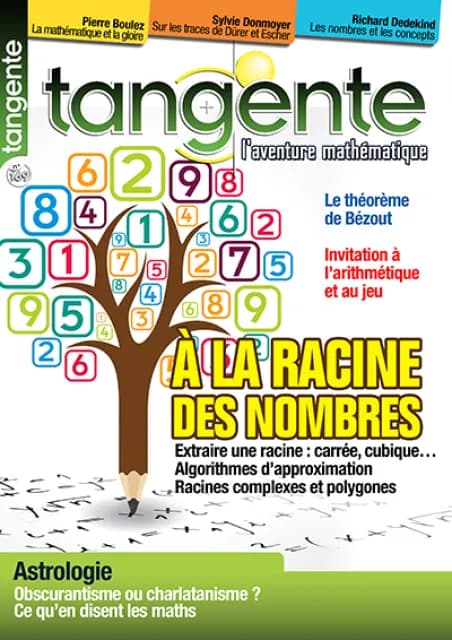
At the root of numbers
Extracting a root, for the famous scholar Cosinus, is a calculation session… at the dentist's. In maths, the methods for extracting square roots are multiple: exact or approximate, using sequences or functions, a calculator – it has become the modern reflex –, but also by hand, like at school for divisions, except that it's a bit more complicated. This will be an opportunity to discover a little-known technique for manually extracting cube roots! One can then easily generalize to complex roots, thanks to Euler, always him: their definition, the regular polygons they allow to draw, and what are called primitive roots with the concept of cyclotomic polynomial.

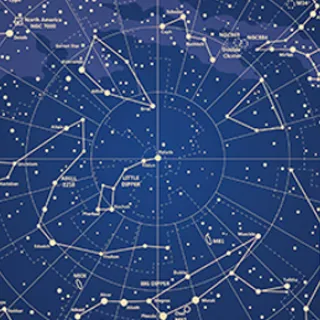
Astrology
Appeared with the Babylonians, highly developed in Antiquity but also during the Renaissance, astrology long tempted astronomers and mathematicians when the origin of gravitational forces was unknown. Although sometimes based on learned calculations, we now know it has no theoretical foundation and is based on astronomical considerations that are most often erroneous… Classified today by scientists as an obscurantist discipline, it still attracts numerous followers. Why? This is undoubtedly the domain of psychology and… probabilities. Because its only art is to make one believe in the reality of its affirmations.
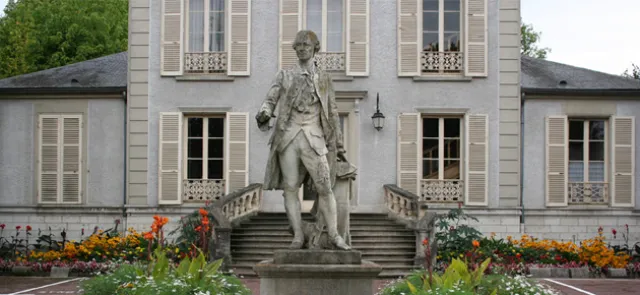
Bézout's theorem
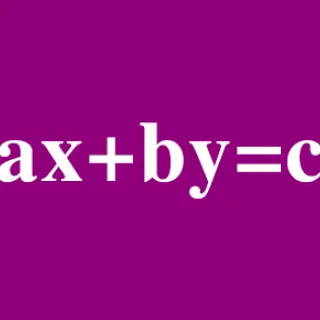
In its arithmetic version, Bézout's theorem is a true invitation to the discovery of "pleasing and delectable" problems, that Bachet de Meziriac had devised and that Tangente continues to offer you. Many elementary arithmetic results follow from it, and will allow you to exercise your sagacity. Bézout's theorem also comes in a polynomial version. This time, it has applications extending into integral calculus and plays a particular role in studying the intersection of algebraic curves.

All articles in this issue
Math teacher: a dangerous job for the government
A middle school math teacher was arrested at New York's John F. Kennedy International Airport while boarding a plane in possession of a ruler, a protractor, a compass, a slide rule and a calculator.
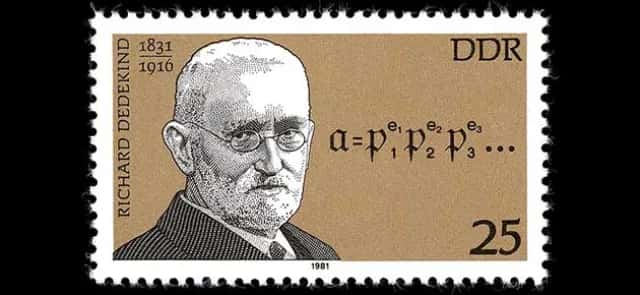
Richard Dedekind: Numbers and concepts
Richard Dedekind died on February 12, 1916. This gives Tangente an opportunity to profile a German mathematician fascinated by numbers, whose legacy continues to shape mathematics today. The concepts he introduced lie at the heart of modern algebra.

Three brilliant mathematicians would have turned 100
1916 evokes the Battle of Verdun. That same year, Halmos, Shannon and Apéry were born. Though very different, they would share an unconventional personality and an original contribution.

Pierre Boulez, mathematics and glory
"Music is a hidden practice of arithmetic, the mind unaware that it is counting," said Leibniz. Pierre Boulez, who died on 5 January, conductor, composer and teacher of music and musical composition all at once, revealed to the whole world the hidden face of "his" music, in which mathematics runs through like a watermark.
Salon 2016: mathematics is transforming our society
The unmissable Salon Culture et Jeux Mathématiques will run from Thursday 26 to Sunday 29 May on Place Saint-Sulpice. Save these dates for the (free) mathematics event of the year!
April Fools' Day mathematics
Let's take advantage of April Fools' jokes to revisit, with Stephen Leacock, a few mathematical classics in a lighthearted way…
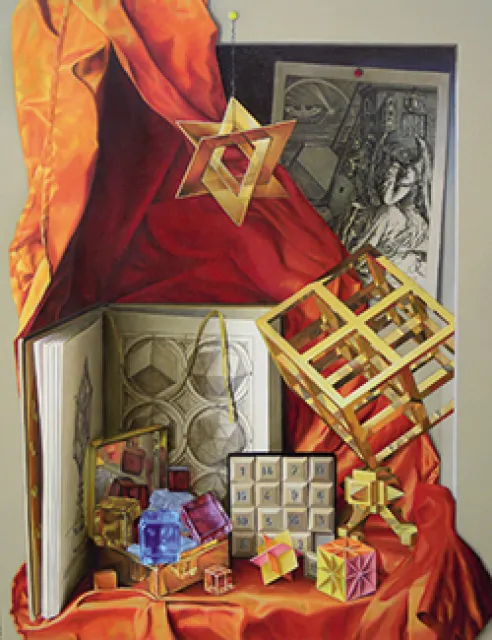
Sylvie Donmoyer, an artist fascinated by mathematics
An artist, not a mathematician, Sylvie Donmoyer is fascinated by geometric forms. In one engraving after another, inspired by Dürer and above all by Escher, she weaves connections between the two worlds of art and mathematics.
Mega primes: one more!
A quest that may seem far-fetched or pointless to some, but is of the utmost importance for our secret codes, is that of "mega primes" — in other words, prime numbers with more than a million digits.
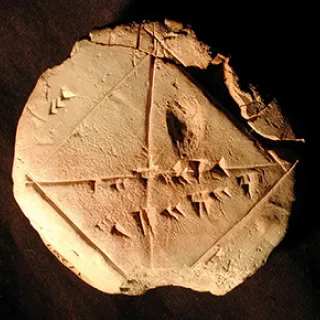
The Babylonians had calculated Jupiter's course!
Fourteen centuries before the Europeans, the Babylonians already knew enough geometry to calculate Jupiter's course!