



Famous figures
Portraits of famous mathematicians, historical and contemporary
 Podcast
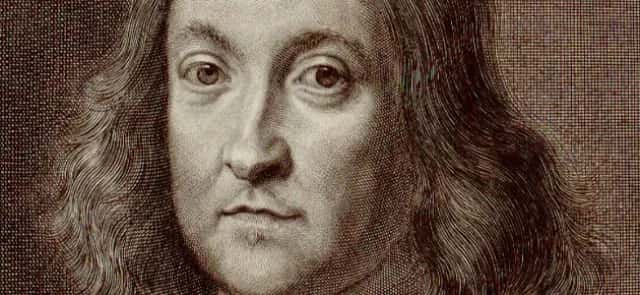
Fermat's false theorem
Fermat formulated many theorems, but one of them proved false: he conjectured that all "Fermat numbers" were prime, an error exposed by Euler. This notably illustrates how induction can lead us astray.
 Podcast
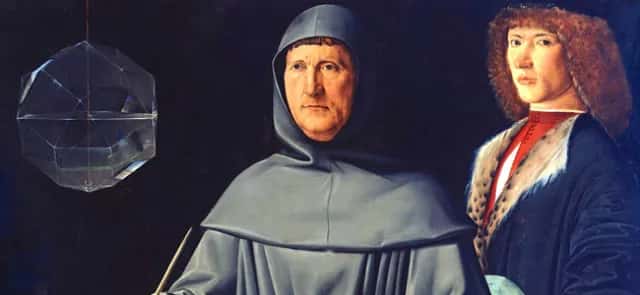
The rule of 72
Interest-rate and monthly-payment problems are hard for our brains to grasp, because we struggle to picture an exponential phenomenon. During the Renaissance, however, trade expanded, bringing with it a growing need for calculations of this kind. This led to the development of new shortcuts.
 Podcast
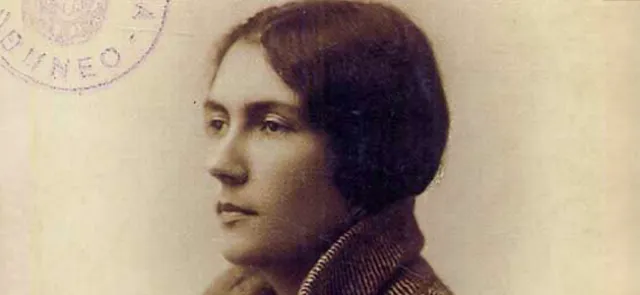
Peano by his great-niece | Tangente
Alongside official biographies, family accounts offer other glimpses into figures known mainly through their work. Lalla Romano, the celebrated Italian author, bears witness to her intellectual closeness with her great-uncle, Giuseppe Peano.
 Podcast
Hilbert spaces, a framework for quantum mechanics
The mathematical modeling of quantum physics rests on probability theory, but also on Hilbert spaces and linear maps (generally not continuous) on these spaces. The power of this mathematical structure has made it possible, for example, to calculate the energy levels of the hydrogen electron.
 Podcast
2025 Tangente High School Students' Prize | Tangente
The Tangente High School Students' Prize is now in its tenth year. Throughout the school year, students from tenth grade through their final year of high school scrutinized every book on the shortlist before choosing the winners.

A stamp bearing Grothendieck's likeness | Tangente
At the instigation of Éric Bouhier, who had already been behind four other stamps, mathematician Alexandre Grothendieck (1928–2014) was honoured with a stamp issued on 16 June 2025.

André Deledicq honoured | Tangente
On April 24, 2025, in the magnificent library of the Institut Henri-Poincaré, amid its historic collection of geometric solids, Gilles Hallout, education adviser to the Élysée, appointed André Deledicq a Knight of the Legion of Honour.
 Podcast
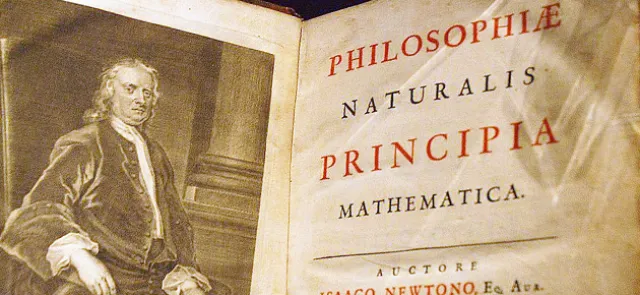
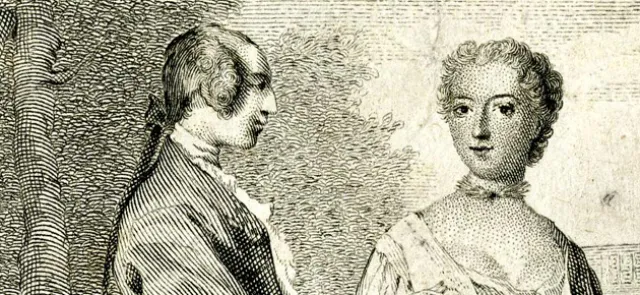
More than a translation of Newton | Tangente
Émilie du Châtelet is famous for having translated Isaac Newton's scientific work into French. Yet she did not simply reproduce the Latin text identically in French; she undertook an original rewriting of the proofs and concepts of Newtonian physics.
 Podcast
The marquise and the scholars of her time | Tangente
Among masters and peers alike, the marquise may have been unique for her sex, but she was not alone, as her many intellectual exchanges with the scholars of her time attest: Maupertuis, Clairaut, Euler, Kœnig, Johann II Bernoulli, Cramer, among many others.
 Podcast
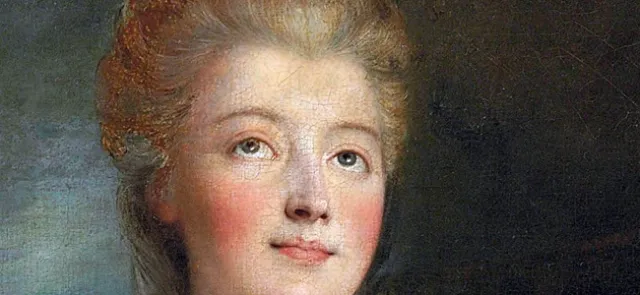
Émilie du Châtelet: From shadow to light | Tangente
As a learned woman, Émilie du Châtelet sometimes found herself overshadowed by men, beginning with Voltaire. Yet her intellectual freedom allowed her to shine and win genuine recognition.
 Podcast
Émilie du Châtelet, learned philosopher | Tangente
Émilie du Châtelet is often presented as the translator of Newton and the woman who introduced Leibniz's and Wolff's thought to France. On that view, she would be no more than a translator and a popularizer. In reality, she is far more than that: she is above all a scholar and a philosopher.
 Podcast
A happy ending
Behind this phrase lies a famous mathematical challenge that brought together two brilliant minds on a quest to uncover the hidden order within chaos. It was the birth of a beautiful love story — and of a new branch of mathematics!
 Podcast
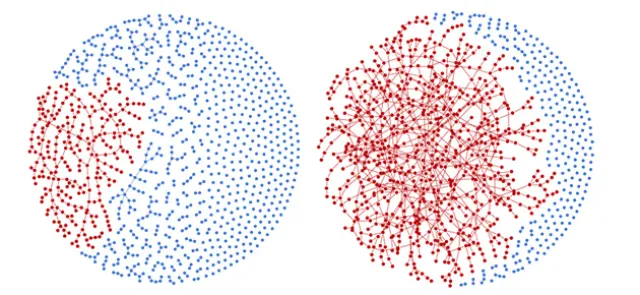
The Erdős-Rényi random graph
The Erdős and Rényi random graph model is so famous in mathematics that it has become a common noun: in probability theory, people routinely speak of "an Erdős-Rényi" the way one would speak of a Brillat-Savarin in gastronomy or a Stradivarius in music.
 Podcast
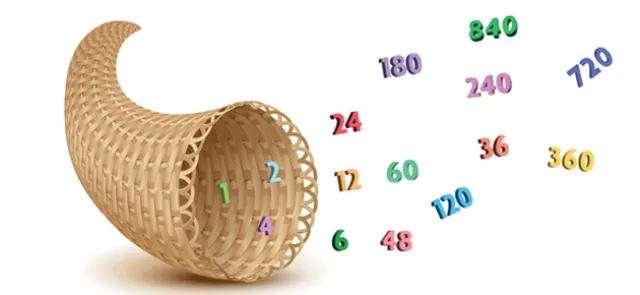
A cornucopia
Paul Erdős and Leonidas Alaoglu studied highly abundant and superabundant numbers, rediscovering along the way notions already studied, but not published, by the celebrated Indian mathematician Ramanujan.
 Podcast
Some of Erdős's work in number theory
Analytic and probabilistic number theory was one of Paul Erdős's favorite subjects. Here is a small selection of his contributions in this field, picked here and there from topics that can still be presented accessibly.

Two geometric jewels
Long after the 19th century, the golden age of geometry, Erdős took an interest in problems whose statements could appear in an elementary textbook. Among these are two jewels of elegance: the Erdős–Mordell theorem, which involves nothing more than a triangle, and the Erdős–de Bruijn theorem, which features only points defining lines.

Paul Erdős by George Csicsery — Documentaries | Tangente
 Podcast
The great book of problems
The "Book" was a project of Erdős's to bring together the most beautiful known mathematical proofs, several of which had been found by Erdős himself. Although he died shortly before the project was completed, the work was nonetheless published, authored by Aigner and Ziegler. Its successive new editions keep the flame alive.

Friends to count on — Graham, Chung and Erdős | Tangente
The married mathematicians Fan Chung and Ronald Graham were among Paul Erdős's closest friends. They took care of some of the practical aspects of Erdős's itinerant life.
 Podcast
Collaborating with Paul Erdős — Tenenbaum's Account | Tangente
Much of Paul Erdős's work was carried out jointly with others. Gérald Tenenbaum, one of the French mathematicians who collaborated with him, agreed to discuss the methods of this unconventional mathematician.