



Maths and History
Historical episodes of mathematics, mainly before the 20th century
 Podcast
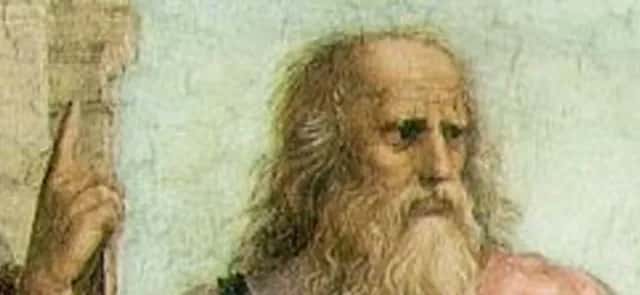
Theaetetus and the diagonal: why stop at √17?
How should we understand the famous passage in the Theaetetus where Theodorus mysteriously stops at the square root of 17? A new hypothesis emerges, involving continued fractions and triangular numbers.
 Podcast
Euler–Cramer paradox: Are 9 points enough to define a cubic?
The Euler–Cramer paradox: If nine points seem sufficient to determine a cubic curve, how can two distinct cubics also pass through those same nine points?
 Podcast
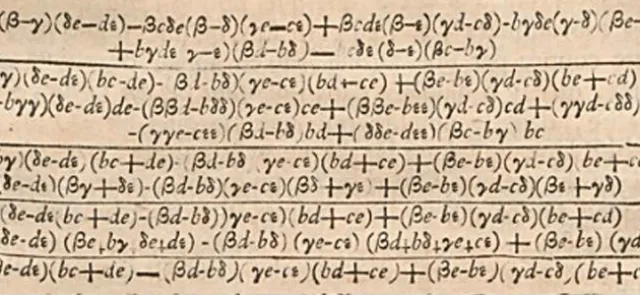
Gabriel Cramer and Cramer's rule in the 18th century
The appendix to Gabriel Cramer's Introduction à l’analyse des lignes courbes algébriques contains the famous rule for solving systems of linear equations and Bézout's theorem.
 Podcast
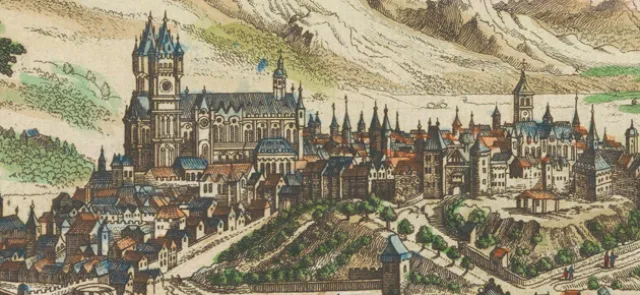
Gabriel Cramer: the journey of an 18th-century Genevan mathematician
Explore Gabriel Cramer's journey, from his education in Geneva to his European Grand Tour among the leading mathematicians of his day.
 Podcast
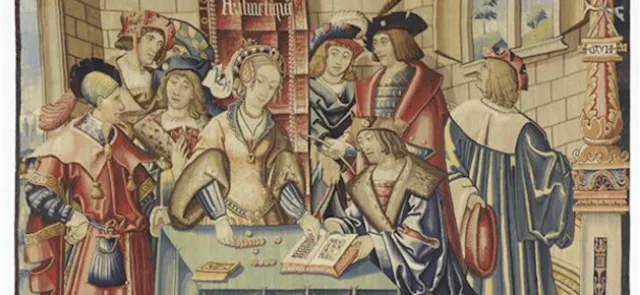
History of official statistics: from antiquity to Insee
A look back at the evolution of counting and enumeration methods, from ancient Rome to the creation of Insee in 1946.

Michel Serres: scientist and philosopher | Tangente
Did Michel Serres, who moved from mathematics to philosophy, truly leave the "queen of the sciences" behind? Throughout his career, at any rate, he never missed an opportunity to refer to the subject. Explore the mathematical landscape of this unconventional philosopher.

Patrick Dehornoy: a tribute to the mathematician | Tangente
The specialist in ordered braids also made numerous videos popularizing mathematics.

Breaking the ADFGVX cipher in 1914–18
For the second phase of the German spring offensives of 1918, the Germans added the letter V to the ADFGX cipher. But Georges Painvin broke the new cipher within hours… paving the way for final victory. The new system, though apparently more sophisticated, was actually weaker!
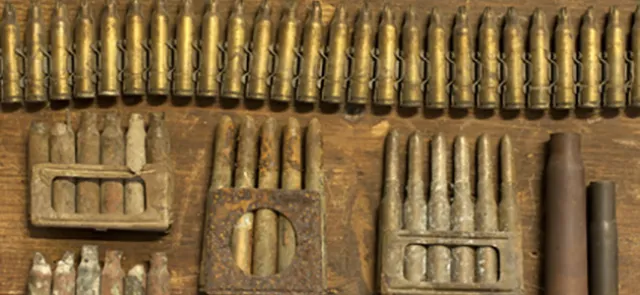
Artillery detection: trigonometry in World War I
During the Great War, artillery caused two-thirds of all casualties. Locating enemy batteries was therefore important so that counter-battery fire could silence them. Surprisingly, the search leads to an old geometry problem!

Mathematicians killed at the front: Gâteaux, Levi and others
Mathematicians, too, paid a heavy price in the Great War, leaving the scientific world with irreparable losses.
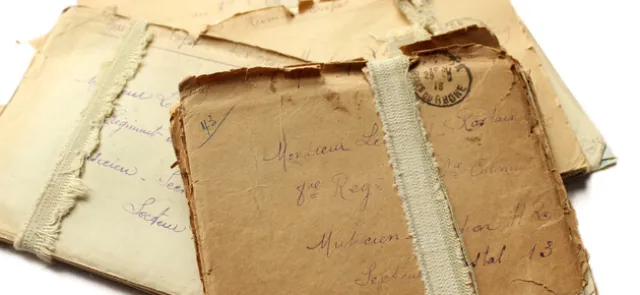
The Great War and European mathematics
The deadly conflict of the First World War shattered international academic cooperation. It also took a devastating human toll, killing many scientists who had seemed destined for brilliant careers. Finally, it profoundly altered the place of mathematics in France.
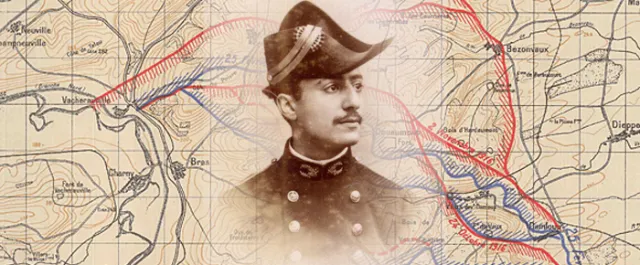
André-Louis Cholesky: soldier-scholar and algebraist
In numerical analysis, the Cholesky method is a celebrated example of a scientific discovery made in one field—military geodesy—that went on to find applications in an ever-growing number of others.

The ruler: history of a measuring instrument
Let's rediscover this object we think we know...
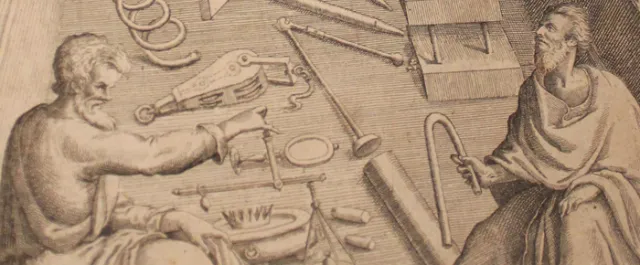
A high-flying formula
Most of us learned how to use a compass to construct a triangle from the lengths of its three sides. Those three numbers are enough to determine a triangle. But how can we find its area from those data alone? That is precisely what Heron's formula does.
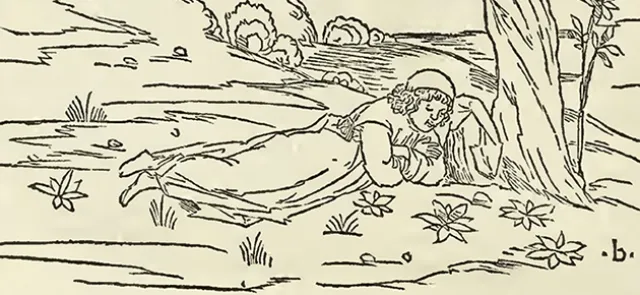
Steganography, cryptography's inseparable companion
While cryptography seeks to make information unintelligible, steganography aims to conceal the very existence of that information. The idea is to hide it within a drawing, image, text or sound.

Codebreaking in intelligence: history and methods
Throughout history, decrypting coded messages has played a major—though often overlooked—role. From the first battle won through cryptography alone to the breaking of Enigma, examples abound, but they have often been kept hidden. That remains true today.
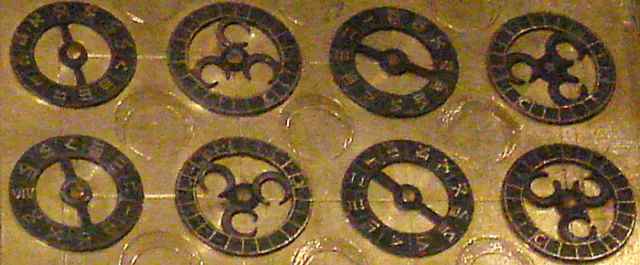
Cryptographic machines: a history of encryption
Since antiquity, people have sought to ensure the secrecy of their correspondence through encryption. Because simple methods were easily decrypted, more sophisticated ones were invented, but they were difficult to use by hand. Machines therefore became essential.
The fascination of gears: geometry and mechanics
Gears are both objects of fascination and symbols of mechanics. Determining the shape of their teeth is a sophisticated mathematical problem. Yet this long history, which stretches back to antiquity and is still being written, remains remarkably little known!
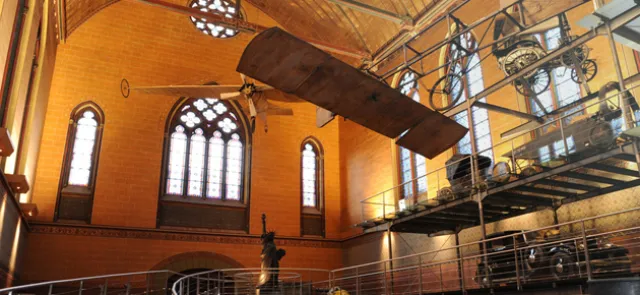
A tour of the Museum of Machines: mathematics and mechanisms at the CNAM
Mathematics isn't visual? You can't really represent it "in the real world," let alone make it tangible? Think again! The Musée des arts et métiers (60 rue Réaumur, 75003 Paris) invites you to revisit its collections… through the surprising lens of mathematics.

An interactive journey through mathematical history
Reading Tangente already lets us travel through mathematical time and space—but have you ever thought of taking a virtual tour around the world and, at each stop, discovering the full history of mathematics rooted there?