



Famous figures
Portraits of famous mathematicians, historical and contemporary
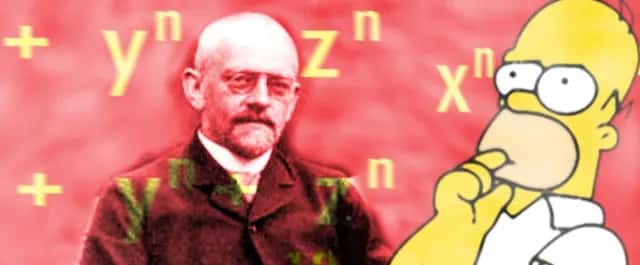
Hilbert, the twenty-three problems and physics
In his plenary address at the second International Congress of Mathematicians in 1900, David Hilbert presented the world with his famous "twenty-three problems." Some relate directly to physics; others have driven advances in both physics and mathematics.
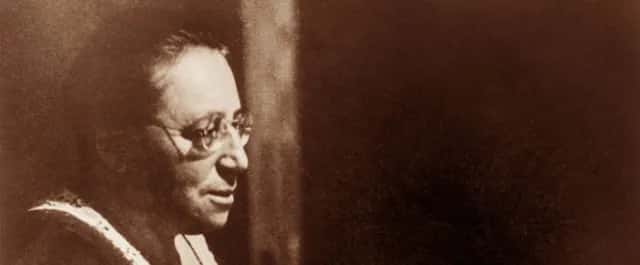
The unforgettable Emmy Noether
A strong-willed woman and visionary mathematician, Emmy Noether defied many restrictions throughout her life and opened up new fields in mathematics and physics.
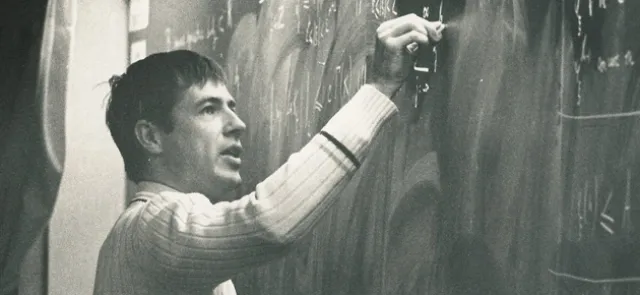
Jean Bourgain, exceptional Fields medallist | Tangente
The prodigious Belgian mathematician Jean Bourgain (1954–2018) worked in many fields of mathematics, forging wholly unexpected links between seemingly separate areas. His outstanding results earned him numerous awards.
An invariant under central projection
The need to model visual perception gave rise to a new geometry. Renaissance painters felt compelled to study it closely in order to depict depth. Lengths, angles: nothing seemed to be preserved, apart from a curious relation linking four collinear points…

Karen Uhlenbeck: first woman to win Abel Prize | Tangente
Following Ingrid Daubechies and Claire Voisin, another female mathematician has been honored this year.
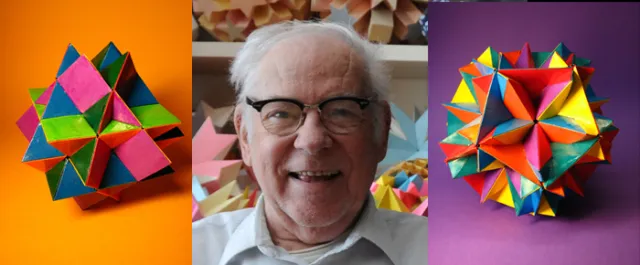
Magnus Wenninger, the "pope" of polyhedra
Building polyhedra is said to require the patience of a monk. Fittingly, the 20th century's greatest polyhedron builder was a Benedictine: Magnus Wenninger died in 2017 after a very long life devoted to God and geometry.
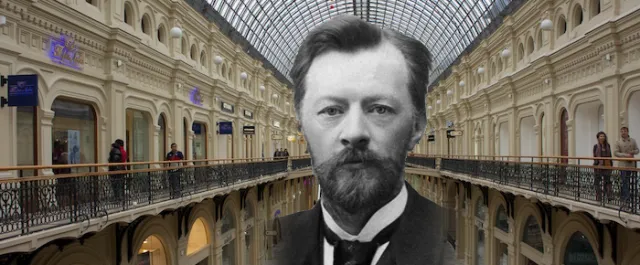
Vladimir Shukhov, Russia's Gustave Eiffel
A mathematician by training, Vladimir Shukhov was one of the leading figures in Russian architecture from 1890 to 1930 and was strongly influenced by Constructivism. His building designs made him a forerunner of contemporary architecture.

The epic of non-Euclidean geometries | Tangente
In antiquity, Euclid essentially postulated that, given a point A and a line D, there is exactly one line through A parallel to D. Two millennia later, three mathematicians share the glory of having proved that a geometry could exist without this "fifth postulate".
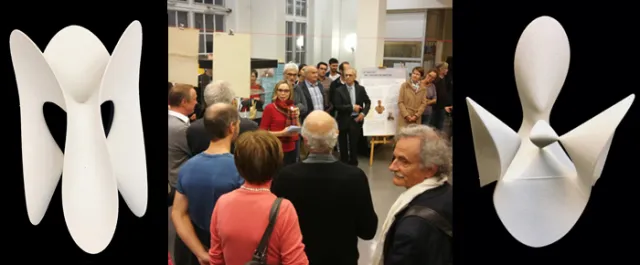
Darboux, the geometer who expanded the study of surfaces | Tangente
The Institut Henri Poincaré hosted an exhibition entitled "The Depth of Surfaces," devoted to the mathematician Gaston Darboux. Its scientific curator was Barnabé Croizat, a specialist in this great French geometer.
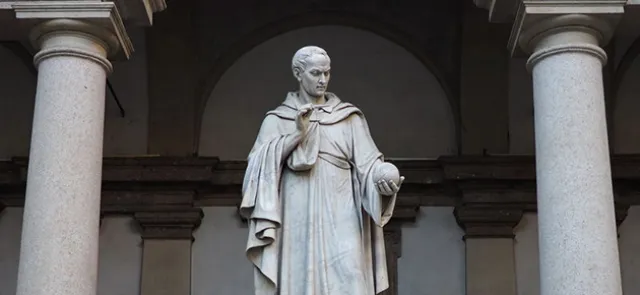
Measuring areas
As soon as we move beyond elementary figures, calculating area brings us up against the concept of infinity. After Archimedes and his skilful use of potential infinity, it was not until the Renaissance that this obstacle was finally overcome.
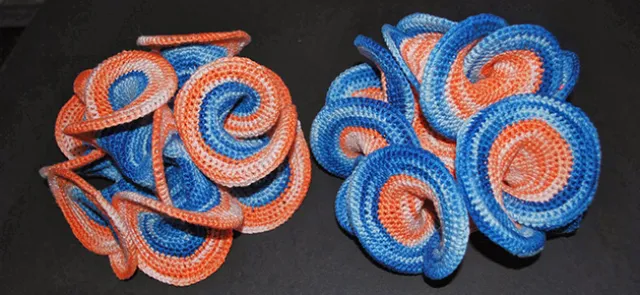
Knitting topological surfaces | Tangente
Knitting is generally used to make clothes. Mathematicians face no such limitations: they are interested in other kinds of surfaces that can be recreated with yarn and a needle. The result? Objects that are at once geometric, educational and… artistic!

Richard Serra: sculptures and surfaces at the Guggenheim | Tangente
In his installation "The Matter of Time," Richard Serra takes us on a journey through eight monumental sculptures, created between 1994 and 2005 and installed in a gallery at the Guggenheim Museum Bilbao, Spain.

François Viète and algebraic zetetics | Tangente
Henri Broch revived the word "zetetics." Long before him, François Viète (1540–1603) had already used it in a slightly different sense.

Russell's teapot and the burden of proof | Tangente
We often hear the phrase "absence of evidence is not evidence of absence." This statement is ambiguous: many fanciful claims cannot be disproved.

Séphora-Berrebi scholarships: 2019 winners | Tangente
The four Séphora-Berrebi scholarships, each worth €2,000, are awarded to female doctoral or postdoctoral researchers who have distinguished themselves through their research in mathematics or computer science.

Félix, inventor bridging art and mathematics | Tangente
Sculptor, architect, engineer, mathematician? No doubt all of the above! Gérard Chamayou, known as Félix, was one of those who refused to accept barriers between disciplines, and his gift was to move among them with a provocative yet deeply humane spirit.

Three mathematicians honored in 2019 | Tangente
The 2019 L'Oréal-UNESCO For Women in Science Award went to Claire Voisin and Ingrid Daubechies. At the same time, Jean-François Le Gall received the prestigious Wolf Prize.

Knuth's octagons
The American mathematician Donald Knuth created TeX, a mathematical typesetting system based on Bézier curves.
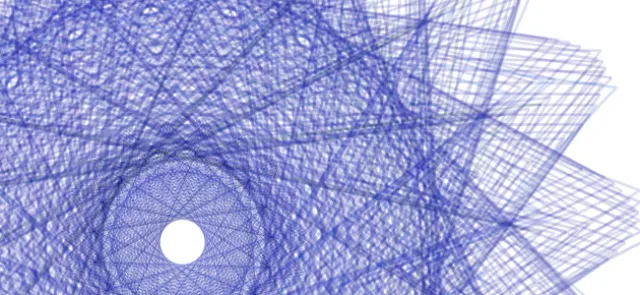
Family reunion
Some geometric figures are a delight to behold: a host of skilfully arranged lines, intertwined with a graceful curve that seems barely to touch each one. What mathematical theory lies behind them? The theory of envelopes of lines.

The art of making numbers talk
We are awash in numerical and statistical information. Yet even objective, accurate data can be interpreted misleadingly. A little calculation and a sound grasp of error theory can correct some unwarranted conclusions.