Folders
Discover how great mathematicians shaped our world, explore the links between math and other fields like art, music, or even philosophy, and relive the key moments that marked its evolution.

With circles
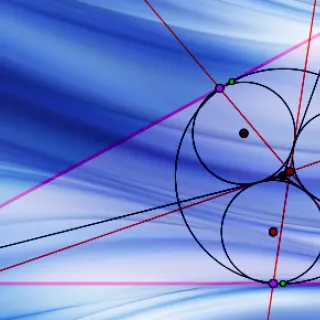
In plane geometry, the tangent, we all know it... as soon as the construction features a circle (C), a line (D) and a point P. However, there are far richer situations! With only tangent circles, an extraordinary diversity emerges. Thus the arbelos, whose vertiginous iterative construction gives rise to countless properties, each more astonishing than the others, fascinated the Ancients. Archimedes' twin circles and the chains of Pappus plunge us into the heart of one of the most elegant geometric transformations, inversion. Closer to us, Malfatti circles allow us to revisit from another angle the notion of incircle. Tangency has not finished amazing us!

Without paper or pencil (nor screen)
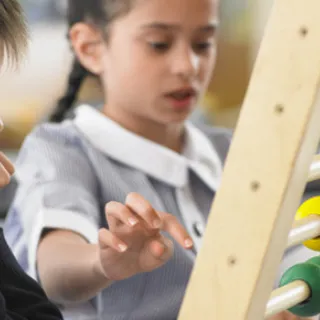
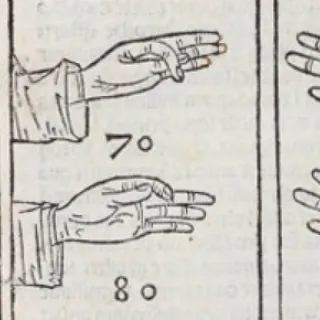
While prohibiting the traditional tools of writing, mental calculation can be enriched with objects that make it possible to track the progress of an operation. For example, rather than considering a number from its decimal representation, some calculators rather visualize it by imagining it written on an abacus. By juggling internally with the beads of the soroban rather than with the usual digits, or by cleverly using the support of the fingers, new horizons open up for developing our calculation abilities in new directions.
Women and mathematics
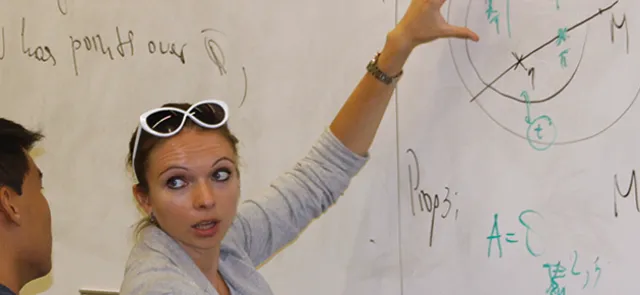
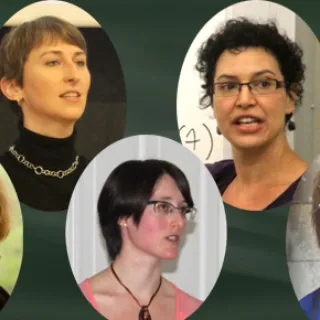
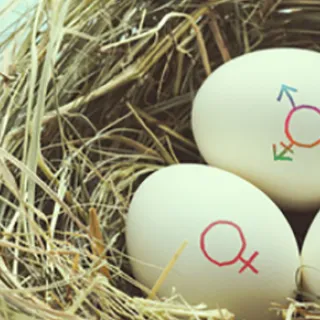
Women are underrepresented in the population of mathematics users, from high school to highly qualified scientific jobs. What is the origin of this asymmetry? Gender stereotypes, deeply rooted in people's minds, contribute to this. How can we remedy this? Should quotas be imposed, or language formulations such as inclusive writing? Associations, like Women and Mathematics, work to change mindsets. Nevertheless, talented women have taken their place at the highest levels in key institutions or associations, paving the way for a desirable evolution. N.B. You may also read: - in Tangente Éducation 44, a dossier on the same subject, focused on girls/boys equality in school; - on the website www.infinimath.com/femmes-en-maths, a compilation of all previous Tangente articles on the subject, updated by their authors.
Women's education
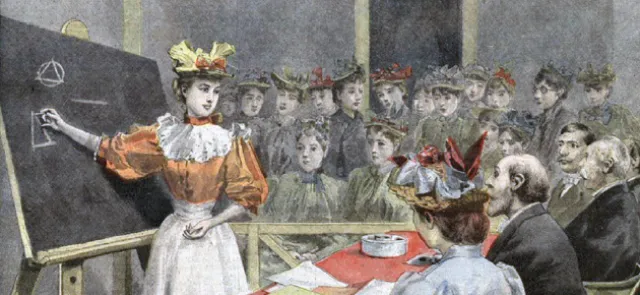
In the 19th century, in France, school gradually took on the role we know today and, thanks to various feminist movements, people came to believe that it would be useful for girls to attend as well to learn to think for themselves too. From then on, there was a need for mathematics teachers and a women's aggregation in mathematics was created. In parallel, opportunities opened up in England, the United States and Germany. Across the Atlantic, Bryn Mawr University, reserved for women, became a highly dynamic center that trained generations of female mathematicians. In Germany, the University of Göttingen welcomed an increasing number of young female researchers.

Work in celestial mechanics
Newton's law of gravitation is the foundation of work in celestial mechanics. It nevertheless sometimes seems to malfunction. Thus, Jupiter and Saturn do not seem to behave as expected; the tidal flow is greater than what the theory predicts. Through extensive work, Laplace discovers little-known phenomena: the so-called Coriolis forces, tidal dynamics, gravitational resonances... The Norman polymath had even predicted the existence of black holes!

Zeteticism
Scientific thinking makes it possible to distinguish between opinion, belief and science. An indispensable tool for every citizen, at the initiative of Henri Broch in the 1980s, it became the subject of scientific methodology teaching for students. He named it zeteticism, thus reviving an old term used by writers and philosophers since Viète. The use of this critical spirit to dismantle paranormal beliefs helped bring zeteticism to public attention. Mathematics, in particular the interpretation of statistics and the famous Simpson's paradox, offer reasoning tools that make it possible to avoid intellectual obscurantism and to demonstrate the perfectly natural character of certain phenomena.

Zoom on the hyperbola
Less famous than the ellipse or the parabola, the hyperbola deserves a closer look. After setting out its definitions, this feature explores its hidden treasures. Replace the unit circle with a hyperbola: sine and cosine transform into new objects, as elegant as they are unexpected. Rotate it around its axis: the hyperboloid of revolution that results fascinates architects and engineers with its extraordinary structural properties. And last but not least: where the ruler and compass fail — trisection of the angle, construction of the regular heptagon — the hyperbola, for its part, succeeds.
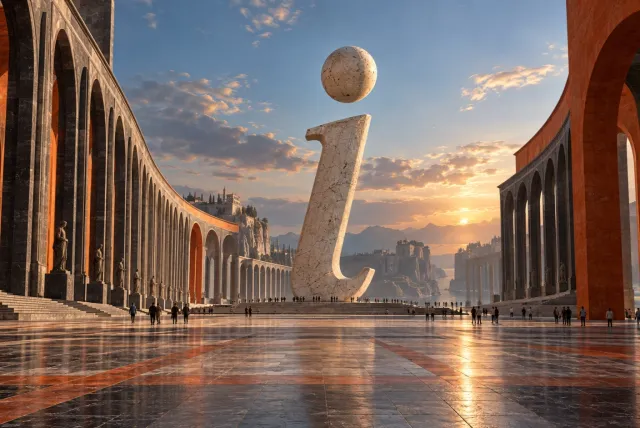
i, the power of the imaginary
Necessity makes the law, as they say, and in mathematics this is indeed often the case. Even when an idea seems absurd, if it proves useful then it ends up finding its place. The number i, this "number whose square equals −1" that the rule of signs forbids from existing, is among them. Certain results obtained with it were questionable or even inconsistent. Above all, one could not form a concrete representation of it. Its initiators such as Bombelli, in the Italian Renaissance, were certainly far from imagining that the computational oddity they used with caution would one day be elevated to the rank of fundamental constant of algebra.

recursion
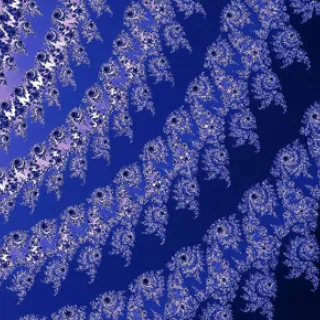
Applying iterative processes from the past could prove to be lengthy and tedious. With the advent of computer science, new avenues opened. Writing recursive programs, calling themselves, makes it easier to prove that an algorithm works correctly. From a practical standpoint, recursion offers an elegant and often clear alternative to loops. The (short) writing of these recursive programs, combined with increasing computing power, opens horizons in solving varied problems that still occupy mathematicians, in combinatorics, geometry or operations research. The development of fractals, so dear to Benoît Mandelbrot, also allows everyone to experiment today with this powerful concept of a function calling itself.

Émile Borel, the Scholar and the Statesman
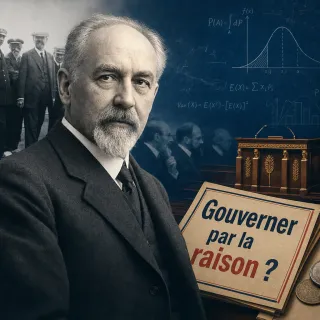
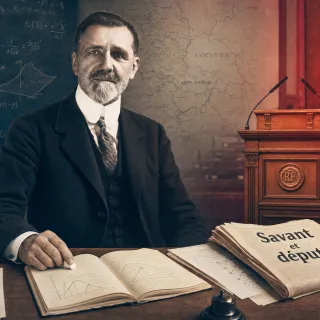
Mathematician, committed politician and influential member of the French intelligensia, Émile Borel alone embodied the ideal of the "Republic of Professors". From Dreyfusism to the Resistance, via the Popular Front and the early days of European construction, he conducted scientific research and civic struggle side by side, convinced that the same rational rigor governs science and politics. His work on measure and chance — notions whose mathematical depth far exceeds intuition — laid lasting foundations, from Lebesgue's theory to normal numbers. The latter, whose strangeness the writer Jorge Luis Borges seemed to have foreseen in his fiction, still open up unexpected horizons today, from ergodic theory to computer science.