Folders
Discover how great mathematicians shaped our world, explore the links between math and other fields like art, music, or even philosophy, and relive the key moments that marked its evolution.

Translating mathematics
Due to their timeless and universal character, mathematics is a subject of choice for translation. Scholars, juggling between different languages, have strived to make scholarly texts available to everyone in the language of culture, sometimes making it possible to save fundamental works. Thus, the history of the translation of mathematical texts includes iconic places, such as Alexandria, Baghdad or Toledo, and stars like Boethius, the Banu Musa brothers or Adelard of Bath. But beware of imprecise transcriptions: the smallest deviation from the original meaning can ruin the entire endeavor. How, then, to translate a technical term, a new concept or a subtle idea into a language whose vocabulary is not sufficiently adapted? Some amusing awkwardnesses have thus come down to us.


Two instruments in history
Two instruments, the unmarked ruler and the compass, came to the fore from Antiquity. They materialized the first axioms of Euclidean geometry and allowed its array of challenges to spread through space and time. They gave rise to a myriad of construction techniques and mathematical tricks, also exploited by artists whose drawings produced wonders. Beyond the alliance of these two mythical tools, spectacular results were achieved with only one of the two.


Unusual Mathematics
Mathematics can maintain a sense of wonder. Logic with surprising paradoxes, geometry with optical illusions, calculation with automatic magic tricks are some of the areas where this sense of wonder is encountered, generated by the underlying presence of a mathematical principle. Admiration can also arise from the unexpected, even incredibly beautiful way a problem is solved, thanks to a deus ex machina, this sort of divine intervention that triggers the ha ha, "the flash of understanding" as Martin Gardner called it.


Various metrics
Since the end of the 19th century, mathematics has embraced the abstract notion of distance by integrating new ways of calculating it in the plane or space: the 'Manhattan' distance, travel time distance... One can then wonder what the corresponding 'circle' looks like. Drawing skills are sometimes necessary to trace the surprising shapes that answer the question. The axiomatization of the concept of metric space also makes it possible to extrapolate distance to combinatorics, analysis, and even algebra. The objects considered are no longer necessarily points in the classical sense. One can then, for example, define a distance between two functions.

Vector spaces, history and axiomatics
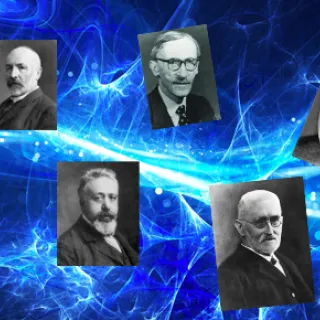
The concept of vector space gradually emerged throughout the 19th century, in order to formalize the space that surrounds us. Visionary pioneers enabled this shift in perspective by introducing the right concepts of « basis », of « dimension », of « determinant », of « linear map »… Linear algebra became the framework for studying numerous theories, particularly in analysis. Today, with the development of computer tools, linear algebra is more easily implemented through matrix computation.

Very large numbers!
In science as well as in everyday life, we are led to encounter large numbers. The way to name them then depends, according to countries, on the choice of the scale used, long or short. The imagination of scientists, particularly mathematicians, being boundless, techniques for designating even larger numbers have been developed. This is the case, from Antiquity, with Archimedes' The Sand Reckoner. More recently, in the 20th century, John Conway and Donald Knuth developed new notations for numbers immensely larger than the number of elementary particles in the universe. And what is even more surprising, is that they are found in certain theories!

What is official statistics?
Official statistics are at the heart of daily life with its immense production of figures. However, it is often confused with statistics emanating from the private sphere, like surveys on voting intentions or on the priorities of the French. In fact, official statistics have a history, which goes back to the ancient practice of counting the workforce of cities and states that need information to better know and govern themselves. With the establishment of large-scale data collection and coherent databases, methods have been refined: development of sampling techniques, birth of econometrics, big data shift…


What mathematics owes to physics...and vice versa
In the history of the development of scientific thought, it is often difficult to distinguish what belongs to mathematics from what is initiated by physics. Scholars rarely confined themselves to a single field at that time. The role of mathematics then evolves, as the physicist changes paradigm: calculation tool, reservoir of models, predictive instrument… From the method of exhaustion already used by Archimedes to the Fourier and Maxwell equations, the examples to explore are numerous.

When fractions continue
They continue, the fractions! Fundamentally confined to the set of rational numbers, they nevertheless manage to escape it when we let them continue to infinity. On this topic, there are multiple ways to do it. One of them consists in adding them again and again, to get closer and closer to irrational numbers like π. A second possibility consists in arranging fractions in a binary tree to obtain them all. Finally, a major method, algebraic or arithmetic techniques make it possible to construct fractions of fractions, which continue to infinity and thus define... continued fractions.


When geometry and combinatorics get involved
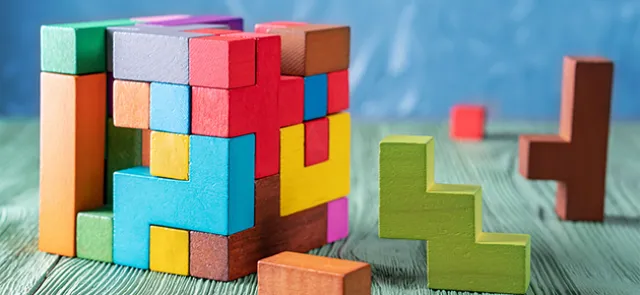
Graphs and probability are not the only areas of mathematics that board games draw upon. Geometry, and even topology, often come into play when it comes to placing pieces of various shapes on a board. Combinatorics is also, of course, the key to many games. But we must not forget number theory, which often makes it possible to imagine models of the relationship between certain game situations and numbers associated with them.