



Knowledge
In-depth articles on mathematical knowledge and theories
Pascal's rhetoric of chiaroscuro | Tangente
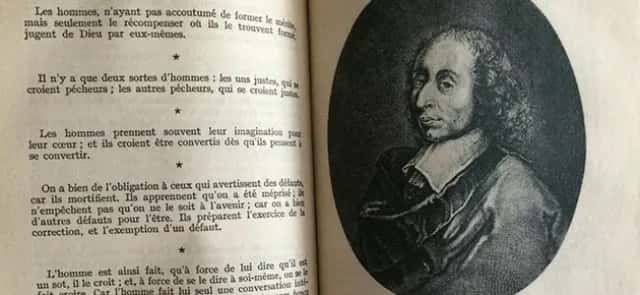
Pascal's dialectic consists in identifying the paradoxes and contradictions in another person's discourse. He thus unsettles his readers, making them realize that where they thought they had knowledge, they know nothing. Antithesis is one of his favorite weapons.
Properties of the arithmetic triangle
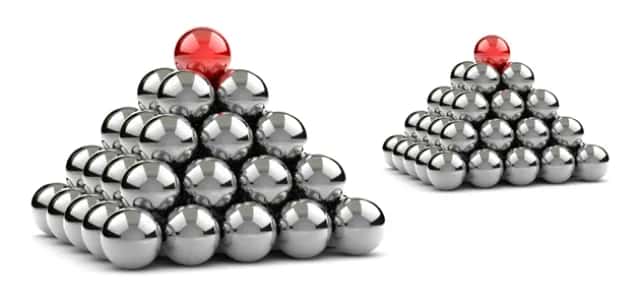
Although Blaise Pascal did not invent the triangle that bears his name, the name pays tribute to his study of it in a treatise that has remained famous in the history of mathematics. Let's delve into this extraordinary text!

A neatly wrapped gift—Divisibility | Tangente
Is the integer 19,061,623 divisible by 37? It is hard to answer "quickly." Yet there is a way to devise simple, effective divisibility tests in no time, without having to perform the division by hand. Blaise Pascal has an arithmetic gift for you!
The art of fair division
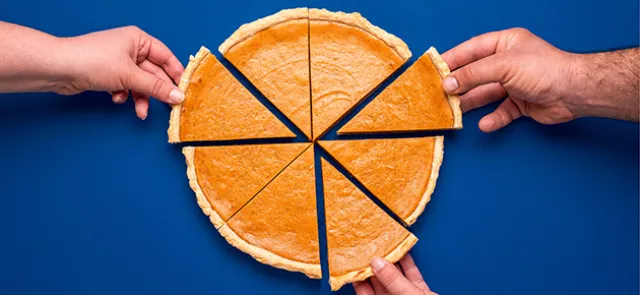
Blaise Pascal had a gift for illuminating all manner of situations through sound, precise analysis, pinpointing the difficulties and explaining himself with unsurpassable clarity. One of the most famous questions in probability—the problem of points—was a case in point.
A master of mathematical induction
Mathematical induction is a major tool in mathematical proofs. On at least three occasions, Pascal explicitly uses reasoning that is "almost" mathematical induction, making him one of the method's inventors.
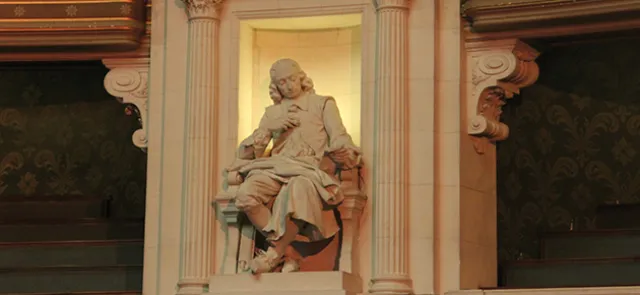
An extraordinary mind — The life of Pascal | Tangente
Blaise Pascal was no universal scholar, but he developed a rigorous, experiment-based scientific method that enabled him to transcend the prevailing orthodoxy and open up new avenues in both mathematics and physics.

Sidon sets
Number theory is a branch of mathematics that still contains questions that are easy to state yet remain unsolved. Sidon sets, in which the differences between pairs of terms are all distinct, are a case in point.
Happy New Year! The properties of 2023
As is now customary, the Tangente team explores the properties of the year number in our Gregorian calendar. What can we say about 2023? We will examine it in particular through the Josephus sieve.
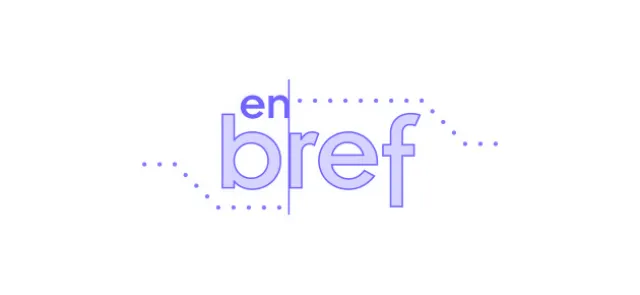
The football World Cup's "8" | Tangente
Despite its Möbius-strip appearance, the logo of the 2022 FIFA World Cup is simply an "8".
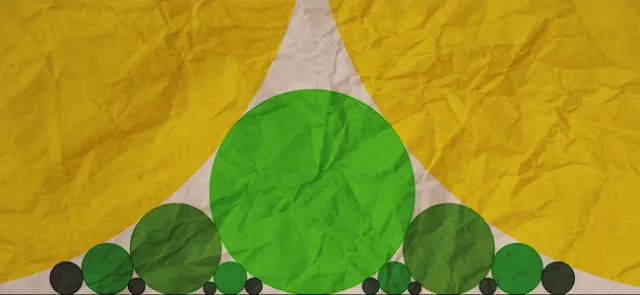
Geometric puzzles at infinity
Some of the most famous sangaku figures echo other mathematical constructions, forging beautiful connections between results established in different places and at different times. Here is a particularly striking example.

The golden ratio in sangaku
Though Western in origin, the golden ratio is said to be everywhere. So we went looking for it in sangaku… and struggled to find it, except in a few rare figures. But perhaps we simply overlooked it!
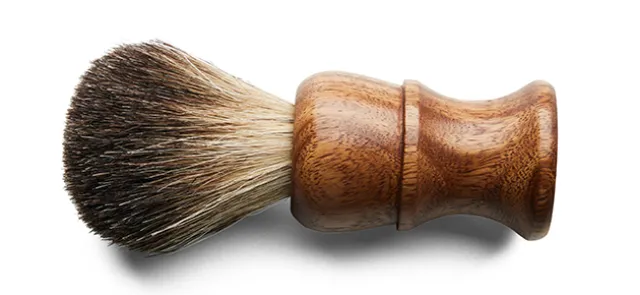
The barber was a woman
The barber paradox is said to be just the thing for dazzling people at parties. Although it serves an educational purpose by illustrating one of the most fundamental results in set theory, taken out of context it may well backfire on you!
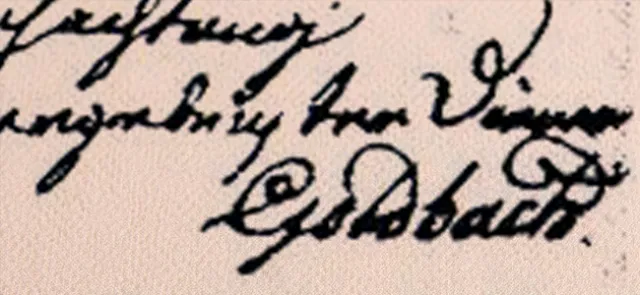
A passion for Goldbach's conjecture | Tangente
In set theory, which Cantor founded, intuition has little place. Yet his approach to open mathematical problems relied more on intuition than on rigorous reasoning. His interest in Goldbach's conjecture is a case in point.

Geometry theorems
With the country cut off almost entirely from the world during the Edo period, Japanese mathematics developed in isolation for more than a century and a half. It was during this period that highly distinctive geometric puzzles flourished and prospered.
Cantor−Bernstein:
Georg Cantor left his mark on the history of mathematics through his study of infinite sets. The Cantor–Bernstein theorem shows how a few results that are obvious for finite sets generalize to infinite sets… provided one takes a serious look at the question.

The beautiful geometry of sangaku
A sangaku was originally a Japanese wooden votive tablet. It sometimes bears an engraved geometric figure with the statement of a problem, together with the solution or sometimes a hint.

Constructing tangents
If we know how to carry out the classic straightedge-and-compass constructions, we are perhaps less at ease drawing the common tangents to two circles. Now is the time to put our whole range of knowledge of Euclidean geometry into practice!
The revenge of the tangent spheres in 4D | Tangente
By shedding new light on the semiregular polyhedra of space, Alicia Boole Stott's method makes it possible to go further and explore objects in the fourth dimension. In particular, she was able to set out in search of semiregular polytopes.

Tangent or asymptote?
Confusing "tangent" and "asymptote" is a very common mistake: what student has never made it? Yet the distinction between the two notions is perfectly clear. An exploration of certain constructions in projective geometry will nonetheless force us to call our certainties into question.

Deviation of a curve from a tangent
Newton and Leibniz, the founders of differential and integral calculus, studied how a curve deviates from a tangent. To this end, they drew on the notion of curvature. The fundamental ideas of these two scholars gave rise to contemporary mathematical analysis.