



Maths and art
Intersections between mathematics and artistic expressions: music, painting, architecture, design
Art and mathematics: creative encounters | Tangente
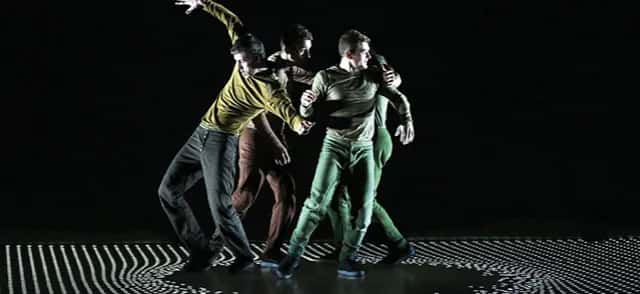
Digital art takes many forms, surprising us with the new territory it explores. It can be 2D or 3D, static or moving, passive or interactive. It lies at the intersection of art and technology. How have artists moved from a mathematical concept to creating a work of art?
Xenakis’s UPIC: mathematics and music | Tangente
One of the pioneers of the digital revolution in music was the composer Iannis Xenakis (1922–2001). Music has always had an underlying structure closely related to mathematics, but with a composer like Xenakis, this synergy found concrete expression.
Digital technology and music: benefits and limitations | Tangente
The introduction of digital technology into the arts was a genuine revolution. In music, that revolution took many forms.
Art, virtual tokens and blockchain | Tangente
The best-known blockchain is used to verify ownership of bitcoins in a way that is, in principle, tamper-proof.
Towards vector art: art and digital technology | Tangente
If contemporary art has been marked since the twentieth century by a succession of avant-garde movements, most often breaking with their predecessors, today's digital art is no exception.
Teja Krašek in Escher's footsteps | Tangente
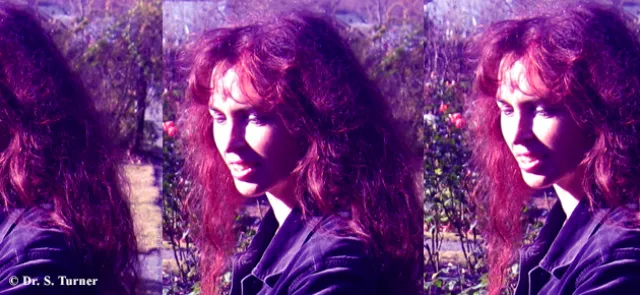
Born in Celje, Slovenia, Matjuska Teja Krašek (pronounced "Teyla Krashek") lives and works in Ljubljana. Her work draws on her fascination with symmetry, fractals and, more broadly, the beauty she sees in mathematics. She agreed to share her passion with us.
Penrose and the Kleenex affair | Tangente
In the 1970s, Roger Penrose filed patent applications for several of his aperiodic tilings (!) and founded a company, Pentaflex, to manage the patent rights.
Dazzling Penrose tilings
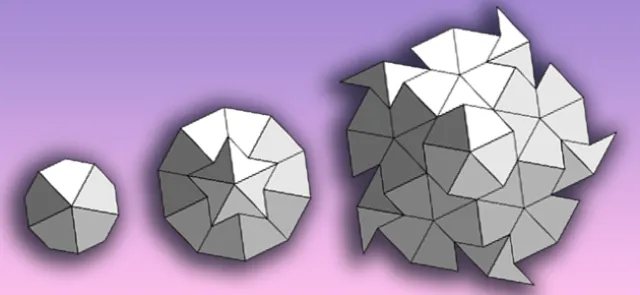
Sir Roger Penrose is renowned for his remarkable and foundational work in geometry and cosmology, and for the applications of that work to black holes. It is puzzling, however, that he is famous to the general public for the tiling that bears his name, with its many remarkable properties.
Squares in art | Tangente
Several artists have taken an interest in the square in order to explore its geometry
Penrose takes center stage to kick off 2021 | Tangente
To mark the award of the 2020 Nobel Prize in Physics to Sir Roger Penrose—a mathematician well known for his work in cosmology, differential geometry, tilings and science communication—Tangente is shaking up its schedule!
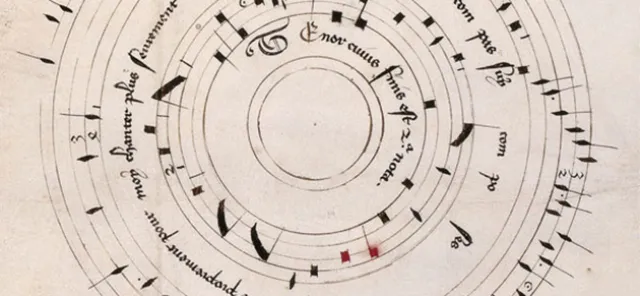
Musical iterations | Tangente
The first iterative process in music gave rise to the Pythagorean scale. Since then, recursive processes have been widely used in musical composition, from Johann Sebastian Bach to contemporary music. Their use is limited only by composers’ imaginations!
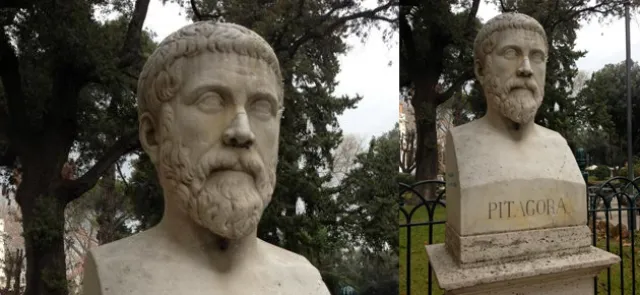
The Pythagorean scale
Pythagoras is often credited with the idea that everything is number. Less well known is that his view of mathematics was closely bound up with musical harmony—not only the "harmony of the spheres," but the actual construction of a musical scale using numbers.
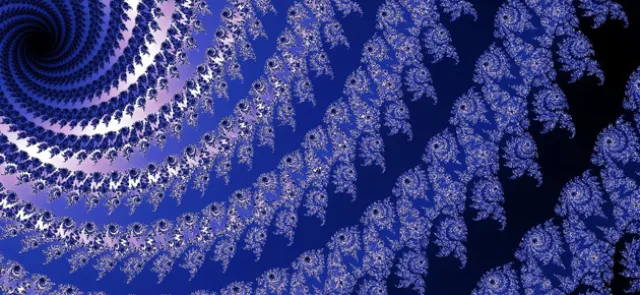
Fractals: the aesthetics of iteration
Repeating a geometric transformation at different scales produces fascinating figures whose aesthetic appeal is far from their only attraction. Let's (re)discover the most iconic fractals!
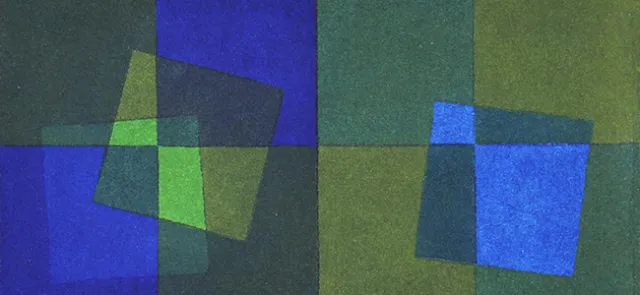
Albert Ayme | Tangente
Albert Ayme left his engineering post in 1960 to devote himself to painting and sculpture. His scientific training led him to devise a combinatorial system of variations on the square, combining visual pleasure with mathematical rigor. He made the square magical!
Tilings: Conway's criterion | Tangente
You have probably heard of tilings, but do you know this simple criterion for determining whether a polygon can tile the plane?
Mary Everest Boole, a surprising educator
Mary Everest did much to advance mathematics education. Among her innovations were the thread boards she used to make curves tangible.
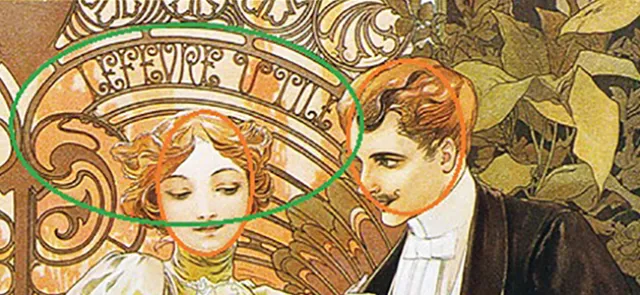
Art Nouveau: a movement of curves | Tangente
Art Nouveau was a total art movement that flourished across several European countries in the late 19th century. Never before had an artistic movement placed such emphasis on the beauty and variety of curves.
Pure and impure self-reference | Tangente
Self-reference is not "pure". It must be tied to an object, a situation or a concept—here, for instance, artistic creation, and photography in particular.
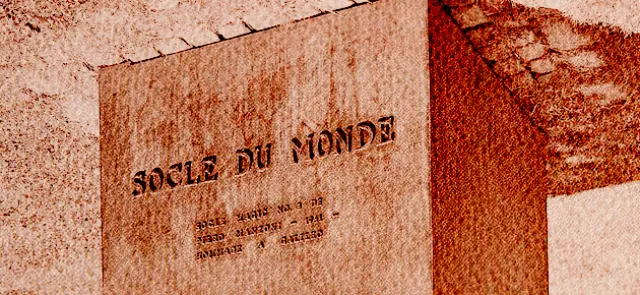
When works speak for themselves | Tangente
Advertising regularly makes use of it, as do graphic designers and artists. Self-reference has become a genre in its own right, appealing not only to our eyes but to all our senses! Let's take a wild tour of this seemingly limitless creativity.
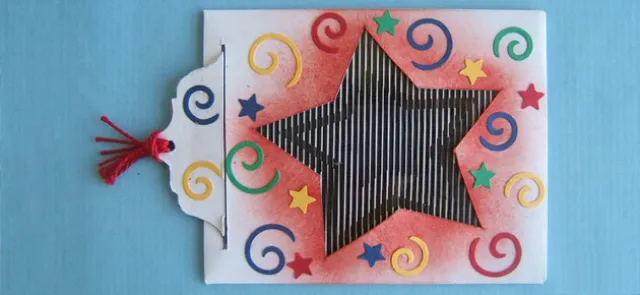
The mathematics of pop-up cards
A sheet of paper offers endless opportunities for mathematical play. Origami and paper folding immediately spring to mind. But allowing yourself to cut the paper produces equally interesting results, as pop-up cards show.