



All articles
Dive into the fascinating world of mathematics with our captivating articles, written by passionate experts. Whether you are a curious amateur or a seasoned mathematician, our articles cover a wide range of topics, from fundamental concepts to the latest discoveries, including practical applications and philosophical reflections.

Coloring planar tilings: four colors | Tangente
The proof of the four-color theorem caused quite a stir! Results on colorings using only two or three colors have proved less controversial. By considering how to make a beaded necklace, we can take a fresh look at these coloring questions.

The astrolabe: answers to six practical challenges | Tangente
After reading the article on the planispheric astrolabe, practise using it by answering these questions
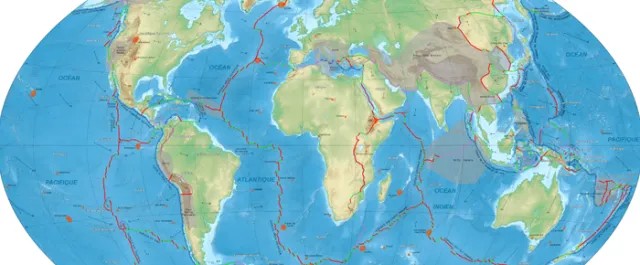
From plate tectonics to dressing a sphere
The surface of our planet seems to consist of a hard crust. But how can we picture a sphere being covered? Plate tectonics shows that the Earth's surface is made up of moving rigid plates that rub against one another.
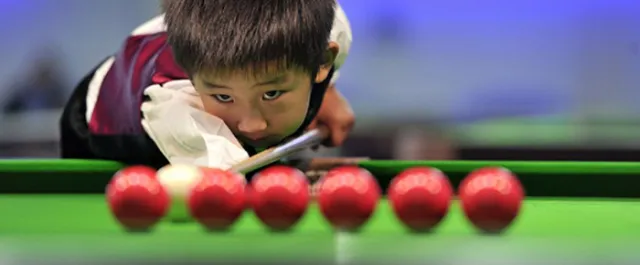
Operations in billiards
One of the arts and pleasures of mathematics is finding different ways to represent problems. Some problems in dynamics can profitably be replaced by the study of trajectories on a billiard table, revealing hidden structures—and hence hidden logical beauty.

The conquering virus
Studying how viruses act also involves… geometry. In particular, determining the area conquered by a virus helps assess how dangerous it is. So let us grab a microscope! Off to the laboratory for some hands-on work…
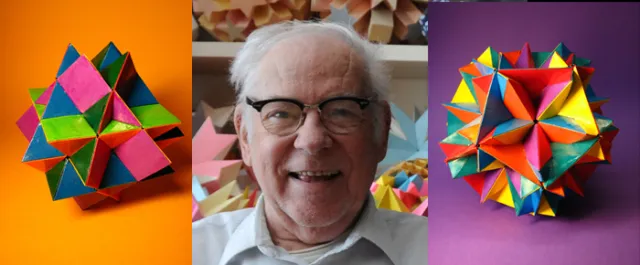
Magnus Wenninger, the "pope" of polyhedra
Building polyhedra is said to require the patience of a monk. Fittingly, the 20th century's greatest polyhedron builder was a Benedictine: Magnus Wenninger died in 2017 after a very long life devoted to God and geometry.
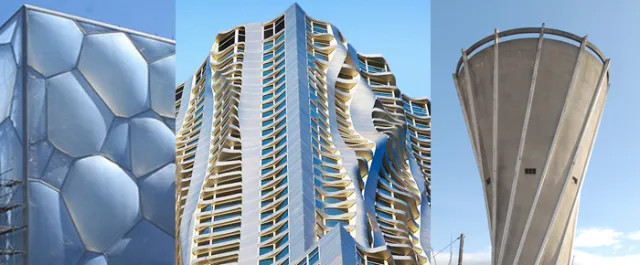
Exceptional surfaces in architecture
Architecture today combines practicality with spectacle. New digital techniques make it possible to design buildings with extraordinary forms.
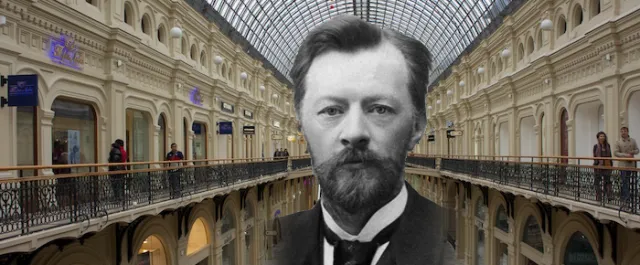
Vladimir Shukhov, Russia's Gustave Eiffel
A mathematician by training, Vladimir Shukhov was one of the leading figures in Russian architecture from 1890 to 1930 and was strongly influenced by Constructivism. His building designs made him a forerunner of contemporary architecture.
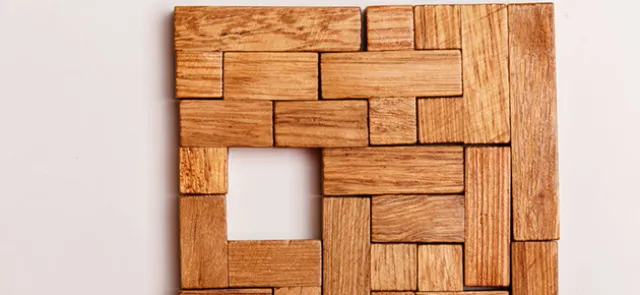
In search of the missing squares | Tangente
There is no need to invoke the paradoxes of infinity to have fun with areas: a simple rectangle is enough to create some formidable puzzles! All you need is a sheet of paper, some pencils, a ruler and a pair of scissors—and you are ready to make little squares disappear.

Remarkable mathematical surfaces | Tangente
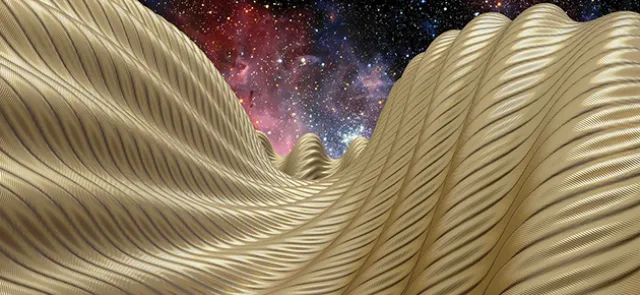
The smooth fractal revolution
How can a sphere be made to occupy less volume? Or how can an object be brought from the fourth dimension into the third? The corrugation technique meets such geometric constraints and produces surfaces both strange and unprecedented: "smooth fractals."

The epic of non-Euclidean geometries | Tangente
In antiquity, Euclid essentially postulated that, given a point A and a line D, there is exactly one line through A parallel to D. Two millennia later, three mathematicians share the glory of having proved that a geometry could exist without this "fifth postulate".
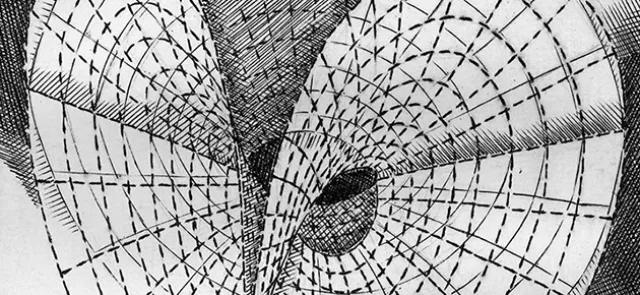
Exquisite minimal surfaces
A surface is minimal when, for a fixed boundary, its area is as small as possible. Soap bubbles provide a physical model of minimal surfaces.
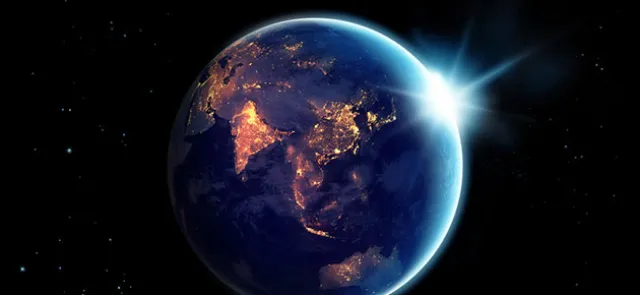
The geoid: the Earth's true shape | Tangente
The surface most familiar to us, the one we walk on every day, raises its fair share of questions: what exactly is the shape of the Earth? It is neither quite a sphere nor an ellipsoid. This irregular object, the geoid, has some subtle properties. We spoke with a specialist.
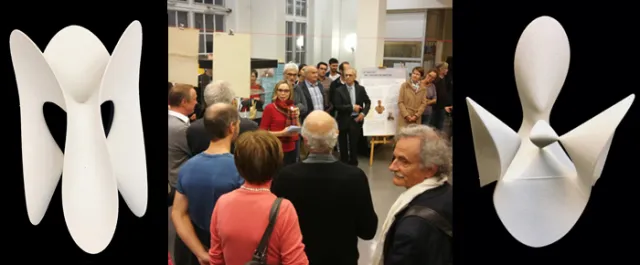
Darboux, the geometer who expanded the study of surfaces | Tangente
The Institut Henri Poincaré hosted an exhibition entitled "The Depth of Surfaces," devoted to the mathematician Gaston Darboux. Its scientific curator was Barnabé Croizat, a specialist in this great French geometer.
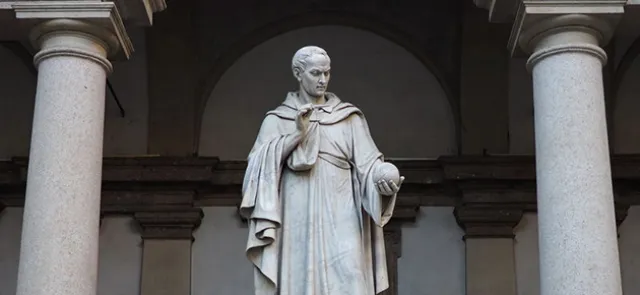
Measuring areas
As soon as we move beyond elementary figures, calculating area brings us up against the concept of infinity. After Archimedes and his skilful use of potential infinity, it was not until the Renaissance that this obstacle was finally overcome.
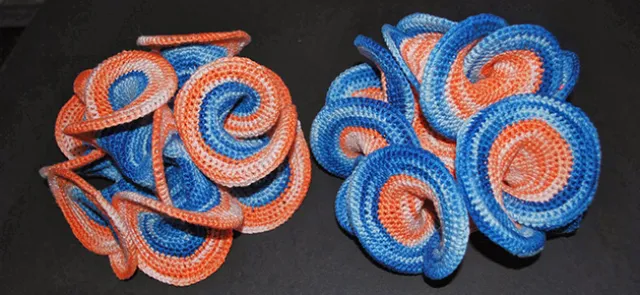
Knitting topological surfaces | Tangente
Knitting is generally used to make clothes. Mathematicians face no such limitations: they are interested in other kinds of surfaces that can be recreated with yarn and a needle. The result? Objects that are at once geometric, educational and… artistic!

Ruled surfaces in architecture | Tangente
How can a surface made up of straight lines be curved? That is the paradox of ruled surfaces!
Round balls
Round, are they? It is not that simple! Each ball is made differently, depending on how it will be used. A survey of their construction offers an opportunity to revisit some lesser-known principles of geometry.
Worlds without thickness
First defined as parts of space described using two parameters, surfaces can also be viewed as worlds in their own right: self-contained universes whose intrinsic properties can be studied without looking at them from the outside.