



History and Culture
History of mathematics and cultural connections
 Podcast
A shaky proof revolutionizes arithmetic
Euler rescued from oblivion Fermat's proposition that it is impossible for the sum of two cubes to be a cube. Though the explanation he provided for it was shaky, it opened up a new framework for arithmetic.
 Podcast
Fermat's false theorem
Fermat formulated many theorems, but one of them proved false: he conjectured that all "Fermat numbers" were prime, an error exposed by Euler. This notably illustrates how induction can lead us astray.
 Podcast
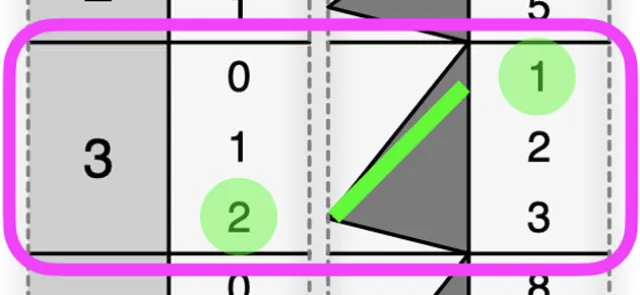
Conquering carries: Genaille–Lucas rulers | Tangente
Napier's rods had simplified multiplication, but handling carries remained an unsolved problem. The obstacle they posed remained insurmountable for three and a half centuries, until Genaille and Lucas finally found a solution.
 Podcast
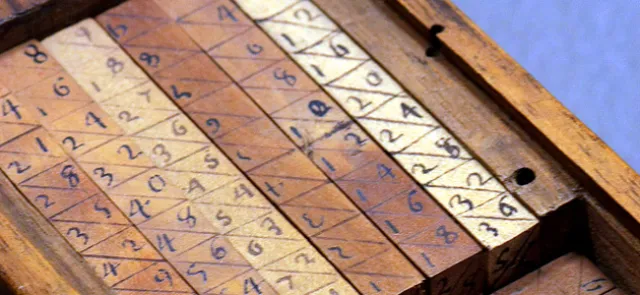
Napier's bones: multiply without tables | Tangente
With the advent of calculators and, later, smartphones, people have become less and less likely to work out a multiplication, division or square root by hand. Yet for centuries this was a problem, inspiring a host of ingenious ways to streamline calculations. One such invention was Napier's bones, which effectively automated multiplication.
 Podcast
At Ratchinski's public school
For fifteen years, Sergei Ratchinski developed his own teaching method, based on creativity.
 Podcast
The abacus mindset: soroban and mental arithmetic | Tangente
The enduring use of the abacus has made Asia the continent where mental arithmetic is most highly developed. Competitions are held there, and the leading experts regularly set new records.
 Podcast
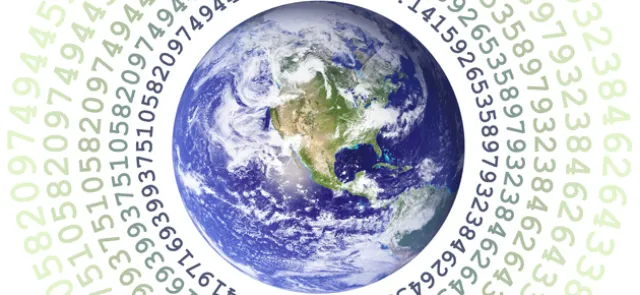
A mnemonic for the number π
Whether for doing mental arithmetic or impressing the crowd, certain numerical values need to be learned by heart. The digits of π are an important example, but a particularly tricky one to memorize, since they follow no simple pattern. To overcome the difficulty, nothing beats alexandrine verse.
 Podcast
The rule of 72
Interest-rate and monthly-payment problems are hard for our brains to grasp, because we struggle to picture an exponential phenomenon. During the Renaissance, however, trade expanded, bringing with it a growing need for calculations of this kind. This led to the development of new shortcuts.
 Podcast
Number sense — A history of mental arithmetic | Tangente
For a time, electronic tools seemed to have consigned mental arithmetic to history. Yet in recent years it has made a strong comeback among educational priorities. Far from being merely a set of automatic procedures, mental arithmetic is an irreplaceable way to explore numerical structures and deepen our understanding of certain concepts.
 Podcast
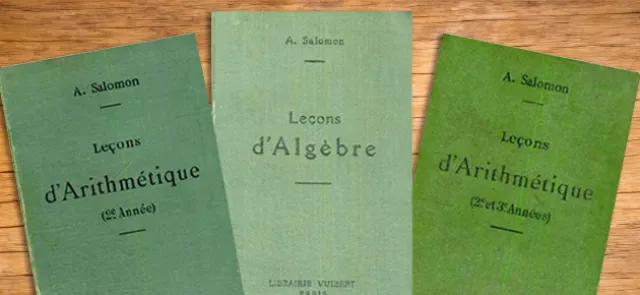
Divisibility in 19th-century textbooks | Tangente
Divisibility rules are numerous and are used by everyone who practises mental arithmetic. Blending arithmetic with common sense, they are a source of countless mathematical recreations, and have long been used in teaching.
 Podcast
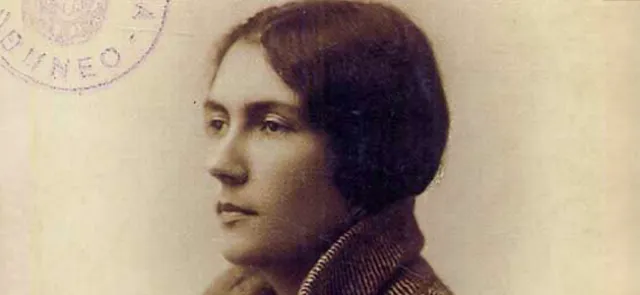
Peano by his great-niece | Tangente
Alongside official biographies, family accounts offer other glimpses into figures known mainly through their work. Lalla Romano, the celebrated Italian author, bears witness to her intellectual closeness with her great-uncle, Giuseppe Peano.
 Podcast
Biology of aging and telomeres | Tangente
Can aging be modeled? That is the challenge taken up by DyLT (short for "Dynamics of Telomere Lengths"), a targeted project within the PEPR Maths-Vives program. It tackles a central question: how do telomeres—the caps at the ends of our chromosomes—shorten over time, and how can mathematics help model this complex process?
 Podcast
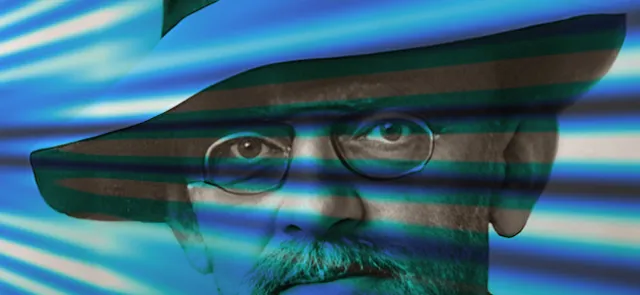
A short history of flexagons | Tangente
Popularized by Martin Gardner, flexagons are geometric curiosities that sparked huge enthusiasm among the general public. Although their mathematical study began in the 1940s, they have not yet given up all their secrets.
 Podcast
Hilbert spaces, a framework for quantum mechanics
The mathematical modeling of quantum physics rests on probability theory, but also on Hilbert spaces and linear maps (generally not continuous) on these spaces. The power of this mathematical structure has made it possible, for example, to calculate the energy levels of the hydrogen electron.
Tangente middle school prize | Tangente
Given the annual success of the Tangente High School Prize, the Littéramath association (litteramath.fr), in partnership with the APMEP and Tangente magazine, has decided to launch the Tangente Middle School Prize, which aims to promote mathematical culture through storytelling.
 Podcast
2025 Tangente High School Students' Prize | Tangente
The Tangente High School Students' Prize is now in its tenth year. Throughout the school year, students from tenth grade through their final year of high school scrutinized every book on the shortlist before choosing the winners.
2025 Tangente Prize | Tangente
Every year since it was created in 2009, the Tangente Prize has honored a book "that has inspired a wide readership to learn more about one or more areas of mathematics." The jury had to choose among six shortlisted books.
A stamp bearing Grothendieck's likeness | Tangente
At the instigation of Éric Bouhier, who had already been behind four other stamps, mathematician Alexandre Grothendieck (1928–2014) was honoured with a stamp issued on 16 June 2025.
André Deledicq honoured | Tangente
On April 24, 2025, in the magnificent library of the Institut Henri-Poincaré, amid its historic collection of geometric solids, Gilles Hallout, education adviser to the Élysée, appointed André Deledicq a Knight of the Legion of Honour.
 Podcast
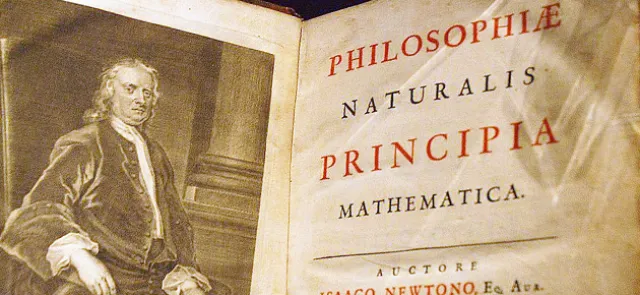
More than a translation of Newton | Tangente
Émilie du Châtelet is famous for having translated Isaac Newton's scientific work into French. Yet she did not simply reproduce the Latin text identically in French; she undertook an original rewriting of the proofs and concepts of Newtonian physics.