



History and Culture
History of mathematics and cultural connections
 Podcast
The nonexistent proof in ancient China?
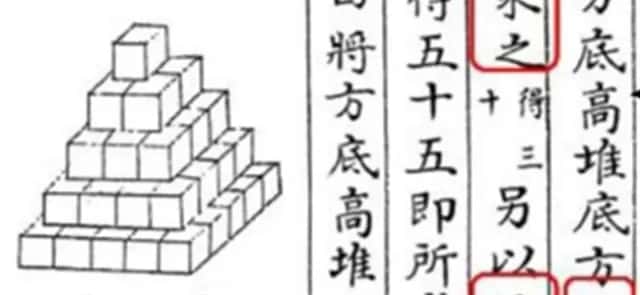
Mathematical proof, which comes from the Greek tradition, is often radically contrasted with Chinese mathematics, where it is absent. In reality, monstration was used there, and an enriching hybridization of mathematical reasoning methods emerges, particularly in the work of Xu Guangqi.
 Podcast
Spread of Chinese math practices, 13th–16th c. | Tangente
The abacus was not the only practical mathematical tool to have existed in China. Concise formulas also made it possible to calculate very quickly. These tools enabled the spread of knowledge over the centuries, thanks to numerous treatises explaining their mechanism.
 Podcast
Setting up polynomial equations in medieval China | Tangente
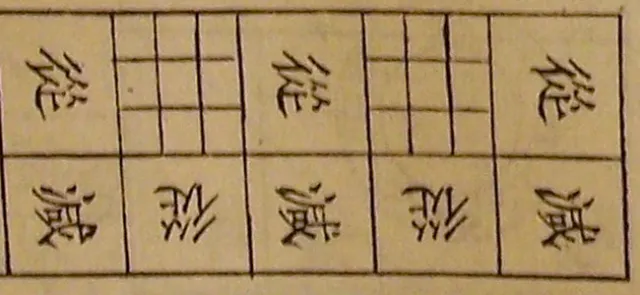
Several methods exist for arriving at a polynomial equation to solve a given problem. The celestial source is the best known but not the only one. This is also an opportunity to see the different strategies of mathematicians in Song-dynasty China.
 Podcast
Chinese science history: an awakening interest | Tangente
At the end of the sixteenth century, contact with knowledge and practices from Europe changed the way mathematics was perceived in China, both from a technical and a historical point of view, around two major questions: how should it be practiced, and who invented it first?
 Podcast
The math quartet of the Song-Yuan dynasties | Tangente
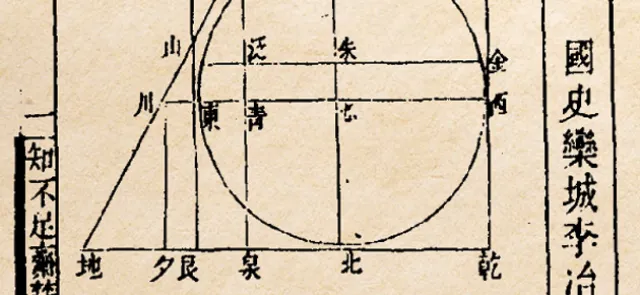
The period covered by the two Song dynasties and the early Yuan dynasty was particularly conducive to mathematics. Indeed, four great names emerged during this time: Li Ye, Zhu Shijie, Qin Jiushao, and Yang Hui. Their works share common influences but sometimes very different approaches.
 Podcast
The Book of Changes and Leibniz's binary system | Tangente
The Book of Changes is a seminal work in the history of Chinese thought and has notably influenced several mathematical texts. Its interest in permutations explains its importance.
 Podcast
The Nine Chapters, a foundational work
The Nine Chapters on the Mathematical Procedures is a collection of problems, each chapter unified by a common procedure for solving them. Their mathematical interest lies chiefly in the commentaries and elaborations of Liu Hui, their principal commentator.
 Podcast
Sources and variety of Chinese mathematics | Tangente
Surprisingly few ancient mathematical works survive from China. This can partly be seen as the result of political choices made by successive dynasties. It helps us understand that the history of mathematics is neither linear nor made up of homogeneous cultural blocks.
 Podcast
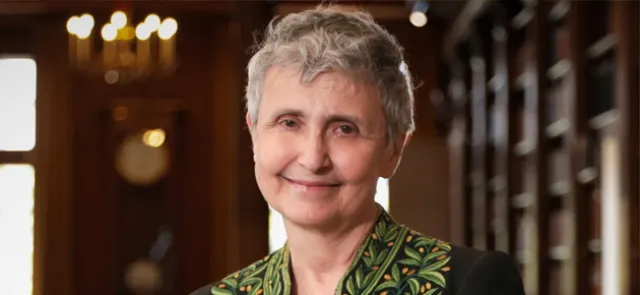
Karine Chemla, mathematician and sinologist | Tangente
Karine Chemla is a central figure in the history of mathematics in China, which she has helped make accessible to a wide audience. A mathematician, historian and translator all at once, she looks back on her rich career and her work.
 Podcast
Why study Chinese mathematics? | Tangente
The history of mathematics in Asia is marked by the central place occupied by China, as a producer of both knowledge and institutions for teaching the sciences. Both were, in the past, taken up by other countries in East Asia. Several of the mathematical classics developed in China were studied elsewhere and inspired the mathematical knowledge and practices implemented there.
 Podcast
Counting in Chinese: numeral systems and counting rods | Tangente
The Chinese numeral system dates back to the beginnings of written Chinese, around the third millennium BC.

Translation and transcription of Chinese texts | Tangente
Translating and transcribing writing systems and pronunciations very different from our own requires us to clarify certain conventions and practices.

The return of Hex | Tangente
Hex is a two-player game played with black and white pieces on a diamond-shaped board tiled with hexagons. The first player to connect their two opposing sides with their pieces wins.

New geometric volumes... | Tangente
In a recent study published in the Notices of the American Mathematical Society, mathematicians Claudia Fevola (Inria Saclay) and Anna-Laura Sattelberger (Max Planck Institute in Leipzig) explore the emerging field of positive geometry to propose a novel bridge between particle physics and cosmology.

Three cheers for France! | Tangente
The international final of the Mathematical and Logic Games Championship was held on August 23 and 24. This year, it took place in Mahdia, Tunisia.
 Podcast
Making art with the Conway knot | Tangente
An artist passionate about mathematics, Michel Delaunay creates works that plunge the eye into the infinity of geometric and topological aesthetics. He notably combines the potentialities of the cube with those of the Conway knot.
 Podcast
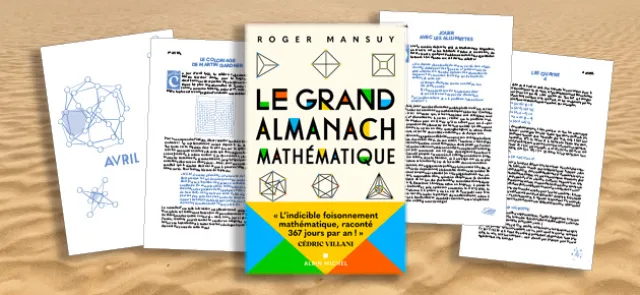
Roger Mansuy's mathematical almanac | Tangente
On the occasion of the publication of his Grand almanach mathématique (The Grand Mathematical Almanac), Roger Mansuy opens up to Tangente about the secrets of this book like no other, in which readers discover, among others, many unjustly forgotten figures.
 Podcast
Tangents and the parabola: gems galore
Behind its sleek appearance, the parabola brims with fascinating properties. Thus, the study of its tangents reveals remarkable angular properties and offers a playground of astonishing richness, where classical geometry meets luminous reflections.

From Pascal to Poncelet
In the winter of 1812, the retreat from Russia ended in disaster. Jean-Victor Poncelet (1788–1867), a 24-year-old military engineer, was taken prisoner. Steeped in Gaspard Monge's (1746–1818) descriptive geometry, he laid the foundations of modern projective geometry in the prison camps of Saratov, without books or instruments.
 Podcast
When Legendre believes he has proved the fifth postulate
For two millennia, mathematicians sought to prove Euclid's fifth postulate. Adrien-Marie Legendre believed he had found a proof, before realizing that his proof implicitly assumed the truth of that same postulate. A circular argument…